

Autonodyne Advances Human–Machine Teaming in Partnership with the U.S. Air Force
Autonodyne LLC has successfully collaborated with the U.S. Air Force to conduct a significant flight test demonstrating advanced human–machine teaming (HMT) between a crewed F-22 Raptor and an uncrewed MQ-20 Avenger developed by General Atomics Aeronautical Systems, Inc.. The demonstration represents another milestone under the Department of the Air Force’s sole-source contract awarded to Autonodyne for the development and integration of a next-generation Pilot Vehicle Interface (PVI). This effort reflects the accelerating pace at which the U.S. defense community is integrating autonomous systems into frontline air combat operations. By enabling direct, intuitive collaboration between pilots and autonomous aircraft, Autonodyne is helping to reshape the future of air dominance and operational effectiveness in highly contested environments. The test further validates the strategic importance of integrating advanced autonomy software with crewed fighter platforms to enhance survivability, extend mission reach, and increase tactical flexibility.
Bashi Command-and-Control Software Demonstrates Tactical Control Capabilities
At the center of the exercise was Autonodyne’s proprietary command-and-control software, Bashi, which served as the operational Pilot Vehicle Interface during the flight. Through Bashi’s tablet-based interface, the F-22 pilot was able to seamlessly communicate autonomy directives to the MQ-20 unmanned aircraft in real time. The system enabled the pilot to assign tactical maneuvers, update mission waypoints, and direct the MQ-20 to execute combat air patrol tasks, all while maintaining full situational awareness. This marked a major advancement in operationalizing collaborative autonomy within a combat-relevant scenario. Bashi’s intuitive design ensures that autonomy tasking does not increase pilot workload but instead enhances mission efficiency by delegating complex functions to the unmanned teammate. The ability to transmit commands, receive confirmation, and monitor execution through a compact, secure tablet demonstrates the practicality of integrating autonomous aircraft into existing fighter cockpits without extensive hardware modifications.
Platform-Agnostic Architecture Enables Seamless Interoperability
A key strength of Autonodyne’s technology lies in its platform-agnostic design and adherence to open standards and government reference architectures. Bashi is engineered to integrate across compliant air, land, and maritime autonomous systems, allowing it to serve as a unified control interface regardless of the vehicle type. This flexibility ensures that future integration efforts can scale rapidly as new uncrewed platforms enter service. By building its system on open architectures, Autonodyne supports long-term interoperability objectives established by the Department of Defense, reducing vendor lock-in and enabling broader ecosystem collaboration. Such an approach is critical as defense modernization strategies increasingly emphasize modular systems, rapid capability insertion, and cross-domain operational integration. The successful demonstration between the F-22 and MQ-20 highlights how a standardized interface can bridge generational differences between legacy fighters and next-generation autonomous assets.
Supporting the Collaborative Combat Aircraft Vision
The demonstration forms part of a broader series of flight exercises under the Collaborative Combat Aircraft program, an initiative aligned with the Next-Generation Air Dominance family of systems. The CCA initiative seeks to develop highly capable uncrewed aircraft designed to operate alongside both current and future crewed fighter jets. These aircraft are envisioned to serve as force multipliers, performing tasks such as sensing, electronic warfare, strike missions, and decoy operations while remaining under human supervisory control. By pairing advanced autonomy with direct pilot oversight, the program aims to enhance mission resilience in contested and anti-access/area-denial environments. Autonodyne’s continued participation in these exercises demonstrates the maturity of its software solution and its alignment with the Air Force’s long-term modernization roadmap.
Multi-Site Flight Demonstrations Validate Loyal Wingman Operations
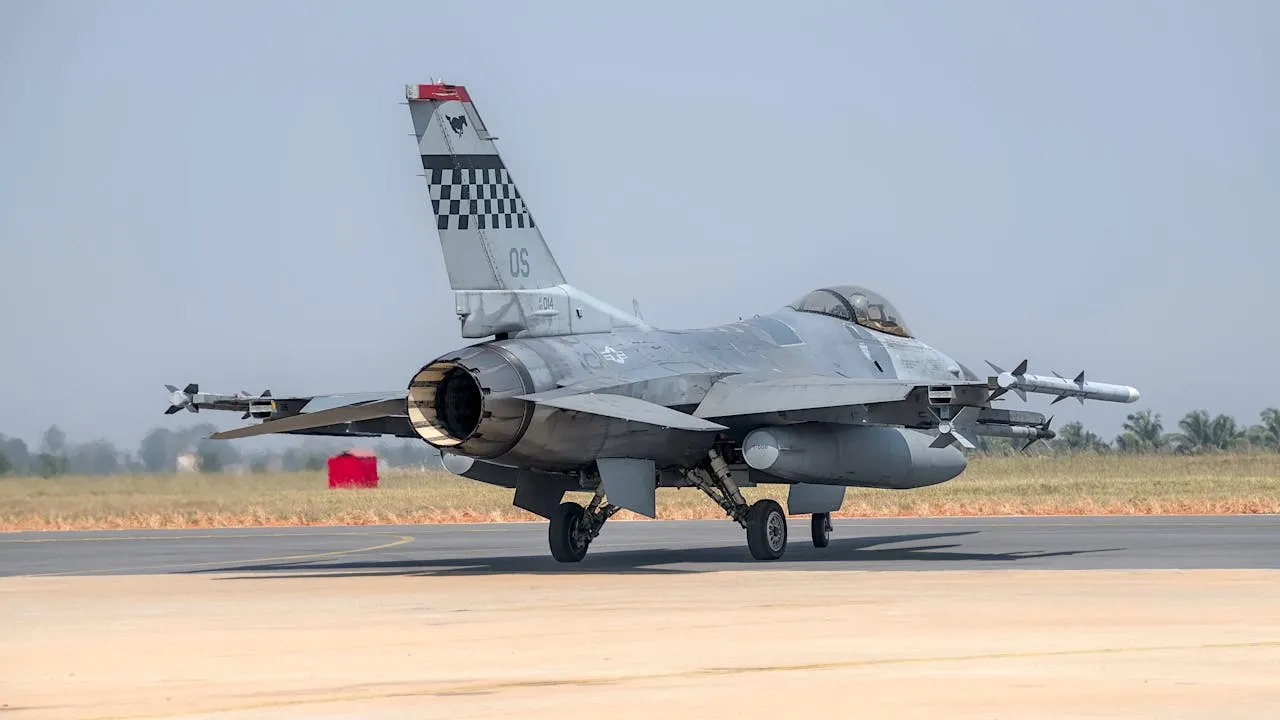
Throughout the fourth quarter of 2025, Autonodyne’s Bashi software supported multiple human–machine teaming flight exercises across the United States. One prominent demonstration paired the MQ-20 with an F-22 at Edwards Air Force Base, a historic hub for advanced aerospace testing. Another significant exercise connected the MQ-20 with an F-16 Fighting Falcon in Tucson, showcasing cross-platform compatibility and validating the adaptability of Autonodyne’s interface. During these tests, loyal wingman mission execution scenarios were successfully completed, with autonomy commands transmitted from the cockpit and displayed in real time on the Bashi tablet interface. Each demonstration reinforced the system’s reliability, responsiveness, and ability to operate under realistic mission conditions. The geographic diversity of the tests further illustrates the scalability of the technology across operational settings and mission profiles.
Enhancing Combat Effectiveness in Contested Environments
The integration of autonomous aircraft alongside crewed fighters offers substantial operational advantages, particularly in contested airspace where survivability and rapid decision-making are paramount. Through human–machine teaming, pilots can extend sensor reach, distribute risk, and coordinate multi-asset maneuvers without exposing additional personnel to danger. The MQ-20, when paired with a frontline fighter, can function as a reconnaissance node, weapons carrier, or decoy platform, depending on mission requirements. Autonodyne’s software ensures that these capabilities remain under human command, preserving accountability while leveraging machine-speed execution. By reducing cognitive burden and simplifying task delegation, Bashi enhances the pilot’s ability to focus on high-priority mission objectives. This approach aligns with evolving air combat doctrine that emphasizes distributed operations, data fusion, and collaborative autonomy as cornerstones of future force design.
Demonstrating Software Maturity and Operational Readiness
Collectively, the 2025 demonstrations underscore the technological maturity of Autonodyne’s autonomy software. The consistent performance across multiple aircraft pairings and testing locations confirms that Bashi has progressed beyond conceptual experimentation into practical operational capability. The ability to transmit, receive, and execute autonomy commands reliably during flight validates both the software’s architecture and its integration framework. These milestones also reflect the success of the Air Force’s incremental testing approach, which prioritizes rapid prototyping, iterative validation, and real-world evaluation. Autonodyne’s ongoing collaboration with military stakeholders demonstrates its commitment to refining human–machine teaming capabilities through rigorous flight testing and data-driven improvements.
Continued Support for 2026 Development Milestones
As the Collaborative Combat Aircraft development program advances into 2026, Autonodyne is expected to continue supporting a series of increasingly complex flight demonstrations. These efforts will further evaluate mission coordination, autonomy scaling, and multi-aircraft teaming scenarios. Future tests may incorporate additional sensor fusion tasks, dynamic threat response maneuvers, and expanded cross-domain integration. The company’s platform-agnostic approach positions it to adapt as new uncrewed aircraft variants are introduced under the broader NGAD modernization strategy. With defense planners prioritizing rapid capability deployment, Autonodyne’s proven software interface provides a critical bridge between experimental autonomy concepts and field-ready operational tools.
Shaping the Future of Collaborative Autonomy
The recent flight tests between the F-22 and MQ-20 mark another decisive step toward operationalizing collaborative autonomy within the U.S. Air Force’s evolving force structure. By delivering an intuitive pilot vehicle interface capable of controlling autonomous teammates, Autonodyne is contributing directly to the transformation of modern air combat. The convergence of open architecture software, secure tablet-based command systems, and combat-proven aircraft platforms signals a new era in which human operators and intelligent machines function as integrated combat teams. As the Air Force continues to refine and expand the CCA initiative, Autonodyne’s technology is poised to remain a foundational component of human–machine teaming capability, supporting enhanced readiness, operational flexibility, and sustained air superiority in the years ahead.
Source Link:https://www.businesswire.com/