

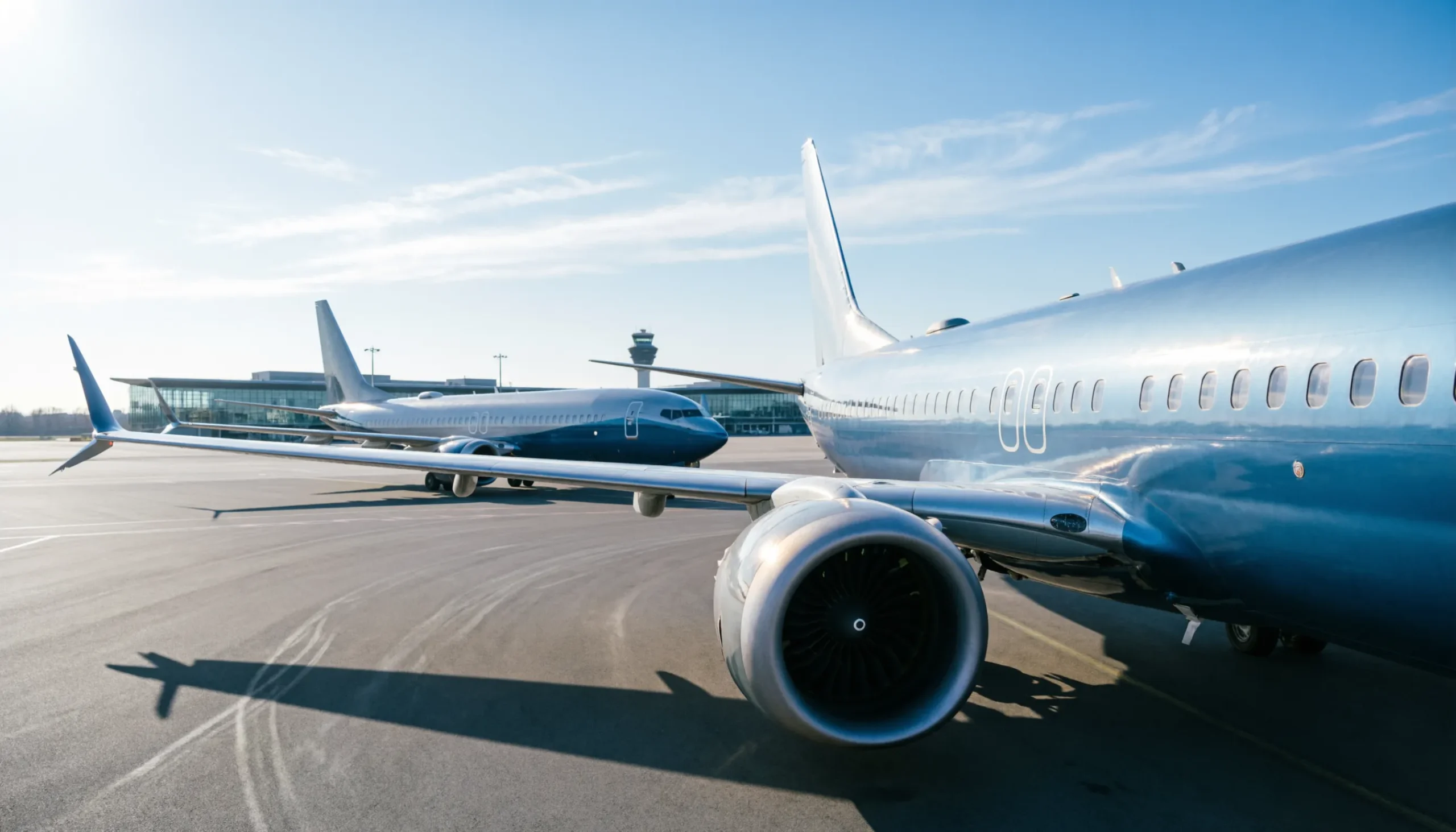
Aviation Capital Group LLC Completes Boeing 737 MAX 8 Deliveries to WestJet as Part of Strategic Sale-and-Leaseback Transaction
Aviation Capital Group LLC (ACG), a premier global full-service aircraft asset manager, has announced the successful delivery of two Boeing 737 MAX 8 aircraft to Canadian carrier WestJet, marking the completion of a structured two-aircraft sale-and-leaseback transaction between the two companies and further strengthening a long-standing commercial partnership rooted in fleet modernization and disciplined growth, with both aircraft delivered in Seattle during the same week and immediately positioned to support WestJet’s expanding narrowbody operations across its domestic and international network.
Transaction Completion Strengthens Long-Term Partnership
The delivery of the two Boeing 737 MAX 8 aircraft represents the culmination of a carefully structured sale-and-leaseback agreement designed to provide WestJet with capital flexibility while securing access to next-generation, fuel-efficient narrowbody aircraft, reinforcing ACG’s role as a strategic financing partner to airlines seeking to optimize balance sheets while maintaining operational growth momentum, and demonstrating the continued demand for efficient single-aisle aircraft in the global aviation leasing market as carriers focus on sustainability, cost discipline, and capacity modernization.
The sale-and-leaseback structure enables WestJet to monetize aircraft assets while retaining operational control under long-term lease agreements, thereby enhancing liquidity and financial agility without compromising network expansion plans, and this approach aligns with broader industry trends in which airlines leverage leasing partnerships to manage capital expenditures, mitigate residual value exposure, and maintain fleet flexibility amid evolving market dynamics, fluctuating fuel costs, and shifting passenger demand patterns across North America and beyond.
Modern, Fuel-Efficient Aircraft to Power Network Growth
Both aircraft delivered under the agreement are Boeing 737 MAX 8 models powered by CFM International LEAP-1B engines, combining advanced aerodynamics, improved fuel burn performance, and lower emissions compared to earlier-generation narrowbody aircraft, offering airlines measurable cost savings through enhanced operational efficiency while supporting environmental performance objectives increasingly prioritized by regulators, investors, and passengers.
The Boeing 737 MAX 8 platform delivers meaningful reductions in fuel consumption and carbon emissions per seat, alongside extended range capabilities that allow carriers such as WestJet to operate longer routes with improved economics, supporting both high-frequency domestic services and select transborder or leisure-focused markets, while advanced winglet technology, optimized flight control systems, and next-generation engine architecture contribute to quieter operations and lower maintenance costs over the aircraft lifecycle.
For WestJet, integrating additional 737 MAX 8 aircraft strengthens fleet commonality, simplifies pilot training and maintenance planning, and improves scheduling efficiency across its route network, positioning the airline to meet sustained travel demand while balancing operating cost pressures and environmental responsibilities in a competitive North American aviation landscape.
Leadership Commentary Highlights Milestone Delivery
Carter A. White, Chief Commercial Officer of Aviation Capital Group, expressed enthusiasm regarding the transaction, noting that the successful delivery of the two aircraft underscores ACG’s commitment to supporting airline partners with tailored capital solutions and modern aircraft assets that align with long-term growth strategies, while also highlighting the enduring relationship between ACG and WestJet as a foundation for future collaboration.
White emphasized that these modern, fuel-efficient aircraft will play an important role in supporting WestJet’s fleet expansion and continued operational growth, reinforcing ACG’s confidence in the airline’s strategic direction and operational resilience, and he further extended congratulations to WestJet as the carrier celebrates its 30th anniversary milestone, acknowledging three decades of transformation from a regional low-cost operator into a major Canadian airline with an expanding global footprint.
Celebrating 30 Years of WestJet’s Operational Evolution
The timing of the aircraft deliveries coincides with WestJet’s 30th anniversary, a significant milestone that reflects the airline’s sustained growth, adaptability, and evolving market presence since its founding, with the addition of next-generation Boeing 737 MAX 8 aircraft symbolizing both operational continuity and forward-looking investment in efficiency, customer experience, and environmental performance.
Over three decades, WestJet has expanded its network across Canada, the United States, Mexico, the Caribbean, Europe, and select international markets, developing a diversified business model that includes mainline operations, regional connectivity, and leisure-focused services, and the integration of fuel-efficient narrowbody aircraft remains central to maintaining competitive cost structures while enhancing passenger comfort through quieter cabins and modernized interiors.
The 737 MAX 8’s improved range and seating flexibility support WestJet’s evolving route strategy, enabling optimization of capacity deployment across high-demand corridors while preserving flexibility to adjust frequencies and destinations in response to seasonal fluctuations and macroeconomic trends, ensuring that fleet growth remains aligned with sustainable profitability objectives.
ACG’s Global Aircraft Asset Management Strategy
As a leading global aircraft asset manager, Aviation Capital Group LLC maintains a diversified portfolio of commercial aircraft placed with airlines worldwide, providing leasing solutions that balance asset risk management with long-term partnership development, and transactions such as the WestJet sale-and-leaseback reinforce ACG’s disciplined investment approach centered on modern, in-demand aircraft types with strong liquidity profiles and proven operational performance.
ACG’s strategy emphasizes collaboration with established carriers, prudent capital allocation, and active portfolio management, ensuring that aircraft acquisitions and lease placements are structured to optimize returns while supporting airline partners’ operational requirements, and the Boeing 737 MAX family remains a cornerstone of many leasing portfolios due to its global operator base, commonality advantages, and ongoing production continuity.
By completing the two-aircraft transaction with WestJet, ACG not only expands its placement of next-generation narrowbody assets but also demonstrates confidence in the continued recovery and expansion of the commercial aviation sector, particularly within the North American market where passenger demand has shown resilience and long-term growth potential.
Seattle Deliveries Mark Operational Milestone
The physical delivery of both aircraft took place in Seattle, reflecting standard industry practice for Boeing handovers and underscoring the logistical coordination required among manufacturer, lessor, airline, and engine supplier teams to ensure seamless acceptance, documentation, financing finalization, and entry-into-service planning, with delivery week activities including technical inspections, contractual sign-offs, and operational readiness procedures.
Such coordinated delivery efforts highlight the complexity of modern aircraft transactions, where financing structures, lease documentation, maintenance reserves, insurance arrangements, and regulatory compliance requirements must align precisely before an aircraft transitions from manufacturer to lessor and ultimately into airline service, demonstrating the collaborative ecosystem underpinning commercial aviation asset deployment.
Forward-Looking Statements and Risk Considerations
This announcement contains forward-looking statements within the meaning of applicable federal securities laws, including statements regarding anticipated operational benefits, fleet growth strategies, market conditions, and future performance expectations, which are based on current assumptions and projections that involve inherent risks and uncertainties capable of causing actual outcomes to differ materially from those expressed or implied.
Factors that may influence future results include changes in economic conditions, fluctuations in fuel prices, evolving regulatory requirements, shifts in passenger demand, aircraft production schedules, supply chain constraints, geopolitical developments, financing market conditions, and other operational variables affecting the commercial aviation sector, and such forward-looking statements should therefore not be interpreted as guarantees of future performance or assurances of specific outcomes.
Except as required by applicable law, the company undertakes no obligation to update or revise any forward-looking statements as a result of new information, future developments, or otherwise, reflecting standard disclosure practices intended to clarify the predictive nature of certain statements contained within corporate communications.
Source Link:https://www.businesswire.com/