

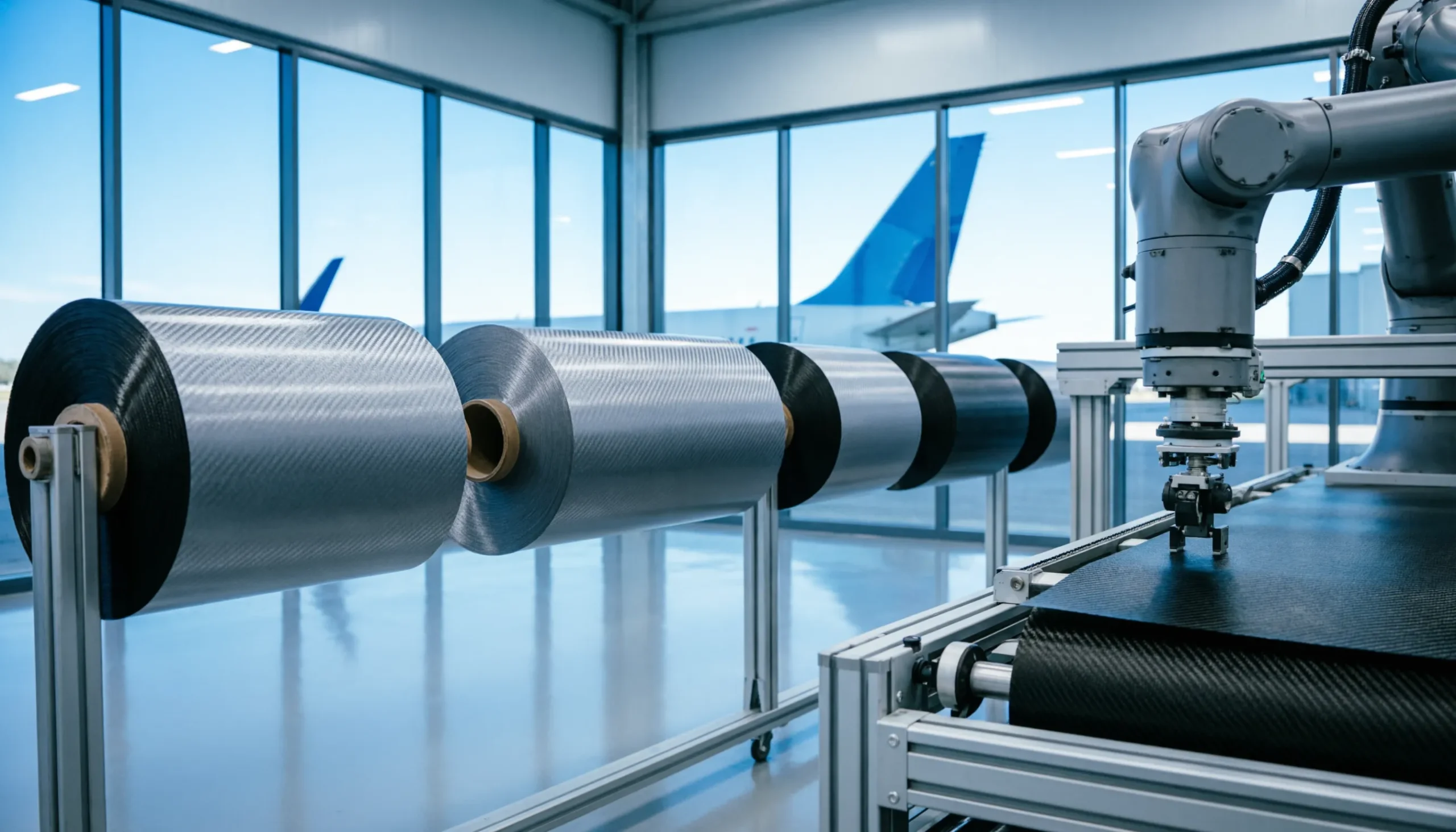
Albany Engineered Composites, a global leader in advanced composite engineering for the aerospace and defense markets, has announced that its president, Chris Stone, will participate in an executive-level panel discussion at Aerolambda’s “The Aerospace Event” on Monday, March 2, at 3 p.m. PT. The engagement places AEC at the center of a strategic industry dialogue focused on the evolving role of composite materials in next-generation aerospace and defense programs, as global production ramps up and supply chains undergo structural transformation.
Executive Leadership Engages in Industry Dialogue
The featured panel, titled “C-Suite Views from Leading Aerospace Composites Companies,” will convene senior executives from across the composites ecosystem to analyze the most pressing forces shaping the sector. The session will examine macro demand trends across commercial aerospace, defense aviation and space systems, while also addressing operational challenges such as supply chain resilience, raw material availability, cost competitiveness and advanced manufacturing scalability.
As aerospace OEMs increase production rates to meet rising global travel demand and defense modernization priorities, composite manufacturers face mounting pressure to deliver high-performance solutions at industrial scale. AEC’s participation underscores its role as a strategic supplier positioned at the intersection of material science innovation and high-rate production readiness.
Rising Demand for Advanced Composite Structures
Global aerospace markets are entering a renewed growth cycle characterized by higher aircraft build rates, next-generation propulsion systems and expanded defense procurement. Composite structures are playing a central role in this transformation due to their superior strength-to-weight ratio, corrosion resistance, fatigue durability and design flexibility compared to traditional metallic materials. Commercial aircraft platforms increasingly rely on composite fuselage sections, wing components.
Nacelles and structural reinforcements to reduce overall aircraft weight and improve fuel efficiency. In parallel, defense programs are adopting advanced composites for stealth characteristics, survivability enhancements and high-temperature tolerance in extreme operational environments. The panel discussion will explore how these performance requirements are reshaping supplier capabilities and investment priorities across the aerospace value chain.
Industrializing High-Performance Composite Solutions
Stone emphasized that as aerospace platforms evolve, the challenge extends beyond innovation and into industrialization. While composite materials offer significant technical advantages, scaling production to meet accelerating build rates requires robust automation, precision quality control systems and vertically integrated manufacturing processes. At AEC, strategic focus has centered on transforming advanced composite engineering from niche, low-volume applications into repeatable, cost-efficient production systems capable of supporting both legacy and next-generation aircraft programs. Metallic replacement opportunities remain a key growth vector, as OEMs seek to reduce structural weight without compromising safety or durability. Advanced composite solutions not only provide weight savings but also enable optimized structural geometries that are difficult to achieve with metals.
Supply Chain Dynamics and Resilience Priorities
The aerospace supply chain continues to adapt to lessons learned from recent global disruptions, including material shortages, transportation bottlenecks and geopolitical uncertainties. As a result, OEMs are placing greater emphasis on resilient domestic sourcing, multi-tier supplier transparency and long-term partnership models. Composite manufacturing strategies are evolving accordingly, with increased focus on localized production footprints, dual-source qualification and enhanced traceability systems.
The executive panel will address how composite suppliers are investing in infrastructure, workforce development and digital integration to strengthen supply continuity. Additionally, the discussion will explore the shifting balance between OEM insourcing and supplier specialization, as aircraft manufacturers reassess which composite processes should remain external and which may move in-house to protect critical intellectual property or ensure program control.
Technology Innovation Driving Competitive Advantage
Rapid advancements in material science and manufacturing technology are accelerating the performance capabilities of aerospace composites. Innovations in resin systems, fiber architectures and automated layup techniques are enabling higher temperature tolerance, improved impact resistance and faster cure cycles. Automation technologies such as robotic fiber placement and digital inspection systems are enhancing production efficiency while reducing variability.
These developments are essential to supporting higher-rate aircraft programs that demand consistent quality across large production volumes. The panel will examine how leading composite manufacturers are aligning research and development investments with evolving customer requirements, particularly in applications involving extreme environments such as hypersonic systems, advanced propulsion integration and next-generation space platforms.
Expanding Applications Across Commercial, Defense and Space
Composite demand is not confined to traditional commercial aviation alone. Defense modernization initiatives are expanding the use of composite materials in fighter aircraft, rotorcraft, unmanned aerial systems and missile structures. Meanwhile, the growing commercialization of space is creating new requirements for lightweight, thermally resilient materials capable of withstanding launch stresses and orbital conditions. As reusable launch vehicles and satellite constellations increase in frequency and scale, composite suppliers must adapt to faster production cycles and tighter cost constraints. The panel discussion will evaluate how suppliers can balance customization for mission-specific applications with the need for standardized production frameworks that reduce lead times and enhance affordability.
The Strategic Role of Supply Chain Partnerships
AEC positions itself not merely as a component manufacturer but as a strategic supply chain partner embedded in long-term aerospace and defense programs. This partnership approach involves early-stage design collaboration, integrated engineering support and continuous performance optimization throughout the product lifecycle. By engaging with OEMs during the conceptual and prototyping phases, composite suppliers can influence structural architecture decisions that maximize material advantages while minimizing downstream manufacturing complexity. Stone’s participation in the executive panel reflects a broader industry trend toward deeper supplier-OEM integration, where innovation is co-developed rather than sequentially transferred. Such collaboration is increasingly critical as aerospace programs face compressed development timelines and heightened cost scrutiny.
Workforce and Manufacturing Scalability
As production rates increase across major aerospace programs, workforce readiness becomes a central factor in sustaining quality and throughput. Advanced composite manufacturing requires specialized skills in material handling, precision assembly and nondestructive inspection. Companies are investing in workforce training, apprenticeship programs and digital skill development to ensure operational continuity. Simultaneously, capital investments in automated systems and smart factory infrastructure are enabling scalable growth without proportional increases in labor intensity. The panel will address how composite manufacturers are balancing human expertise with automation to maintain agility while meeting aggressive delivery schedules.
Responding to OEM Insourcing Trends
One of the critical topics expected to surface during the discussion is the evolving role of OEM insourcing. Aircraft manufacturers are selectively bringing certain composite processes in-house to strengthen control over proprietary technologies or to manage high-volume structural elements directly. This shift requires suppliers to differentiate through advanced engineering capabilities, niche specialization or integrated service offerings that provide value beyond basic fabrication. By focusing on complex assemblies, extreme-environment applications and advanced materials development, composite companies can reinforce their strategic importance within the aerospace ecosystem.
Preparing for the Next Generation of Aerospace Programs
The aerospace industry stands at the threshold of significant transformation driven by sustainability targets, digital engineering adoption and emerging defense requirements. Next-generation aircraft concepts emphasize improved fuel efficiency, alternative propulsion integration and modular architecture, all of which increase reliance on lightweight composite structures.
Defense and space programs similarly demand materials capable of withstanding unprecedented thermal and structural stresses. AEC’s emphasis on industrializing high-performance composite solutions positions the company to support these emerging platforms with scalable, reliable manufacturing systems. Participation in high-level industry forums provides an opportunity to articulate strategic priorities and align with broader market expectations.
Industry Outlook and Long-Term Growth
The long-term outlook for aerospace composites remains robust as global air travel recovers, fleet modernization accelerates and defense budgets prioritize advanced capabilities. However, sustained growth depends on the industry’s ability to align innovation with affordability and supply chain resilience. Executive discussions such as the one hosted at “The Aerospace Event” serve as a critical platform for evaluating market direction and identifying collaborative pathways forward. As aerospace programs evolve and production rates accelerate, composite manufacturers must demonstrate not only technical excellence but also operational reliability and strategic partnership capability. Through executive engagement and continued investment in advanced manufacturing technologies, AEC reinforces its commitment to shaping the future of aerospace composites while supporting customers across commercial aviation, defense and space sectors with scalable, high-performance solutions designed for the next era of flight.
Source Link:https://www.businesswire.com/