

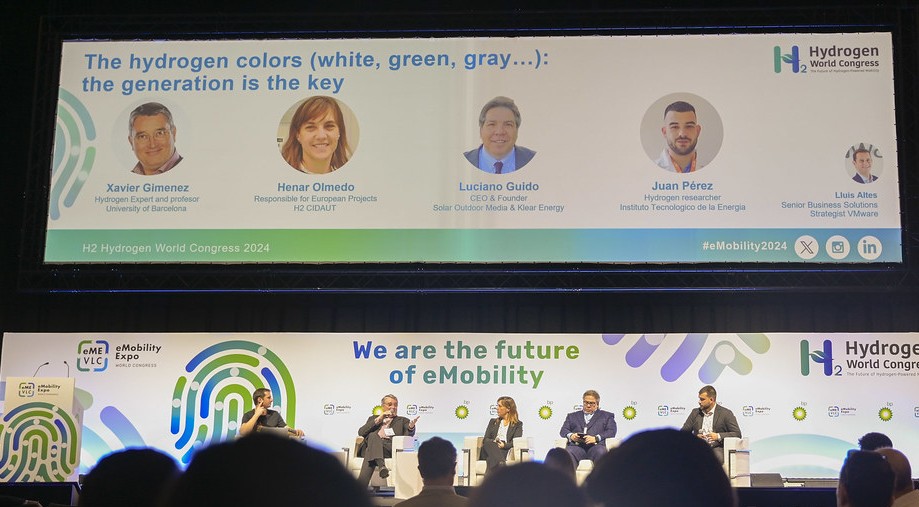
The event will address the transport energy transition, focusing on batteries and hydrogen, on March 10–11 in Málaga, Spain
The acceleration of the energy transition, the decarbonization targets set for 2030 and 2050, and the need to strengthen competitiveness and energy independence have placed mobility at the center of Europe’s environmental transformation. This transition will be the focus of discussions in Málaga (Spain) on March 10–11 at the eMobility Expo World Congress – MOW 2026, Europe’s leading professional event for the sustainable, autonomous, electrified, connected, and safe mobility industry.
Aiming to address the main challenges posed by the energy transition in the mobility sector, the forum will bring together leading experts, including Montserrat Espín, Head of Maritime Transport Decarbonization at Bureau Veritas; Xavier Giménez, Professor at the University of Barcelona; Dani Pérez, Director of Strategy and Innovation at KM0 Energy; Fernando Marcos, Sales Director at Everllence; and David Pardos, Head of Mobility at Eurecat. They will offer a pragmatic outlook on Europe’s future energy mix between 2030 and 2040. Key topics will include the coexistence of batteries, hydrogen, and hybrid systems across different segments of the automotive industry, as well as solutions related to cost, range, infrastructure, and operational flexibility.
This transformation is driven not only by regulation and industrial strategy, but also by growing user demand and the evolution of infrastructure, which is moving toward integrated high- power corridors and more reliable, user-friendly energy services. Pierre-Yves Sachet, Executive Vice President of Mobility at Moeve, will outline the company’s commitment to operational excellence through the integration of ultra-fast charging solutions across its extensive network of service stations located along major transport routes, prioritizing reliability and user needs.
Hydrogen Emerges as a Key Driver of Zero-Emission Mobility
Hydrogen is becoming a key factor in the transition to zero-emission mobility, particularly in segments where full electrification presents operational or scalability challenges. Xavier Ribas, CEO at EVARM; Pablo del Castillo, CSO at Evoo-Syn; and María García, from the Aragón Institute of Technology (ITA), will examine the latest developments in hydrogen-based propulsion technologies, including fuel cells, combustion engines, and supporting infrastructure.
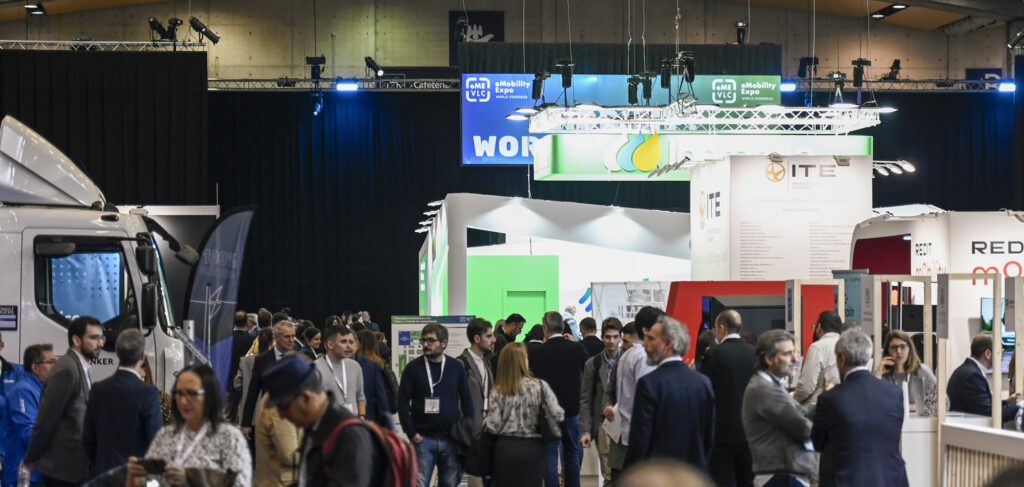
Barriers to adoption—such as cost, infrastructure deployment, regulatory frameworks, and supply chain readiness—will also be addressed, alongside the opportunities hydrogen offers to accelerate transport decarbonization. In this context, Curro Nicolau, President of Go Energy, will focus on hydrogen’s economic viability, analyzing cost trends, financing models, and public-private partnership mechanisms that enable innovation to translate into profitable projects.
Despite strong political and industrial support, the sector continues to face the challenge of scaling projects from the pilot phase to commercially viable models. Santiago Ramas, managing director at HVR Energy; and Gonzalo Gutiérrez, director at ENAGAS Scale Green Energy, will share real-world applications in mobility and operations to address this key issue.
Heavy Transport and Maritime Sectors Look to Green Hydrogen as a Long-Term Solution
The path toward net-zero-emissions mobility is not linear, but rather a balancing act. In this regard, Mónica Aguado, director of energy and hydrogen department at Cener, will highlight the strategic role of green hydrogen produced from renewable energies as a solution for heavy transport, the maritime sector and industry, providing storage capacity and flexibility to the energy system.
Meanwhile, Mario Canet, Head of Innovation and Projects at TMB (Transports Metropolitans de Barcelona), will present will present lessons learned from the day-to-day operation of urban hydrogen bus fleets, including maintenance, energy efficiency, and integration with existingm systems.
Innovative Technologies Enhance Charging Speed and Battery Circularity
As battery volumes increase across Europe, recycling is evolving from pilot initiatives to industrial-scale competition. In this context, the forum will explore how established operators and new players—particularly those focused on direct recycling and large-scale facilities—are reshaping the sector in response to growing regulatory and market demands. Roman Stiftner, CEO of EUMICON, will also examine the strategic importance of raw materials such as lithium, nickel, and copper in ensuring supply security and supporting the future of energy storage.
Ultra-fast charging is redefining the integration of electric vehicles into everyday mobility, significantly reducing charging times and bringing the experience closer to conventional refueling. Cristóbal Sánchez, Deputy Minister of Industry, Energy, and Mines of the Regional Government of Andalusia, Francisco Rubio, Senior Business Development at Moeve, Daniel Fraile, Chief Policy and Markets Officer at Hydrogen Europe, and Andy Weinstein, CEO at Godot, will discuss how charging speed impacts not only vehicle design, but also the stability of the electricity grid and the evolution of business models in Europe.
About: eMobility Expo World Congress – MOW (March 10-11, 2026 – FYCMA, Málaga): It is the professional event for the autonomous, electrified, sustainable, connected and safe mobility industry. Over two days, eMobility Expo – MOW 2026 will bring together in Malaga leading companies specializing in micromobility, the automotive industry, technology, manufacturers of electric batteries and charging systems, new fuel sources, products for automated and autonomous driving, the components industry, logistics, aeronautics, rail, and naval industries, as well as the startups that are revolutionizing the sector. The MOW congress will take place within the framework of the event, where more than 370 experts will share the keys to implementing new business models and present the latest technological and sustainable trends in the mobility landscape.