

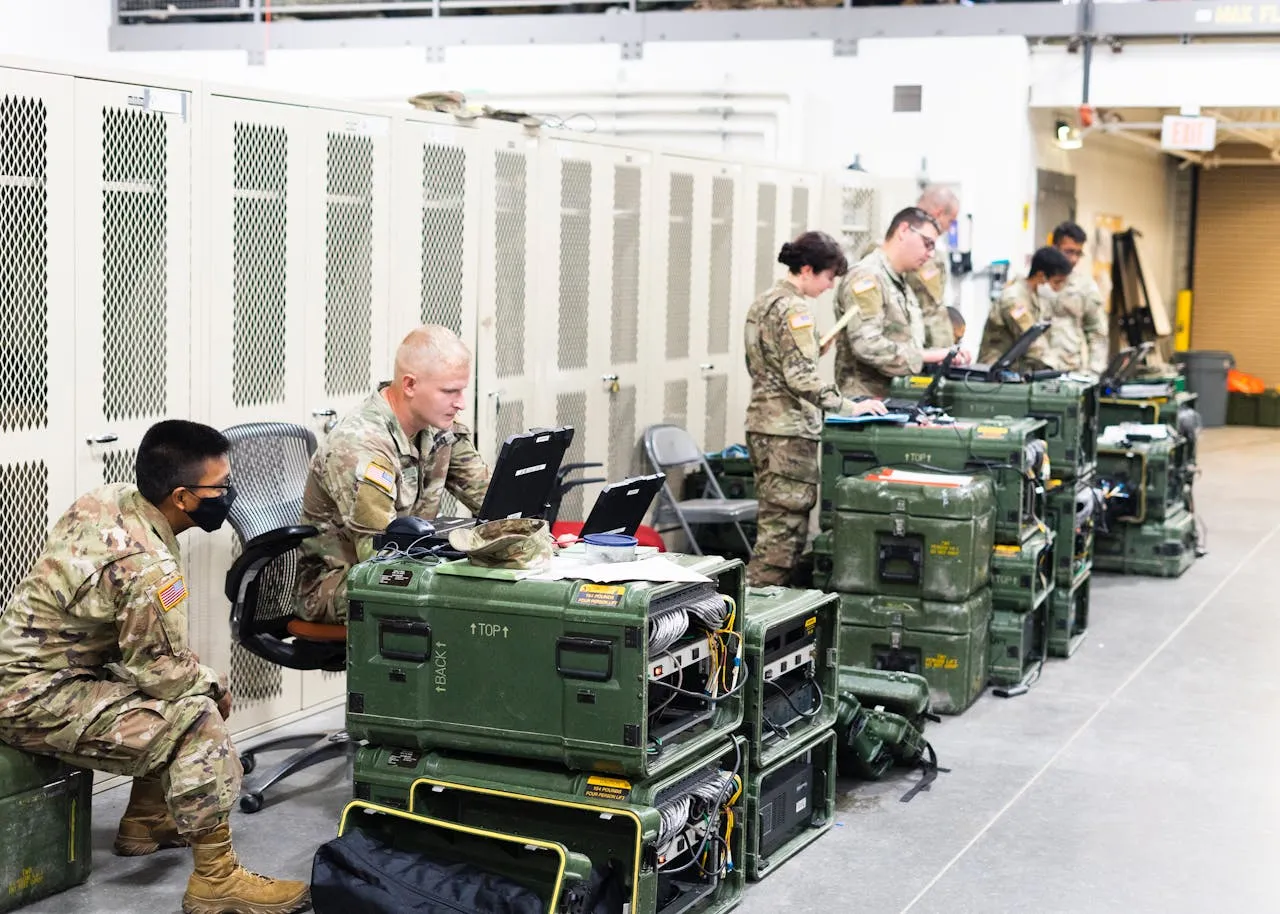
Rune Technologies Secures $2 Million U.S. Army SBIR Contract to Advance Predictive Logistics Platform for Contested Environments
Rune Technologies, a defense technology company specializing in artificial intelligence–driven predictive software for military logistics, has announced that it has received a $2 million Direct to Phase II Small Business Innovation Research (SBIR) contract from the United States Army. The award will support the Army’s Predict, Optimize, Recommend, and Track for Adaptive Logistics (PORTAL) program, which is being led by the Army Applications Laboratory (AAL) in collaboration with Army Futures Command through its innovation initiative known as Army FUZE.
The contract marks a significant step forward for Rune Technologies as it continues developing advanced logistics software capable of supporting military operations in environments where communication networks may be disrupted or unavailable. With modern conflicts increasingly defined by sophisticated electronic warfare, cyber threats, and adversaries capable of targeting supply chains, the U.S. Army is prioritizing new technologies that enable logistical operations to remain resilient even in contested environments.
Over the next 18 months, Rune Technologies will work closely with the 1st Cavalry Division, headquartered at Fort Hood, to deploy and evaluate its flagship logistics platform, TyrOS. The system will be implemented across multiple levels of military command, replacing many traditional manual processes that have historically been used to track supplies, plan resupply missions, and coordinate logistics support.
Advancing Predictive Logistics for Modern Warfare
Military logistics has long been recognized as one of the most complex and critical aspects of military operations. Sustaining forces in the field requires the continuous movement of fuel, ammunition, medical supplies, spare parts, and other resources across vast and often dangerous operational areas. Traditionally, these logistics processes have relied on centralized systems and manual reporting methods that can become inefficient or vulnerable when communication infrastructure is disrupted.
Rune Technologies’ TyrOS platform aims to address these challenges by integrating artificial intelligence and predictive analytics into tactical logistics planning. The software is designed to analyze large volumes of operational data, allowing commanders and sustainment teams to anticipate supply shortages, track equipment and inventory in real time, and generate optimized resupply strategies.
Unlike many legacy systems that rely heavily on centralized servers or continuous connectivity, TyrOS is built with an “edge-first” architecture. This means that intelligence and decision-making tools are embedded directly at the tactical level, enabling frontline units to continue operating effectively even when network connections are degraded or temporarily unavailable.
By providing predictive insights and automated recommendations directly to soldiers and commanders in the field, the platform can help accelerate decision-making and reduce the time required to identify and resolve logistical challenges.
Supporting the Army’s PORTAL Initiative
The PORTAL initiative represents a broader effort by the U.S. Army to modernize its logistics infrastructure and improve operational readiness. The program focuses on developing systems that can predict logistical needs, optimize resource allocation, recommend courses of action, and track supply movements in real time.
Through the SBIR contract, Rune Technologies will refine TyrOS so it can integrate seamlessly with existing Army digital infrastructure. Key systems involved in this integration include the Joint Battle Command Platform, which provides real-time situational awareness and mission command capabilities, and the Global Combat Support System–Army, the Army’s primary logistics and supply chain management platform.
Integration with these systems will allow TyrOS to leverage existing operational data while enhancing the Army’s ability to analyze logistics patterns and respond proactively to disruptions.
Building on Previous Military Testing
Rune Technologies has already demonstrated the capabilities of its predictive logistics platform during several military exercises involving active operational units. These tests have provided valuable insights into how AI-powered logistics tools can improve sustainment operations during large-scale training scenarios.
The TyrOS system has previously been evaluated during exercises involving the 25th Infantry Division, the 4th Infantry Division, and the XVIII Airborne Corps. During these engagements, the platform demonstrated its ability to process complex operational data, identify potential supply chain disruptions, and deliver actionable insights to logistics planners.
These stress tests have served as important milestones in measuring improvements in key logistics performance metrics, including sustainment speed, data accuracy, and the quality of operational decision-making. Early results from these exercises indicate that AI-enabled predictive systems can significantly enhance the Army’s ability to anticipate logistical challenges before they escalate into operational problems.
The new collaboration with the 1st Cavalry Division will expand these efforts, enabling more comprehensive field testing and providing additional opportunities to gather feedback from soldiers who rely on logistics systems during demanding training missions.
Accelerating Innovation Through the SBIR Program
The Small Business Innovation Research program plays an important role in supporting technology development within the U.S. defense ecosystem. By providing funding to innovative small businesses, the program allows the Department of Defense to explore new technologies that may enhance national security capabilities.
Rune Technologies’ award is classified as a Direct to Phase II SBIR contract. This designation is reserved for technologies that have already demonstrated sufficient feasibility and promise during earlier development stages. Instead of beginning with basic research, Direct to Phase II awards allow government agencies to move quickly toward advanced testing, prototyping, and integration.
For Rune Technologies, the contract provides an opportunity to accelerate the development of its predictive logistics platform while conducting rigorous testing in operational environments. The program will focus on validating the system’s performance under real-world conditions and ensuring that it meets the Army’s technical and operational requirements.
Key Capabilities of the TyrOS Platform
As part of the 18-month contract, Rune Technologies will continue refining the core capabilities of the TyrOS platform. These capabilities are designed to address several of the most pressing challenges in modern military logistics.
One of the system’s primary features is real-time tracking of logistics assets and supply chains. By consolidating data from multiple sources, TyrOS allows commanders and logistics planners to maintain a clear picture of resource availability and movement across operational areas.
Another critical capability is predictive modeling. Using artificial intelligence algorithms, the platform can analyze historical data and current operational trends to forecast potential disruptions in supply chains. This allows planners to anticipate shortages of critical resources such as fuel or ammunition and take proactive measures to prevent operational delays.
In addition, the platform generates AI-assisted courses of action for commanders. These recommendations may include optimized resupply routes, adjustments to resource distribution, or strategies to mitigate risks associated with contested logistics environments.
Together, these features provide military leaders with tools that can enhance situational awareness, improve planning efficiency, and reduce the likelihood of unexpected logistics failures during complex operations.
Recognition in Army Modernization Programs
The latest SBIR contract represents another milestone in Rune Technologies’ growing relationship with the U.S. Army and its modernization initiatives. The company was recently selected by both prime contractor teams participating in the Army’s Next Generation Command and Control (NGC2) program.
These teams are led by major defense contractors including Lockheed Martin and Anduril Industries, both of which are working with the Army to develop advanced command-and-control technologies that integrate data from multiple operational domains.
Rune’s selection by both teams highlights the growing interest in predictive logistics technologies that can complement broader military digital transformation efforts.
Emphasizing an Edge-First Development Philosophy
One of the defining characteristics of Rune Technologies’ approach is its emphasis on solving problems from the point of need upward. Instead of building centralized enterprise systems that may not function effectively in tactical environments, the company focuses on delivering software tools that can operate directly at the operational edge.
This “edge-first” philosophy is particularly relevant for modern military operations, where communications may be degraded or contested by adversaries. By enabling decision-making capabilities directly at the unit level, edge-based systems help ensure that soldiers can continue to execute missions even when connectivity is limited.
Rune’s development process also emphasizes close collaboration with soldiers and operational units. Feedback from field exercises and training missions is incorporated into software updates, allowing the platform to evolve rapidly based on real-world operational requirements.
As the U.S. Army continues investing in advanced digital capabilities, predictive logistics platforms like TyrOS are expected to play an increasingly important role in military operations. The ability to anticipate supply chain disruptions, optimize resource allocation, and maintain operational readiness under challenging conditions is becoming a key priority for defense planners.
Through its partnership with the 1st Cavalry Division and participation in the PORTAL initiative, Rune Technologies will have an opportunity to demonstrate how artificial intelligence can transform military sustainment operations.
If successful, the project could pave the way for broader adoption of predictive logistics technologies across the Army and potentially throughout other branches of the U.S. military.
For Rune Technologies, the $2 million SBIR contract not only provides funding for continued development but also reinforces the growing importance of innovative small businesses in shaping the future of defense technology. As the project moves forward over the next 18 months, the collaboration between the company and the Army will aim to deliver practical solutions that enhance logistics resilience in the face of evolving global security challenges.
Source link: https://www.businesswire.com/