

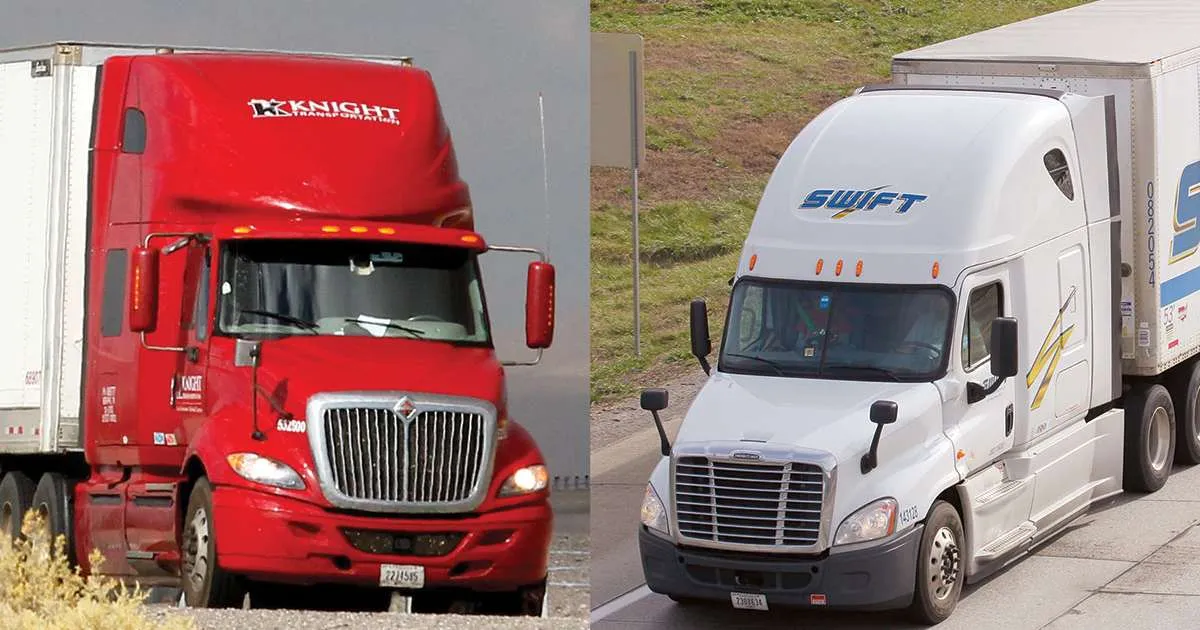
Knight-Swift Transportation Holdings Updates First-Quarter 2026 Earnings Outlook and Issues Second-Quarter Guidance
Knight-Swift Transportation Holdings Inc., one of North America’s largest transportation and logistics providers, has announced a significant revision to its earnings outlook for the first quarter of 2026 while also introducing guidance for the second quarter. The company said several one-time or largely first-quarter-specific events affected profitability during the opening months of the year, prompting a downward adjustment to expected earnings. At the same time, management expressed growing confidence in improving freight market conditions and expects a sharp rebound in the second quarter.
The revised guidance comes as the trucking and logistics sector continues to navigate changing market dynamics, including tightening truckload capacity, weather-related disruptions, rising fuel prices, and shifting customer demand patterns. Knight-Swift indicated that despite a weaker-than-expected first quarter, the broader operating environment appears to be strengthening, positioning the company for better results in the months ahead.
First-Quarter Earnings Guidance Reduced
Based on preliminary financial results, Knight-Swift now expects adjusted earnings per share (EPS) for the first quarter of 2026 to range between $0.08 and $0.10. This marks a substantial reduction from the company’s earlier forecast of $0.28 to $0.32 per share.
The revised outlook reflects a combination of unexpected charges, operational delays, and external pressures that were concentrated primarily in the first quarter. According to the company, these developments impacted both GAAP and non-GAAP results.
Management emphasized that many of these issues were non-recurring or isolated in nature, suggesting they should not materially affect performance in later quarters.
Key Factors Behind the Lower First-Quarter Outlook
Knight-Swift outlined several specific items that weighed on earnings during the quarter.
Less-Than-Truckload Claims Development
One of the most significant negative impacts came from the company’s less-than-truckload (LTL) segment. Knight-Swift expects approximately $0.08 per share of negative impact related to claims development, driven primarily by a large unfavorable arbitration award tied to a 2022 incident.
The LTL business has become an increasingly important component of Knight-Swift’s diversified transportation portfolio. However, legal settlements and claims expenses can create occasional volatility, especially when tied to legacy matters.
Warehousing Project Delays
The company also cited a $0.05 per share negative impact stemming from project business delays in its warehousing operations, which are included within the “All Other Segments” reporting category.
These project revenues have been deferred into the second and third quarters rather than being recognized in the first quarter. Knight-Swift said weather-related disruptions contributed to the delay, preventing some planned business from being completed on schedule.
While this negatively affects first-quarter results, it also implies that some earnings may shift into future periods rather than being permanently lost.
Mexico VAT Reimbursement Decision
Another headwind was a $0.02 per share negative impact resulting from an adverse ruling on value-added tax (VAT) reimbursement in Mexico related to prior tax years.
This appears to be a tax-related matter connected to historical operations or reimbursements. Although relatively modest compared with other charges, it still contributed to the lowered quarterly guidance.
Winter Weather and Fuel Cost Pressure
Knight-Swift further estimated a $0.05 to $0.06 per share negative effect caused by severe winter weather in January and rapidly rising fuel prices during March.
Winter storms can significantly disrupt freight operations by slowing transit times, reducing available capacity, increasing maintenance costs, and lowering asset utilization. Combined with surging fuel expenses, these factors created a notable drag on margins during the quarter.
Fuel costs remain a major variable across the transportation industry, particularly when price increases occur rapidly and before surcharge mechanisms can fully offset the impact.
Stronger Second-Quarter Outlook
Despite the first-quarter disappointment, Knight-Swift issued a much stronger forecast for the second quarter of 2026. The company expects adjusted EPS for the second quarter to range from $0.45 to $0.49.
That guidance implies a substantial sequential improvement from the first quarter and suggests management believes the company is entering a more favorable operating environment.
Knight-Swift said the expected rebound reflects several factors:
- First-quarter disruptions are not expected to repeat
- Deferred warehousing business should contribute in later quarters
- Freight market fundamentals improved exiting the first quarter
- Recent trends in shipment volumes are strengthening
- Spot pricing has improved
- Customer bid activity is accelerating
- Seasonal freight demand is expected to rise
Together, these trends indicate that market conditions may be turning more positive for carriers after an extended freight downturn.
Freight Market Tightening
Chief Executive Officer Adam Miller commented that while winter weather hurt first-quarter volumes and costs, it also highlighted shrinking truckload capacity across the industry.
When harsh weather disrupts freight networks, underlying supply constraints often become more visible. Limited truck availability can create pricing leverage for carriers, particularly those with scale and network density.
Miller suggested that these developments are meaningful for ongoing customer bid activity, where shippers negotiate contract freight rates for future business.
He also noted that rising fuel prices may accelerate the existing decline in industry supply, as smaller or less efficient carriers face higher operating pressure.
Truckload Conditions Continue to Improve
According to management, the truckload market continues to tighten, and pricing discussions with customers are evolving rapidly. Knight-Swift believes its strong presence in the one-way truckload market gives it a competitive advantage as shippers seek reliable capacity partners.
The company has one of the largest truckload fleets in North America, allowing it to serve customers across major freight lanes with scale, flexibility, and service consistency.
As capacity exits the market and demand gradually improves, larger carriers such as Knight-Swift often benefit through:
- Higher contract pricing
- Improved fleet utilization
- Stronger spot-market opportunities
- Better customer retention
- Increased market share gains
Growing Optimism for the Coming Quarters
Miller said the company is more optimistic about earnings opportunities over the next several quarters than it was three months ago.
That optimism is based on multiple catalysts, including:
Bid Season Progress
Many freight contracts are renegotiated during annual bid cycles. As those bids conclude, carriers can begin realizing improved pricing and awarded volumes in actual operating results.
Cost and Operational Initiatives
Knight-Swift continues to implement cost-control measures and operational improvements designed to enhance margins, improve network efficiency, and maximize returns.
Spot and Project Freight Opportunities
Management also expects more spot-market and project freight opportunities than it has seen in recent years. Spot freight demand tends to rise when capacity tightens or when customers need additional flexible transportation options.
Importance of Diversification
Knight-Swift’s results also illustrate the importance of diversification within modern transportation businesses. The company operates across multiple segments, including:
- Truckload transportation
- Less-than-truckload services
- Logistics
- Intermodal
- Warehousing
- Brokerage
- Other support operations
While certain divisions faced pressure in the first quarter, strength in others could help support future recovery.
Investor Perspective
For investors, the first-quarter earnings revision may create short-term concern because of the sharp reduction from prior expectations. However, markets often focus just as heavily on forward guidance, and the stronger second-quarter outlook may help offset disappointment.
If freight pricing and demand continue improving, Knight-Swift could be positioned for stronger earnings momentum during the remainder of 2026.
Knight-Swift said its earnings ranges are based on current freight market conditions, recent operating trends, and management’s present assumptions regarding volumes, pricing, and broader economic factors.
Although risks remain—including fuel volatility, macroeconomic uncertainty, and competitive pressures—the company’s latest commentary signals confidence that the freight cycle is improving.
Following a difficult first quarter shaped by unusual events, Knight-Swift now appears focused on capturing upside from tighter truckload capacity, better pricing conditions, and recovering freight demand.
As one of the largest and most closely watched carriers in the industry, Knight-Swift’s guidance may also serve as an important signal for the broader transportation sector heading into mid-2026.
Source link: https://www.businesswire.com/