

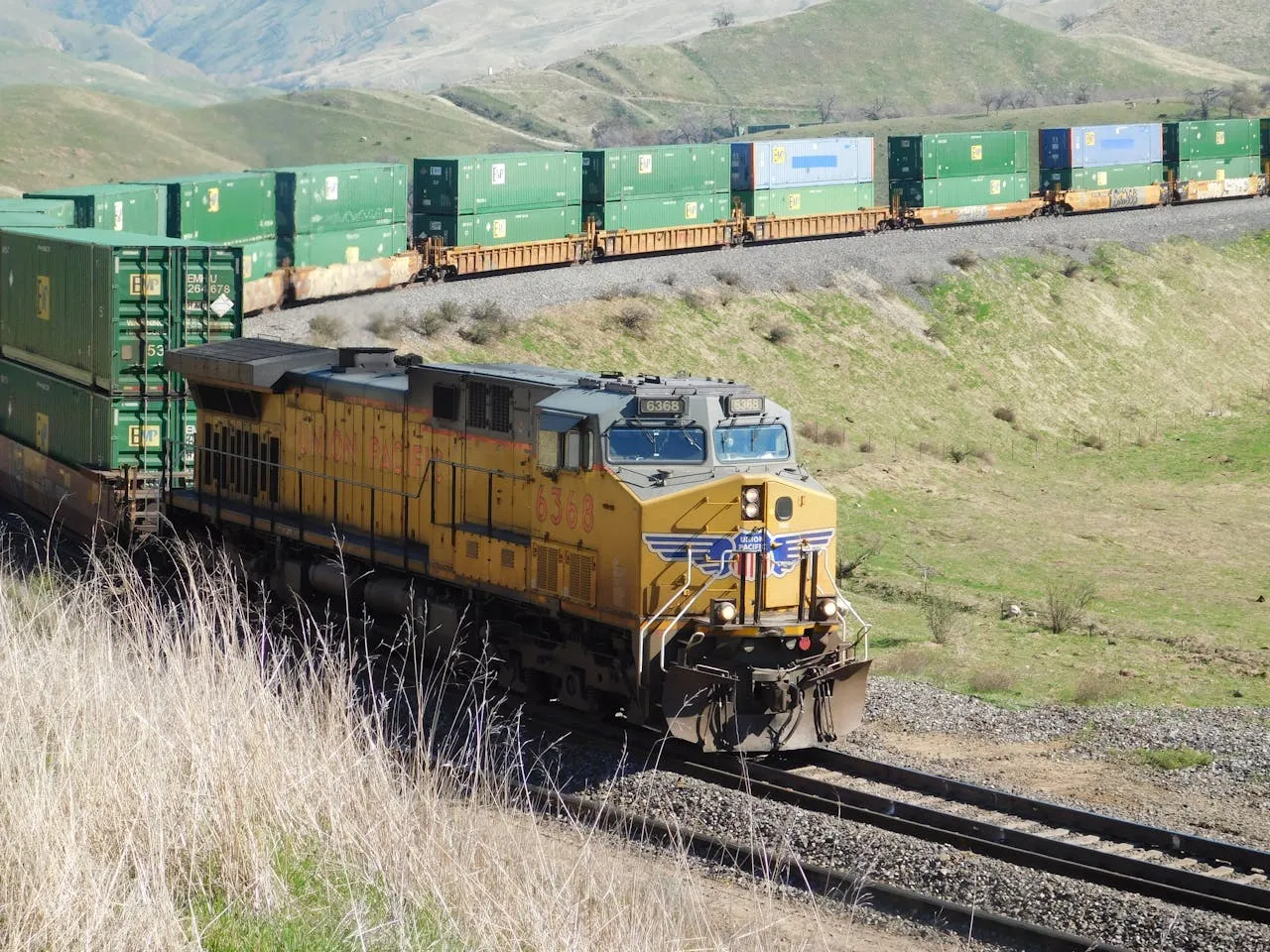
Union Pacific Corporation has announced strong financial and operational results for the first quarter of 2026, reporting higher earnings, record revenue levels, and continued efficiency gains across its rail network. The company delivered improved profitability while also advancing strategic initiatives, including its pursuit of regulatory approval for what it describes as America’s first transcontinental railroad.
The quarter demonstrated Union Pacific’s ability to combine disciplined pricing, operational excellence, and productivity enhancements to generate value despite modest declines in shipment volumes. Management highlighted progress in safety, service reliability, and cost control as major contributors to another quarter of industry-leading performance.
First Quarter 2026 Net Income and Earnings Growth
Union Pacific reported first quarter 2026 net income of $1.7 billion, representing a 5% increase compared with the same period in 2025. Diluted earnings per share came in at $2.87, up 6% year over year.
Included in the quarter’s reported results were merger-related costs totaling $36 million, which reduced diluted earnings per share by $0.06. Excluding those one-time charges, adjusted first quarter net income remained $1.7 billion, while adjusted diluted earnings per share reached $2.93.
This compares favorably with first quarter 2025 net income of $1.6 billion, or $2.70 per diluted share, underscoring Union Pacific’s continued earnings momentum despite a mixed freight demand environment.
CEO Highlights Operational Momentum
Union Pacific Chief Executive Officer Jim Vena praised the railroad’s performance and emphasized the company’s commitment to continuous improvement.
According to Vena, the company’s progress in safety, service, and operational execution reflects a culture focused on challenging assumptions and finding new ways to improve performance. He noted that the railroad increased reported net income, expanded earnings per share, and improved its operating ratio during the quarter.
Vena also pointed to the company’s long-term strategic direction, particularly the proposed merger process that could create the nation’s first coast-to-coast freight railroad network. He said Union Pacific enters the remainder of 2026 with a strong foundation for another year of leading financial and operating results.
Record First Quarter Revenue Performance
Union Pacific generated operating revenue of $6.2 billion during the first quarter, marking a 3% increase from the prior year and establishing a new record for first quarter operating revenue.
The revenue growth was primarily supported by:
- Core pricing gains across multiple business segments
- Higher fuel surcharge revenue
- Favorable business mix
- Strong commercial execution
These positives were partially offset by a 1% decline in carload volumes and lower other revenue categories.
Despite slightly lower volumes, the company’s ability to improve revenue illustrates the strength of its pricing discipline and service offering. Railroads often rely on pricing power, network reliability, and efficiency to maintain margins when freight volumes fluctuate, and Union Pacific’s first quarter results demonstrated success in those areas.
Freight Revenue Expands
Freight revenue increased 4% year over year during the quarter, another record for a first quarter period.
When excluding fuel surcharge revenue, freight revenue still grew 3%, indicating that gains were not solely driven by fuel recovery mechanisms. Instead, the performance reflected solid pricing and freight mix improvements across the company’s diverse portfolio.
Union Pacific serves multiple sectors, including:
- Agriculture
- Automotive
- Chemicals
- Energy
- Industrial products
- Intermodal
- Bulk commodities
- Consumer goods
Growth in freight revenue excluding fuel surcharge is often viewed as a clearer indicator of underlying commercial performance, making this metric especially notable.
Improved Operating Ratio
Union Pacific reported a first quarter operating ratio of 60.5%, improving by 20 basis points from the prior year.
The adjusted operating ratio, which excludes merger-related costs, was 59.9%, representing an 80 basis point improvement.
Operating ratio is one of the most closely watched performance measures in the railroad industry. It reflects operating expenses as a percentage of revenue, meaning a lower ratio indicates stronger efficiency and profitability.
Union Pacific’s improvement suggests that management’s ongoing focus on precision operations, asset utilization, and productivity continues to translate into better financial outcomes.
Best-Ever Quarter for Key Operating Metrics
In addition to strong financial results, Union Pacific delivered several operational milestones during the quarter.
The company achieved its best quarter ever in:
- Terminal dwell
- Locomotive productivity
It also posted its best first quarter results in:
- Freight car velocity
- Train length
- Workforce productivity
- Fuel consumption rate
These achievements reflect a network operating with greater speed, better asset turns, and stronger labor efficiency.
Freight Car Velocity Improves Sharply
Freight car velocity reached 235 daily miles per car, a 9% increase from first quarter 2025.
Higher velocity means railcars are moving faster through the network, allowing the company to serve customers more efficiently while reducing the number of railcars needed to move the same amount of freight.
Improved car velocity also benefits shippers by enhancing transit consistency and reducing delays.
Terminal Dwell Reaches New Best Level
Average terminal dwell declined to 19.7 hours, an 11% improvement year over year.
Terminal dwell measures how long railcars remain in terminals before moving onward. Lower dwell times indicate smoother operations, faster switching performance, and better network fluidity.
For customers, this translates into more reliable shipment movement and quicker turnaround times.
Locomotive Productivity Sets Record
Locomotive productivity rose to 144 gross ton-miles per horsepower day, a 6% increase.
This metric reflects how efficiently locomotives are being utilized to move freight. Better locomotive productivity means the railroad is generating more output from its fleet, reducing unnecessary idle time and helping control capital and maintenance costs.
The result signals strong train planning, efficient scheduling, and improved power management across the system.
Fuel Efficiency Continues to Improve
Union Pacific reported a fuel consumption rate of 1.064 gallons per thousand gross ton-miles, a 4% improvement compared with the prior year.
Fuel efficiency remains critical for railroads because fuel is one of the industry’s largest operating costs. Lower fuel consumption supports profitability while also reducing emissions intensity.
Rail transportation is already one of the most fuel-efficient modes of freight transport, and continued improvements strengthen Union Pacific’s environmental and economic position.
Workforce Productivity Advances
Workforce productivity reached 1,163 car miles per employee, improving 7% year over year.
This measure reflects how effectively Union Pacific’s workforce supports freight movement across the network. Gains in productivity typically result from better processes, scheduling discipline, technology deployment, and operational coordination.
The company’s ability to improve workforce productivity while also enhancing safety and service metrics is a notable accomplishment.
Safety Performance Strengthens
Union Pacific also reported improvement in two major safety indicators:
- Reportable personal injury rate improved
- Reportable derailment rate improved
Safety performance is a core priority for railroads due to the scale and complexity of operations involving trains, crews, yards, and hazardous materials.
Improved injury and derailment rates indicate better training, operational discipline, infrastructure maintenance, and risk management practices.
Strategic Outlook for 2026
With a strong start to the year, Union Pacific appears well positioned for continued momentum through the remainder of 2026.
The company enters the next quarters with several strengths:
- Solid pricing environment
- Efficient network operations
- Strong asset utilization
- Improving service metrics
- Healthy earnings growth
- Ongoing strategic transformation initiatives
Investors will also be watching the regulatory process tied to the proposed merger initiative that management says could create America’s first transcontinental railroad. If approved, such a combination could significantly reshape North American rail competition and network connectivity.
Industry Leadership Continues
Union Pacific’s first quarter performance reinforces its status as one of the leading freight rail operators in North America. By delivering record revenue, higher profits, and substantial operational gains, the company demonstrated resilience in a dynamic economic environment.
While some industries continue to navigate shifting demand, supply chain adjustments, and cost pressures, Union Pacific’s diversified freight portfolio and disciplined execution provide stability.
Union Pacific’s first quarter 2026 results reflect a company operating from a position of strength. Revenue reached a record level for the period, earnings increased, and multiple operating metrics achieved historic highs.
The railroad’s continued progress in efficiency, safety, service reliability, and profitability gives it momentum heading deeper into 2026. Combined with its long-term strategic ambitions, Union Pacific appears focused not only on current performance but also on reshaping the future of rail transportation in North America.
Source link: https://www.businesswire.com/