

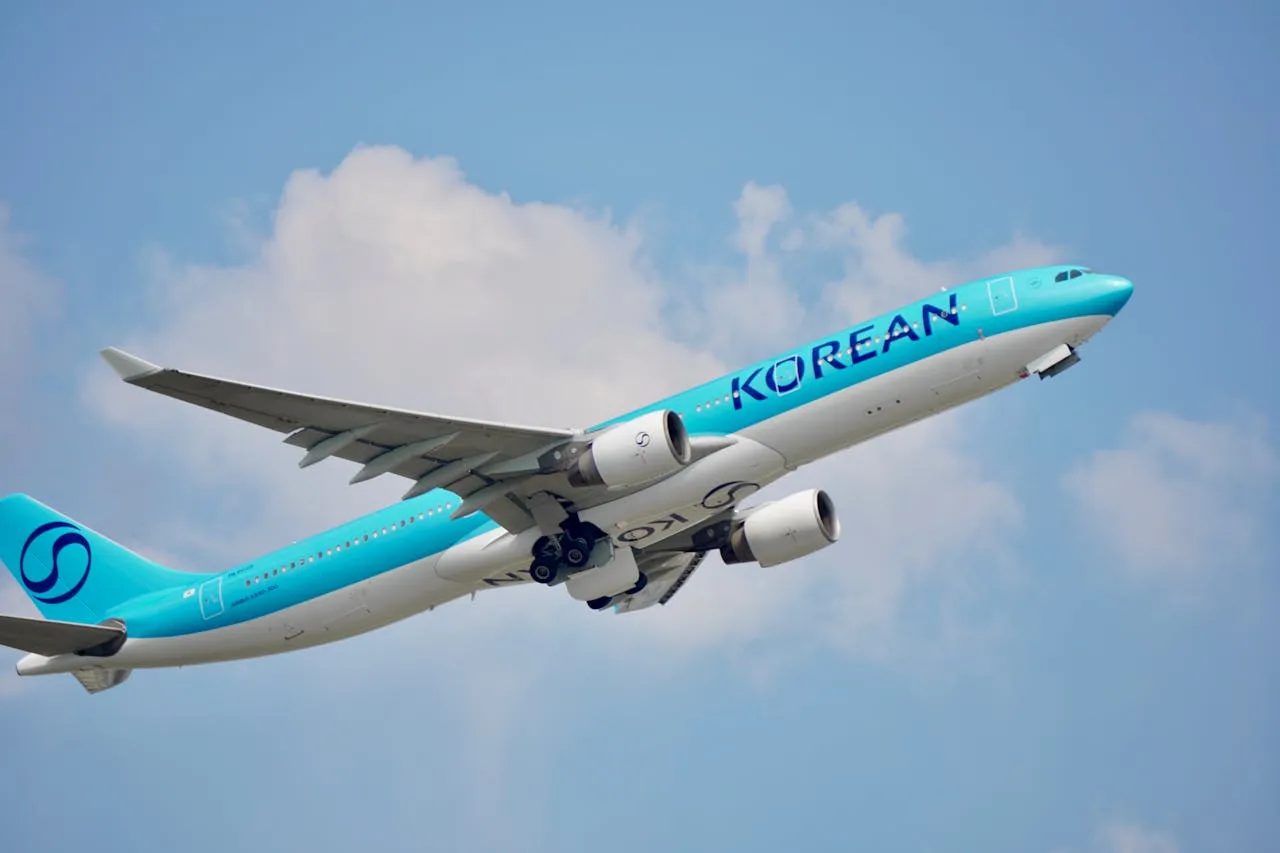
Korean Air Delivers 5,000 Airbus A320 Sharklets Milestone
Korean Air has reached a major industrial milestone with the production and delivery of its 5,000th Sharklet for the Airbus A320 family, underscoring the airline’s increasingly significant role in global aerospace manufacturing and aerostructures supply chains. The achievement highlights more than a decade of sustained production capability, engineering advancement, and international collaboration with Airbus.
The milestone was formally commemorated on April 23 at Korean Air’s Busan Tech Center in South Korea. The event brought together company leadership, employees, and representatives from partner firms involved in the Sharklet program. As part of the ceremony, attendees were given guided tours of Korean Air’s aerostructure manufacturing lines and maintenance, repair, and overhaul (MRO) facilities, showcasing the integrated industrial ecosystem that supports its aerospace operations.
In addition to celebrating the production landmark, Korean Air also recognized 15 partner companies that have contributed to the success of the Sharklet program. These suppliers and collaborators play a crucial role in ensuring consistent quality, precision manufacturing, and timely delivery across a highly complex global aerospace supply chain. Their recognition reflects the collaborative nature of modern aircraft component production, where multiple specialized firms contribute to a single aircraft system.
A Strategic Role in Global Aerospace Manufacturing
The delivery of 5,000 Sharklets represents more than just a numerical achievement; it is a reflection of Korean Air’s transformation from a traditional airline into a diversified aerospace manufacturer. While the company is widely known for its passenger and cargo airline operations, it has spent years building a strong industrial base in aircraft components, leveraging advanced engineering capabilities and long-term partnerships with global aviation leaders such as Airbus.
The Sharklet program is a key example of this evolution. Selected in 2010 through a competitive bidding process, Korean Air became one of the manufacturers responsible for producing Sharklets for the Airbus A320 family. The first delivery was completed in July 2012, marking the beginning of a long-term production commitment that has now exceeded 5,000 units.
Since then, Korean Air has steadily scaled its production capacity and refined its manufacturing systems to meet global demand. The company’s aerostructures division has become a critical supplier within Airbus’s supply chain, contributing to one of the most widely used commercial aircraft families in the world.
Understanding the Importance of Sharklets
Sharklets are L-shaped wingtip devices installed on aircraft in the Airbus A320 family. Though relatively small in size compared to the aircraft itself, they play an important role in improving aerodynamic efficiency. By reducing wingtip vortices—a major source of drag during flight—Sharklets help aircraft consume less fuel, reduce emissions, and improve overall operational efficiency.
In practical terms, these improvements translate into meaningful environmental and economic benefits. Airlines operating aircraft equipped with Sharklets can achieve lower fuel consumption per flight, which reduces operating costs and supports broader industry goals of reducing carbon emissions. As aviation faces increasing pressure to decarbonize, components like Sharklets have become essential elements in improving aircraft sustainability performance without requiring entirely new aircraft designs.
Korean Air’s contribution to this system places it directly within the global effort to enhance aviation efficiency. Each Sharklet produced in its facilities becomes part of an aircraft that may fly for decades, serving airlines and passengers around the world while supporting reduced environmental impact.
Busan Tech Center: A Manufacturing and Innovation Hub
The April 23 ceremony was held at Korean Air’s Busan Tech Center, a key site in the company’s aerospace manufacturing network. The facility is central to Korean Air’s aerostructures operations and serves as both a production hub and a center for technological development.
During the event, attendees toured manufacturing floors where advanced production techniques are used to fabricate and assemble aerostructure components. These operations require high levels of precision, strict quality control, and compliance with international aviation standards. The integration of manufacturing and MRO capabilities at the same site also allows Korean Air to maintain strong oversight of component lifecycle performance, from production through maintenance support.
The Busan facility reflects broader trends in aerospace manufacturing, where efficiency, digitalization, and automation are increasingly important. Korean Air’s investment in production systems, including advanced assembly methods, has helped the company maintain competitiveness in a global market dominated by high regulatory standards and tight production tolerances.
The Role of Automation and Production Systems
A key factor in Korean Air’s ability to reach the 5,000-unit milestone is its use of the Auto Moving Line system. This production approach enhances manufacturing efficiency by streamlining workflow, reducing bottlenecks, and improving consistency across production stages.
In aerospace manufacturing, where even minor deviations can have significant safety implications, maintaining consistent quality is essential. Systems like the Auto Moving Line help ensure that each Sharklet meets strict design and performance requirements while also supporting higher production volumes.
Over time, this system has allowed Korean Air to significantly improve output capacity while maintaining adherence to Airbus’s global quality standards. The combination of automation and skilled engineering labor has enabled the company to scale production in response to long-term demand from Airbus’s A320 program.
Leadership Perspective and Industry Significance
At the commemorative ceremony, Jong Seok Yoo, Executive Vice President and Chief Safety and Operating Officer at Korean Air, emphasized the importance of the milestone as a reflection of both engineering capability and long-term partnership.
He noted that the achievement demonstrates Korean Air’s commitment to quality and its ability to sustain collaboration with one of the world’s leading aircraft manufacturers. The statement also highlighted the company’s intent to continue strengthening its capabilities in aerospace manufacturing while maintaining high safety and production standards.
From an industry perspective, reaching 5,000 Sharklets underscores Korean Air’s established position within the global aerospace supply chain. Aircraft manufacturing is highly specialized and globally distributed, with components often sourced from multiple countries and integrated into final assembly lines in Europe and elsewhere. Korean Air’s role in this ecosystem demonstrates the increasing importance of Asian aerospace manufacturers in supporting global aviation production.
Strengthening Supply Chain Partnerships
Another important aspect of the milestone was the recognition of 15 partner companies involved in the Sharklet program. These suppliers contribute materials, precision components, engineering services, and logistical support essential to maintaining uninterrupted production.
Modern aerospace manufacturing relies heavily on such interconnected supply chains. No single company typically produces a complete aircraft independently; instead, production is distributed across a network of specialized suppliers. Korean Air’s coordination with its partners ensures that quality, timing, and regulatory requirements are consistently met.
By formally recognizing these partners during the ceremony, Korean Air highlighted the collaborative foundation of its success. It also reinforced the importance of long-term supplier relationships in maintaining stability and efficiency in aerospace production programs that span decades.
The delivery of the 5,000th Sharklet marks a significant milestone, but it also points to continued future demand. The Airbus A320 family remains one of the most widely used aircraft platforms globally, with strong production rates driven by demand for short- and medium-haul travel.
As airlines continue to prioritize fuel efficiency and sustainability, components like Sharklets will remain central to fleet modernization strategies. This positions Korean Air to continue playing an important role in the aerospace manufacturing sector for years to come.
Looking ahead, the company is expected to further develop its aerostructures capabilities, potentially expanding its participation in additional aircraft programs and strengthening its position as a key supplier in the global aviation industry.
Korean Air’s production and delivery of its 5,000th Airbus A320 Sharklet represents a defining moment in its aerospace manufacturing journey. From its selection as a supplier in 2010 to its first delivery in 2012 and now this major milestone, the company has steadily built a reputation for precision engineering, production efficiency, and global collaboration.
The achievement not only reflects internal capabilities at Korean Air’s Busan Tech Center but also highlights the broader importance of international partnerships and advanced manufacturing systems in modern aviation. As the industry continues to evolve toward greater efficiency and sustainability, Korean Air’s role in producing critical aerodynamic components positions it as an increasingly influential participant in the global aerospace ecosystem.
Source link: https://www.koreanair.com/