

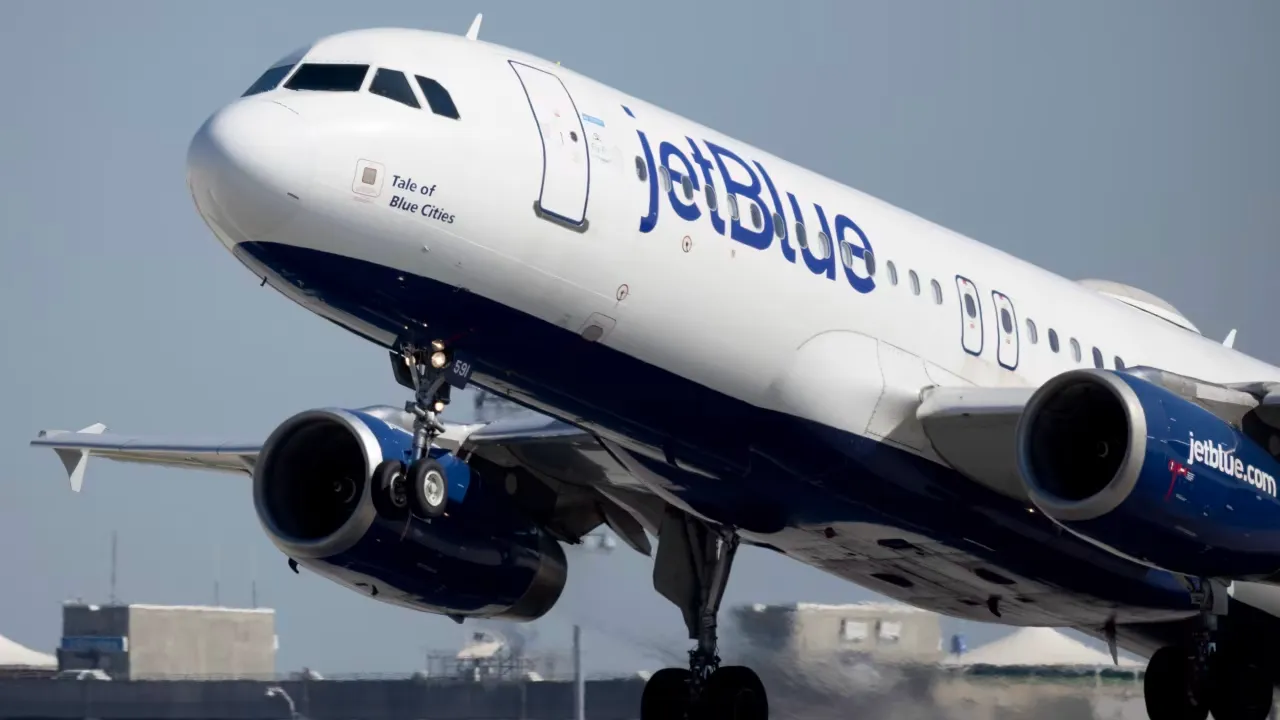
JetBlue Reports First Quarter 2026 Financial Results, Advances JetForward Strategy
JetBlue Airways Corporation has released its financial results for the first quarter of 2026, highlighting stronger-than-expected revenue performance, improving demand trends, and ongoing execution of its long-term transformation strategy known as JetForward. The airline reported that consumer demand remained resilient throughout the quarter, helping support improved yields despite a challenging operational and cost environment.
Chief Executive Officer Joanna Geraghty said the company’s performance in the first quarter exceeded internal expectations, driven primarily by steady demand and continued customer preference for JetBlue’s differentiated service offering. She noted that demand conditions improved progressively over the course of the quarter, which contributed to better revenue outcomes even as the airline industry continues to face external pressures.
“While we delivered a strong first quarter with revenue performance exceeding expectations, we saw meaningful support from resilient consumer demand and continued appreciation for JetBlue’s customer experience,” Geraghty said. She added that strengthening demand trends helped improve yields, particularly in the latter part of the quarter, even as the airline navigated a complex operational environment.
Improving Demand and Revenue Performance
JetBlue emphasized that its first-quarter results were supported by strengthening demand conditions, which became more pronounced as the quarter progressed. This demand environment helped the airline achieve improved revenue per available seat mile (RASM), a key industry metric used to measure unit revenue performance.
The company stated that customer demand remained healthy across its network, particularly in key leisure and high-demand routes. This trend supported fare strength and contributed to a better-than-anticipated revenue trajectory for the quarter. JetBlue also highlighted that its focus on customer experience continues to be a key differentiator in maintaining loyalty and attracting travelers in competitive markets.
Despite macroeconomic uncertainty and operational challenges across the airline industry, JetBlue indicated that its network positioning and brand strength allowed it to capture stable demand flows. The company believes these factors will continue to support its performance as it progresses through the remainder of 2026.
JetForward Strategy Gaining Traction
A central theme of JetBlue’s earnings update was the continued progress of its JetForward strategy, which is designed to restore sustainable profitability and improve long-term financial performance. The airline stated that early results indicate the strategy is moving in the right direction and delivering measurable improvements.
Geraghty noted that JetForward is helping the company make structural changes across revenue management, cost discipline, and network optimization. According to the airline, these efforts are becoming increasingly visible in operational performance and financial outcomes.
She emphasized that while short-term pressures remain—particularly related to fuel costs and external volatility—the airline is confident that its strategic direction is correct. “We are seeing clear evidence that JetForward is on track and working,” she said, reinforcing that the company remains focused on long-term transformation rather than short-term fluctuations.
Fort Lauderdale Continues Strong Growth
One of the standout operational highlights in the quarter was JetBlue’s continued expansion and strong performance in Fort Lauderdale (FLL), which remains a critical hub in the airline’s network strategy.
The company reported that Fort Lauderdale once again exceeded expectations during the first quarter of 2026. Revenue per available seat mile in the market increased by approximately 5% year-over-year, supported by a 23% increase in capacity. This growth demonstrates JetBlue’s ability to successfully scale operations while maintaining revenue strength in competitive markets.
JetBlue also expanded its presence in Fort Lauderdale through additional routes and increased flight frequencies, particularly in high-demand leisure and business travel corridors. These additions are part of the airline’s broader strategy to strengthen focus cities that provide both domestic and international connectivity advantages.
The company views Fort Lauderdale as a key growth engine within its network and expects continued momentum from the market as new routes mature and demand patterns stabilize.
Managing Fuel Volatility and Operational Costs
Like many airlines, JetBlue continues to face significant cost pressures, particularly related to fuel price volatility. The company acknowledged that macroeconomic conditions have become increasingly unpredictable, with fuel costs representing one of the most significant external challenges.
In response, JetBlue has implemented a series of proactive measures aimed at mitigating the impact of rising fuel expenses and improving cost efficiency across its operations. These measures include capacity adjustments, revenue optimization initiatives, and ongoing efforts to enhance operational efficiency.
The airline expects to achieve fuel recapture levels of approximately 30% to 40% in the second quarter of 2026, with full recapture anticipated by early 2027. This approach is intended to reduce exposure to fuel price fluctuations over time and improve financial predictability.
In addition to fuel-related strategies, JetBlue has reduced its second-quarter capacity by nearly one percentage point compared to earlier expectations. The company also plans to reduce second-half capacity by at least two to three percentage points relative to prior forecasts. These adjustments are primarily focused on off-peak travel periods, allowing the airline to better align supply with demand while preserving revenue quality.
JetBlue also noted that it has implemented additional cost-saving initiatives beyond capacity reductions. These include operational efficiencies and ongoing efforts to optimize resource allocation across its network.
Strengthening Liquidity and Financial Position
Another key focus for JetBlue during the first quarter was strengthening its liquidity position and maintaining financial flexibility in a volatile environment. The company reported several actions taken to reinforce its balance sheet and improve capital structure resilience.
During the quarter, JetBlue executed $500 million in committed aircraft-backed financing, with the option to increase the facility by an additional $250 million if needed. This financing provides the company with enhanced liquidity and supports its fleet and operational funding requirements.
Additionally, JetBlue repaid the remaining $325 million of its 2021 convertible notes during the second quarter, further simplifying its capital structure and reducing future financial obligations.
As of the end of the first quarter, JetBlue reported total liquidity of approximately $2.4 billion. This represents about 26% of trailing twelve-month revenue, which is above the company’s internal target range of 17% to 20%. This figure excludes an undrawn $600 million revolving credit facility, providing additional financial flexibility if required.
The airline also highlighted that it continues to maintain more than $6 billion in unencumbered assets, further strengthening its financial position and providing a substantial buffer in the event of continued market volatility.
Outlook and Strategic Priorities
Looking ahead, JetBlue remains focused on managing near-term cost pressures while executing its long-term transformation strategy. The company’s primary priorities include mitigating fuel cost impacts, optimizing capacity, strengthening revenue performance, and maintaining disciplined cost control.
Geraghty emphasized that while external challenges persist, JetBlue is taking a proactive approach to managing controllable factors. She reiterated confidence in the JetForward strategy as the foundation for restoring sustained profitability over time.
The airline’s updated actions around capacity management, fuel optimization, and liquidity strengthening reflect a broader effort to build resilience while positioning the business for improved financial performance in the coming years.
JetBlue’s first-quarter 2026 results reflect a combination of stronger-than-expected revenue performance, improving demand trends, and continued execution of its strategic transformation plan. While the company continues to operate in a challenging macroeconomic environment marked by fuel price volatility and operational pressures, it is taking decisive steps to manage costs and strengthen financial stability.
With growth in key markets such as Fort Lauderdale, ongoing capacity optimization, and a reinforced liquidity position, JetBlue is positioning itself to navigate near-term uncertainty while advancing toward its long-term financial and operational objectives. The company remains confident that its JetForward strategy will continue to drive improvements and ultimately support a return to sustained profitability.
Source link: https://www.businesswire.com/