

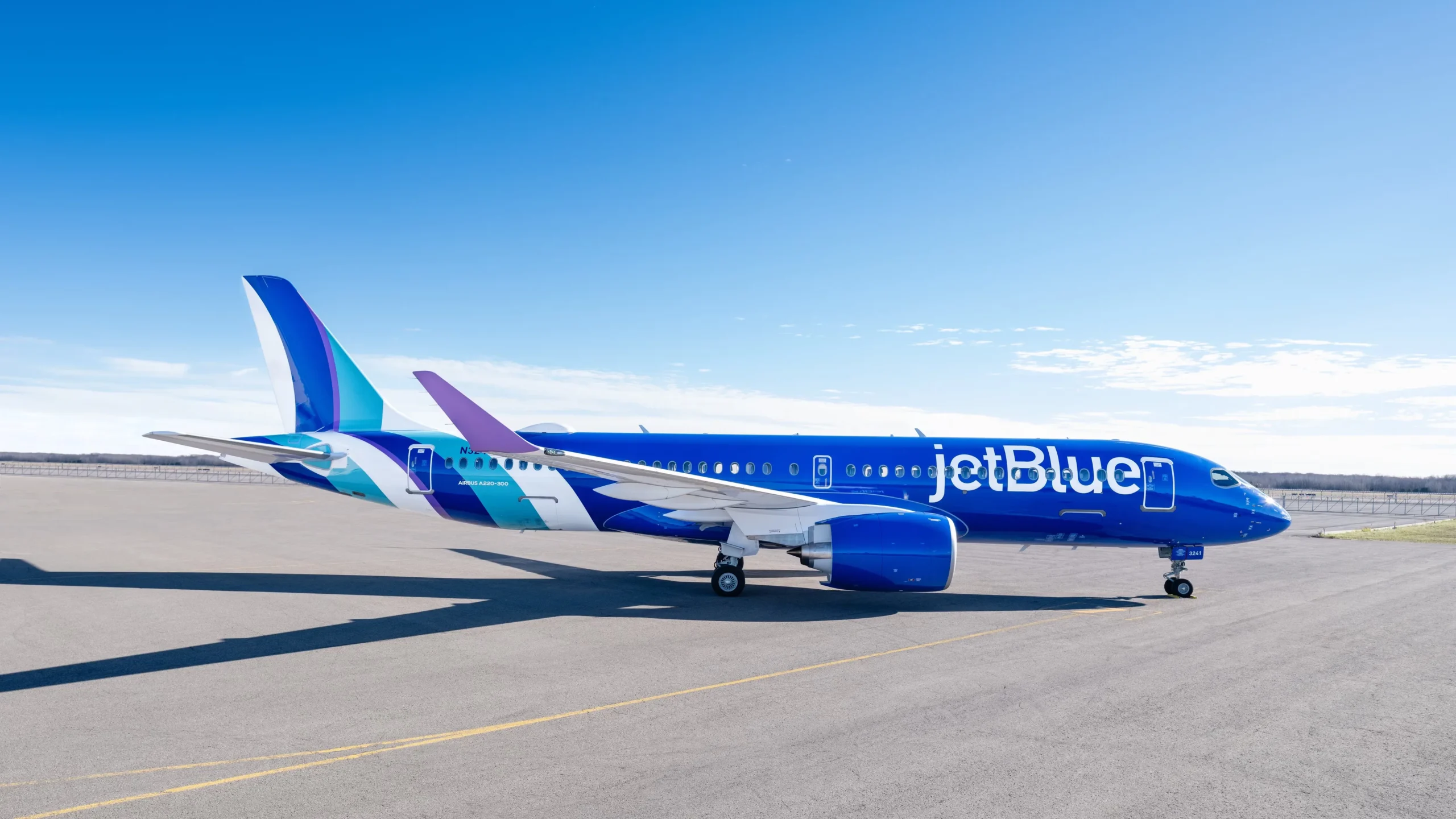
JetBlue Revives Iconic ‘Blueprint’ Livery with Airbus A220 Debut, Marking a New Era in Fleet Design
JetBlue Airways has once again turned heads in the aviation world with the launch of Blueprint II, a refreshed and modernized version of one of the airline’s most beloved aircraft liveries. The carrier officially introduced the new design as it began scheduled passenger operations featuring the special livery on one of its newest Airbus A220 aircraft. The unveiling represents more than just a fresh coat of paint—it symbolizes JetBlue’s continued commitment to creativity, customer connection, and brand storytelling as the airline enters a new chapter with its all-Airbus fleet.
The original Blueprint livery first appeared in 2017 on JetBlue’s Embraer E190 aircraft and quickly became one of the most recognizable designs in the airline’s portfolio. With its unique “see-through” concept and playful artistic elements, the livery captured the imagination of travelers, aviation enthusiasts, and JetBlue crewmembers alike. Now, after the retirement of the Embraer fleet and the airline’s broader fleet transformation, JetBlue has brought the concept back to life in a bigger, bolder, and more detailed form.
A Beloved Design Returns
When JetBlue first launched the original Blueprint design nearly a decade ago, it stood apart from traditional airline liveries. Rather than focusing solely on logos, stripes, or corporate colors, the airline introduced a design that celebrated the everyday moments and memories associated with travel.
The original aircraft featured an imaginative “x-ray” style visual concept, where the aircraft appeared almost transparent, revealing a combination of mechanical structures and playful illustrations hidden within the fuselage. These illustrations included everyday travel essentials, memorable vacation symbols, and personal touches inspired by the experiences of JetBlue customers and employees.
Passengers and aviation spotters quickly embraced the design, praising it for its originality and for reflecting the airline’s distinctive personality. Over the years, Blueprint became a fan favorite across social media and within the aviation community.
When JetBlue retired the design in 2024 as part of its transition away from Embraer aircraft, many fans wondered whether the iconic livery would ever return.
Now, JetBlue has answered that question with the introduction of Blueprint II.
Introducing Blueprint II on the Airbus A220
JetBlue’s latest version of the iconic livery makes its debut on the Airbus A220, one of the newest and most technologically advanced aircraft in the airline’s fleet.
The A220 has become a key part of JetBlue’s modernization strategy, offering improved fuel efficiency, quieter operations, and enhanced passenger comfort. By placing Blueprint II on the A220, JetBlue is combining one of its most recognizable brand elements with one of its most important aircraft platforms for the future.
The new livery builds upon the creativity of the original while introducing more intricate visuals, stronger colors, and additional hidden details.
Unlike the original design, which already offered passengers a unique visual experience, Blueprint II pushes the concept even further by incorporating dozens of subtle “Easter eggs” throughout the aircraft. These hidden elements invite travelers and aircraft enthusiasts to take a closer look and discover something new each time they see the plane.
Celebrating JetBlue’s History and Network
One of the most notable aspects of Blueprint II is how it tells JetBlue’s story through carefully selected symbols and illustrations.
The updated livery includes multiple design elements that reflect the airline’s history, network growth, and spirit of adventure.
Among the standout features is the return of the oversized teddy bear, one of the most beloved visual elements from the original aircraft. In Blueprint II, the teddy bear has been reimagined sitting comfortably in its own passenger seat, adding a playful and nostalgic touch.
Another major design element is a crown, which pays tribute to London, JetBlue’s first European destination. JetBlue’s expansion into transatlantic markets marked a significant milestone for the airline, and the inclusion of this symbol recognizes the importance of that achievement.
Inside the flight deck section of the design, JetBlue has included a sextant, a classic navigational instrument used by mariners and aviators throughout history. This element serves as a tribute to the heritage of exploration and navigation that has shaped aviation over the decades.
For travelers who associate JetBlue with vacation escapes, the livery also includes tropical-themed icons such as fins, a snorkel, a diving mask, and a pool float. These elements represent the warm-weather leisure destinations that remain a cornerstone of JetBlue’s route network.
Together, these symbols transform the aircraft into a flying canvas that tells JetBlue’s story from nose to tail.
Hidden Easter Eggs for Aviation Enthusiasts
JetBlue has also added dozens of hidden design elements throughout Blueprint II, creating a sense of discovery for passengers and plane spotters.
These Easter eggs are intentionally subtle, encouraging viewers to look closely at the aircraft and uncover unique details with every encounter.
This interactive design approach reflects JetBlue’s broader brand philosophy—making air travel more personal, engaging, and memorable.
Aviation enthusiasts, photographers, and social media followers are expected to closely examine the aircraft for these hidden details, which could become a major talking point among the airline’s fan community.
By adding these surprises, JetBlue turns the aircraft into more than just transportation—it becomes an experience in itself.
Leadership Perspective
JetBlue leadership sees aircraft liveries as more than branding tools. According to airline executives, special liveries help communicate the personality and humanity that define the JetBlue customer experience.
Marty St. George, President of JetBlue, emphasized the significance of the new design, noting that the airline’s liveries are an important extension of its brand identity.
He explained that Blueprint II honors a design that customers and crewmembers have admired for years while also celebrating the journeys, memories, and discoveries that continue to shape the JetBlue experience today.
This philosophy has been central to JetBlue’s identity since its founding. Unlike many carriers that focus exclusively on operational branding, JetBlue has consistently used aircraft design to create emotional connections with customers.
Completing the Transition to an All-Airbus Fleet
The launch of Blueprint II also coincides with a major operational milestone for JetBlue.
On September 9, 2025, JetBlue officially retired its Embraer E190 fleet, completing its transition to an all-Airbus operation.
This fleet modernization strategy represents a major shift in JetBlue’s operational model. By standardizing around Airbus aircraft—including the A220 and A320 family—JetBlue aims to improve efficiency, simplify maintenance, reduce training complexity, and support long-term growth.
The Airbus A220, in particular, has become a cornerstone of this strategy.
With advanced aerodynamics, improved fuel consumption, lower emissions, and a quieter passenger experience, the A220 supports JetBlue’s goals for sustainability and operational excellence.
By introducing Blueprint II on the A220, JetBlue symbolically connects its past with its future.
The Role of Special Liveries in JetBlue’s Brand Strategy
JetBlue has long been recognized for its creative approach to aircraft liveries.
Over the years, the airline has introduced multiple special designs celebrating sports teams, cultural themes, destinations, and partnerships. These liveries have helped distinguish JetBlue in a highly competitive airline market.
Special liveries serve several strategic purposes:
Building Brand Recognition
A uniquely painted aircraft naturally attracts attention at airports, on social media, and within the aviation community. This visibility helps reinforce JetBlue’s brand presence.
Creating Emotional Connections
By incorporating playful designs and storytelling elements, JetBlue creates a stronger emotional connection with passengers.
Encouraging Social Engagement
Special aircraft often generate significant online engagement, with passengers and aviation photographers sharing images across digital platforms.
Reinforcing Company Culture
Creative liveries also boost internal pride among JetBlue crewmembers, strengthening the airline’s culture and identity.
As Blueprint II enters scheduled service, JetBlue is once again demonstrating that aircraft design can be both functional and emotionally meaningful.
In an industry often focused on schedules, efficiency, and competition, JetBlue continues to differentiate itself by bringing creativity and storytelling into the passenger experience.
The arrival of Blueprint II on the Airbus A220 not only revives one of the airline’s most beloved liveries but also signals a new era for JetBlue as it moves forward with its modernized fleet.
For customers boarding the aircraft, aviation enthusiasts spotting it on the runway, or crewmembers proudly operating it, Blueprint II serves as a reminder that travel is about more than reaching a destination—it is about the stories, memories, and discoveries made along the way.
With this latest launch, JetBlue proves that even in a rapidly evolving aviation landscape, innovation and imagination still have a place at 35,000 feet.
Source link: https://news.jetblue.com/