

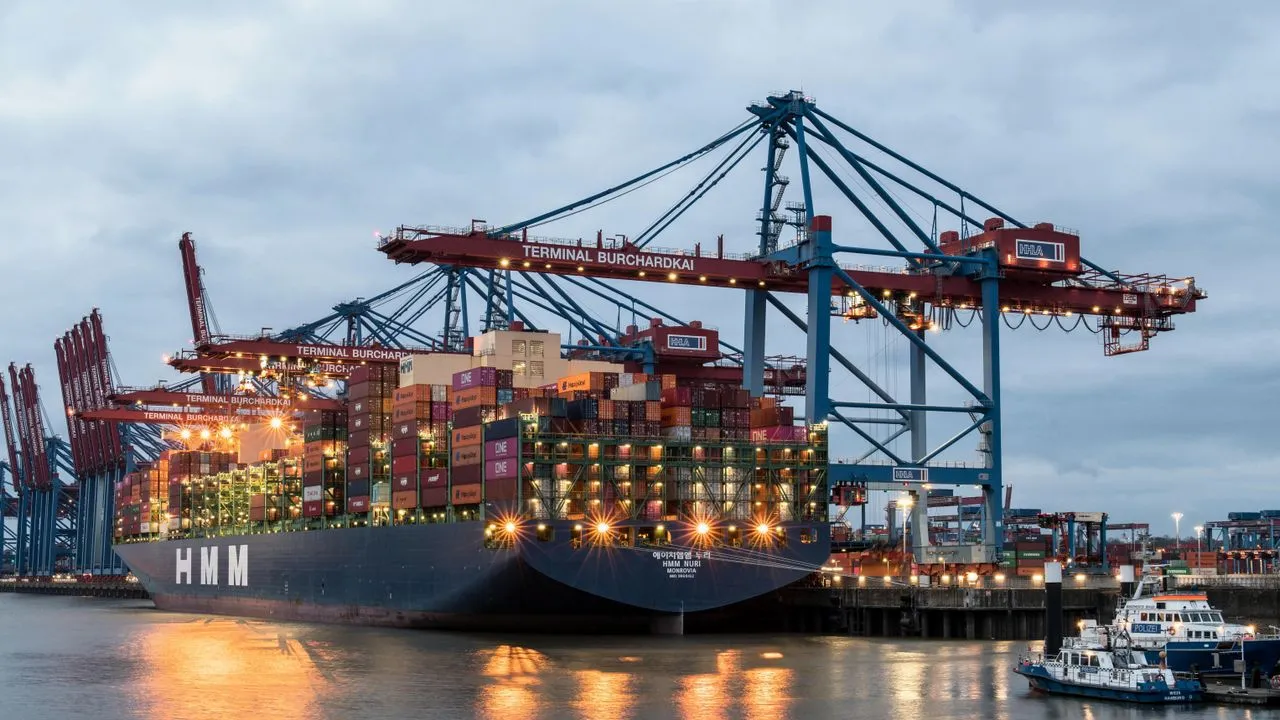
HMM Invests in Washington United Terminals Modernization with Four New Port Cranes
HMM has announced a major investment in its U.S. port infrastructure as part of its ongoing strategy to strengthen global supply chains and expand its container terminal capabilities. The company revealed that its U.S. subsidiary, Washington United Terminals Inc. (WUT), has signed a contract with HD Hyundai Samho for the supply of four new port cranes, marking a significant modernization project that will enhance cargo handling efficiency and increase terminal capacity at the Port of Tacoma in Washington State.
The agreement represents another important milestone in HMM’s long-term commitment to developing modern port infrastructure capable of supporting larger container vessels and growing international trade volumes. Once completed, the project will substantially increase the operational capacity of Washington United Terminals, enabling the facility to handle significantly more cargo while improving service quality for shipping customers operating across the U.S. West Coast.
The modernization initiative also reinforces HMM’s broader investment strategy, which includes expanding terminal infrastructure in key international markets to support its growing fleet, strengthen logistics connectivity, and build a more resilient global transportation network.
Strengthening a Strategic U.S. Gateway
Washington United Terminals is one of HMM’s most important overseas terminal assets and serves as a strategic gateway for containerized cargo moving between Asia and North America.
Located within the Port of Tacoma in Washington State, the terminal began operations in 1999 and has played a central role in supporting HMM’s trans-Pacific shipping services for more than two decades.
The facility occupies approximately 510,000 square meters, or about 126 acres, providing ample space for container storage, cargo handling operations, and equipment movement.
Its extensive 793-meter berth allows multiple vessels to be accommodated efficiently while supporting the handling of large container ships serving international trade routes.
As cargo volumes continue to grow across the Pacific, the Port of Tacoma remains one of the most important gateways for U.S. imports and exports, making WUT a critical component of HMM’s North American logistics network.
Integrated Rail Connectivity Enhances Inland Distribution
Beyond its marine operations, Washington United Terminals offers significant inland transportation capabilities through its on-dock rail infrastructure.
The terminal features an integrated rail system capable of accommodating up to 26 rail cars simultaneously, allowing containers to move efficiently between ocean vessels and inland rail services without requiring additional truck transfers.
This direct rail connectivity plays a vital role in supporting supply chain efficiency by reducing cargo transfer times and improving access to inland markets throughout the United States.
The combination of deep-water port facilities and rail integration enables HMM to provide customers with seamless multimodal transportation solutions that connect international shipping routes with domestic distribution networks.
As demand for efficient intermodal logistics continues to increase, these capabilities become increasingly valuable for manufacturers, retailers, agricultural exporters, and logistics providers moving freight across North America.
Comprehensive Equipment Modernization
At the heart of the modernization project is the installation of four new cranes supplied by HD Hyundai Samho.
Washington United Terminals currently operates eight quay cranes responsible for loading and unloading container ships alongside six yard cranes used to move containers throughout the storage yard.
Under the modernization program, two aging quay cranes will be replaced with advanced new units designed to support the latest generation of larger container vessels.
In addition, two new yard cranes will be added to improve container stacking operations, optimize yard management, and accelerate cargo movements across the terminal.
The equipment upgrade is expected to significantly improve operational efficiency while providing greater flexibility to manage increasing cargo volumes and larger vessel calls.
Modern crane technology offers higher lifting capacities, faster operating speeds, improved automation capabilities, enhanced energy efficiency, and greater operational reliability compared with older equipment.
These improvements help terminals reduce vessel turnaround times while increasing productivity across both ship-to-shore and yard operations.
Preparing for Larger Container Ships
One of the primary objectives of the crane investment is to prepare Washington United Terminals for the continued growth in vessel size across the global container shipping industry.
Shipping companies increasingly deploy ultra-large container vessels to improve economies of scale and reduce transportation costs.
These larger ships require terminals equipped with taller, wider, and more capable cranes capable of reaching across broader vessel beams while lifting heavier containers efficiently.
By replacing older quay cranes with modern equipment, WUT will be better positioned to accommodate these next-generation container ships, ensuring the terminal remains competitive within the rapidly evolving maritime industry.
The investment also supports HMM’s own fleet development strategy as the company continues introducing larger and more technologically advanced vessels into its global shipping network.
Significant Increase in Cargo Capacity
Perhaps the most notable benefit of the modernization project is the substantial increase in annual cargo-handling capacity.
Currently, Washington United Terminals can process approximately 590,000 twenty-foot equivalent units (TEUs) each year.
Following completion of the equipment upgrades, annual handling capacity is expected to increase to approximately 880,000 TEUs.
This represents an increase of nearly 50 percent, allowing the terminal to accommodate significantly higher cargo volumes while maintaining efficient vessel operations.
The expanded capacity will help HMM meet growing customer demand, support increasing trade flows between Asia and North America, and improve service reliability across its shipping network.
Higher terminal capacity also reduces congestion risks during peak shipping periods, contributing to smoother cargo flows throughout regional supply chains.
Turnkey Delivery by HD Hyundai Samho
The contract awarded to HD Hyundai Samho covers the complete delivery of the new equipment through a turnkey project model.
Rather than supplying only the cranes themselves, HD Hyundai Samho will oversee every stage of the project from initial engineering through final commissioning.
Its responsibilities include equipment design, manufacturing, transportation, installation, testing, and operational commissioning.
This comprehensive approach helps streamline project execution while ensuring consistent quality standards throughout implementation.
Working under a turnkey arrangement also simplifies project management for HMM by providing a single contractor responsible for delivering fully operational equipment.
According to the agreement, all four cranes are expected to be delivered and fully operational by 2028.
Once commissioned, the upgraded equipment will immediately begin supporting expanded cargo handling operations at the terminal.
Supporting Global Supply Chain Resilience
The investment in Washington United Terminals reflects HMM’s broader strategy of strengthening supply chain resilience through infrastructure development.
In recent years, global shipping has experienced significant disruptions caused by congestion, equipment shortages, labor challenges, geopolitical developments, and changing trade patterns.
These events have highlighted the importance of modern, efficient port facilities capable of handling cargo reliably even during periods of increased demand.
By expanding terminal capacity and investing in advanced cargo handling equipment, HMM aims to improve operational flexibility while creating a stronger logistics network for customers worldwide.
Modern terminals equipped with efficient infrastructure help minimize delays, accelerate cargo processing, and improve schedule reliability across international shipping routes.
Expanding Port Investments Worldwide
The modernization of Washington United Terminals forms part of a larger global infrastructure investment program currently being pursued by HMM.
The company continues investing in strategic port developments across multiple regions to support future trade growth and strengthen its international logistics footprint.
Last year, HMM signed a Memorandum of Understanding (MOU) with the Jawaharlal Nehru Port Authority (JNPA) regarding port development opportunities at Vadhvan in India.
The Vadhvan project represents one of India’s most significant future port developments and aligns with HMM’s objective of expanding its presence in one of the world’s fastest-growing maritime markets.
In Europe, HMM is also investing in the expansion of its Total Terminal International Algeciras (TTIA) facility in Spain.
Located near the Strait of Gibraltar, the Algeciras terminal serves as an important transshipment hub connecting Europe, Africa, the Mediterranean, and global shipping routes.
By simultaneously investing in terminal infrastructure across North America, Europe, and Asia, HMM is creating a more diversified and resilient international logistics network.
Supporting Customers Through Infrastructure Growth
According to an HMM official, the modernization of Washington United Terminals is ultimately intended to deliver greater value for customers by improving operational efficiency and strengthening logistics services.
The upgraded equipment will enable faster cargo handling, increased vessel productivity, and improved terminal performance, benefiting importers, exporters, freight forwarders, and shipping partners using HMM’s services.
The company emphasized that investments in port infrastructure complement its ongoing fleet expansion strategy.
As HMM continues introducing new vessels and expanding shipping services, modern terminals play a crucial role in ensuring that cargo can move efficiently throughout the global supply chain.
By aligning vessel capacity with advanced terminal infrastructure, the company aims to create a fully integrated transportation network capable of supporting long-term trade growth.
Building the Ports of the Future
The latest investment demonstrates HMM’s continued focus on preparing its global logistics network for future shipping demands.
As international trade volumes increase and container vessels continue to grow in size, ports must evolve to accommodate higher throughput while maintaining operational efficiency.
The modernization of Washington United Terminals represents more than simply replacing aging equipment. It reflects a broader commitment to building smarter, more capable, and more resilient port operations that support customers across global supply chains.
With new quay cranes, expanded yard capacity, enhanced intermodal connectivity, and significantly higher cargo throughput, WUT will be positioned to play an even greater role in HMM’s international shipping network over the coming decades.
Together with investments in India, Spain, and other strategic locations, the project underscores HMM’s long-term vision of strengthening global logistics infrastructure, improving supply chain resilience, and delivering reliable transportation solutions for customers in an increasingly interconnected world.
Source link: https://www.hmm21.com/