

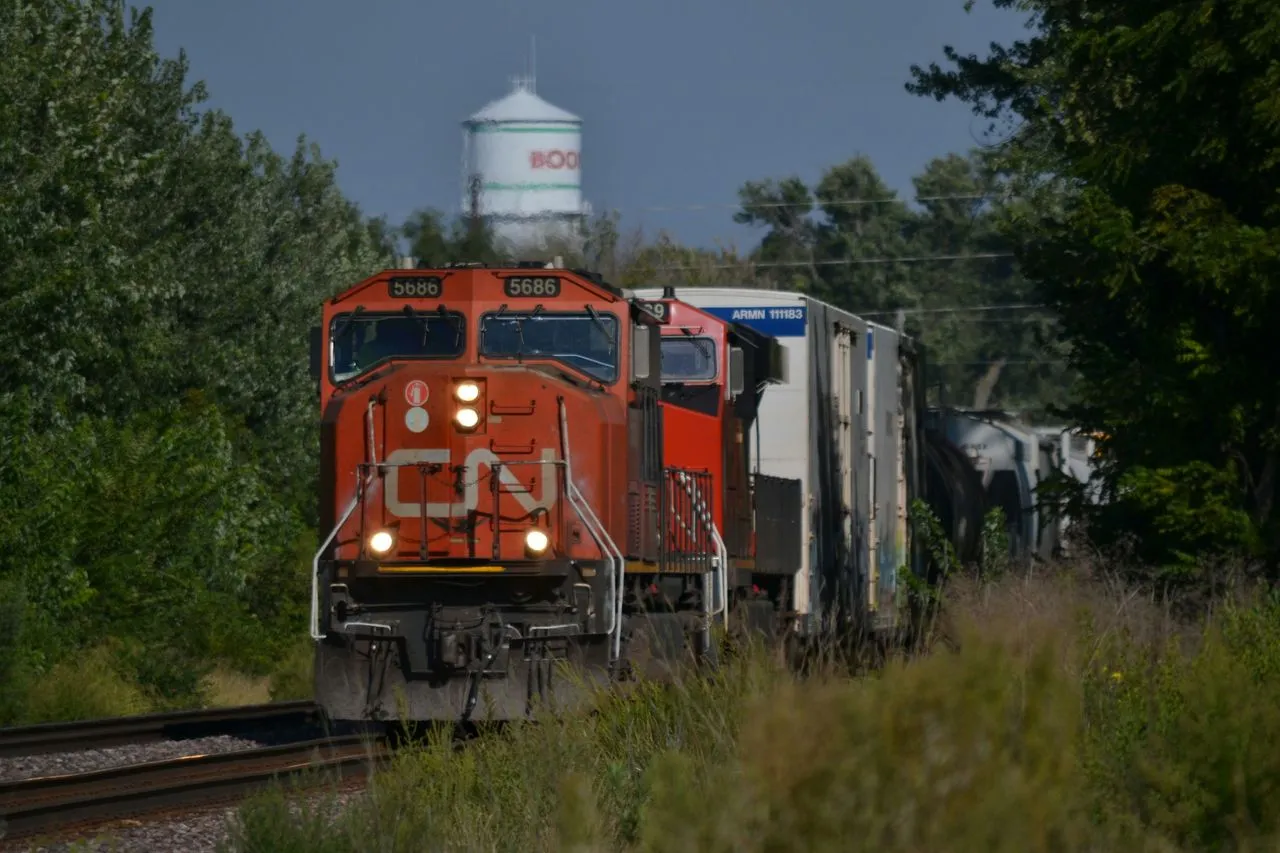
CN Details Proposed Conditions to Preserve Rail Competition Across the Midwest
Canadian National Railway Company (CN) has filed a description of the conditions it anticipates seeking from the Surface Transportation Board (STB) as part of the regulatory review of the proposed Union Pacific (UP) and Norfolk Southern (NS) transaction. The filing outlines CN’s position on measures that could help maintain competitive rail service and provide shippers with additional transportation choices in several important Midwest markets.
CN, which trades under the symbols TSX: CNR and NYSE: CNI, submitted the filing to the STB after establishing a framework with Union Pacific earlier this year. The company said the proposed conditions are intended to address potential competitive effects associated with the UP-NS transaction while creating opportunities for CN to expand its network reach and serve additional customers.
The filing builds on a binding Memorandum of Understanding announced by CN and UP in July. That agreement established a framework under which CN could obtain access to new locations and customers as part of a potential remedy for competitive concerns arising from the proposed transaction.
According to CN, the anticipated conditions are focused on preserving meaningful rail competition, maintaining customer choice and expanding access to CN’s network in strategic Midwest markets.
CN Focuses on Competition and Customer Choice
CN says the proposed conditions are based on the importance of maintaining competition within the freight rail industry. The company argues that competition encourages railroads to improve service, provide customers with more routing alternatives and continue investing in infrastructure and operations.
The railroad believes that giving shippers access to multiple Class I railroads can provide important commercial benefits. Customers can have greater flexibility when selecting transportation providers, negotiating service arrangements and determining how freight moves between origins and destinations.
CN’s proposed measures would therefore target locations where the proposed UP-NS combination could reduce the number of Class I railroads available to customers.
The company intends to strengthen its position in the Midwest by connecting its existing network to important markets in St. Louis and Kansas City. At the same time, CN proposes preserving competitive rail choices for customers in Des Moines, Iowa, and central and southern Illinois.
These markets are particularly important to CN’s filing because some customers could experience a significant reduction in the number of Class I railroads serving their facilities if the proposed transaction is completed without additional competitive conditions.
Protecting 2-to-1 Shippers
One of the central elements of CN’s anticipated conditions involves customers that could become 2-to-1 shippers as a result of the proposed UP-NS transaction.
A 2-to-1 situation refers to customers that currently have access to two Class I railroad options but could be left with only one following a transaction. CN believes that maintaining access to an additional railroad in these markets is important for preserving competitive pressure and customer flexibility.
CN has identified a number of locations in central and southern Illinois where it proposes to preserve competitive options. These include Hillsboro, Carlinville, Bloomington, Mt. Vernon, Granite City, Momence, Federal, Alton and Danville.
Des Moines, Iowa, is also included among the markets where CN proposes to preserve competitive options for customers that could otherwise see their Class I choices fall from two railroads to one.
For shippers, maintaining a second Class I option can have implications beyond simply having an alternative transportation provider. Competition can influence service quality, routing flexibility, commercial negotiations and the ability of customers to respond to changing transportation requirements.
CN believes its existing Midwest network gives it a strong foundation for providing this additional competition.
Maintaining 3-to-2 Competition
CN’s proposed conditions also address customers that could move from three Class I railroad options to two following the proposed UP-NS transaction.
The company specifically identifies Des Moines and Avon, Iowa, as locations where it believes competitive options should be preserved.
Although a reduction from three railroads to two does not eliminate competition entirely, CN argues that preserving a broader range of providers can still be important to customers. Additional competition can give shippers greater flexibility and help prevent markets from becoming increasingly concentrated.
By seeking access and operating rights in these markets, CN aims to provide customers with another competitive alternative while expanding the geographic reach of its own Midwest network.
Expanding CN Access to Kansas City
Another major component of CN’s anticipated conditions is expanded access to Kansas City.
Kansas City is a major transportation and logistics hub in the central United States, connecting freight flows across multiple regions. CN’s proposed conditions would provide the railroad with new access to the market, including rights between Kansas City and St. Louis.
CN also proposes leasing UP’s Neff Yard in Kansas City.
The company says these measures would help address the loss of a Class I carrier in areas where the UP and NS networks overlap. By gaining access to Kansas City and strengthening its connection with St. Louis, CN would be better positioned to provide competitive rail services across an important Midwest freight corridor.
Access to infrastructure such as a major rail yard could also support CN’s ability to organize, interchange and manage freight more efficiently in the region.
For customers, expanded CN access could translate into additional routing alternatives and a greater choice of rail service providers.
Improving Access to St. Louis
The proposed conditions also include measures aimed at improving CN’s access to East St. Louis, Illinois, and St. Louis, Missouri.
CN is seeking overhead trackage rights between Tuscola, Illinois, and East St. Louis, Illinois. Trackage rights can allow one railroad to operate over another railroad’s infrastructure under specified conditions, providing access to markets that may not otherwise be directly connected to its network.
For CN, the proposed rights would strengthen its ability to connect its existing network with important freight markets around the St. Louis region.
St. Louis is strategically positioned within the Midwest transportation network, making connectivity in the area significant for freight movements involving Illinois, Missouri and surrounding states.
CN believes improved access to East St. Louis and St. Louis would complement its broader strategy of expanding competitive rail service throughout the region.
CN Highlights Its Midwest Network
CN says it is particularly well positioned to act as a remedy carrier because of its established Midwest network, operating capabilities and ability to provide rail service at scale.
The company already operates an extensive rail network and maintains a presence in several major freight markets. CN argues that its existing infrastructure and operating experience would allow it to implement the proposed conditions effectively if they receive regulatory approval.
Rather than creating an entirely new rail operation, CN would be able to build on its existing network and connect additional locations to its broader system.
The company also emphasized its operating performance as a factor supporting its role in addressing competitive concerns.
CN’s proposed expansion would require investment to support additional services, infrastructure requirements and customer opportunities. The company said it is committed to making those investments as part of its effort to preserve competition and give shippers more transportation choices.
Potential Benefits for Midwest Shippers
The proposed conditions could have implications for a wide range of freight customers throughout the Midwest.
Rail shippers often depend on reliable transportation networks to move commodities, industrial products, agricultural goods, manufactured materials and other freight. Access to more than one Class I railroad can provide customers with greater flexibility when managing their supply chains.
CN believes its proposed conditions would help maintain that flexibility in markets where the UP-NS transaction could otherwise reduce the number of available Class I railroad options.
Additional competition could also encourage railroads to compete on service, reliability, pricing and routing. For customers operating in competitive freight markets, these factors can influence overall supply chain costs and operational efficiency.
CN’s proposed access to Kansas City and St. Louis could further expand the number of markets connected to its network, potentially giving customers additional options for moving freight across the Midwest.
Regulatory Review Remains Critical
While CN has described the conditions it anticipates seeking, the measures are not yet final. The proposed conditions remain subject to review and approval by the Surface Transportation Board.
The STB plays a central role in reviewing major railroad transactions and determining whether proposed combinations satisfy applicable regulatory requirements, including considerations related to competition and the broader public interest.
CN’s filing therefore represents part of the larger regulatory process surrounding the proposed UP-NS transaction.
The railroad has made clear that its anticipated conditions are intended to address potential competitive harms associated with the transaction. However, the final terms of any remedies will depend on the regulatory process and decisions made by the STB.
CN also noted that the proposed conditions are subject to the closing of the UP-NS transaction.
Formal Requests Expected in November
The next important stage in the process will be the submission of formal requests for conditions.
According to CN, formal requests are due on November 18. The anticipated conditions described in the current filing provide an indication of the measures CN expects to pursue as the regulatory review progresses.
The November deadline will therefore represent an important milestone for CN, UP, NS and other stakeholders involved in the transaction.
Customers, competing railroads and other industry participants will have an interest in how the proposed conditions develop because the final remedies could influence competitive access and freight transportation options across several Midwest markets.
CN Seeks a Larger Midwest Role
The proposed conditions represent more than a request to preserve existing competition. They would also give CN an opportunity to expand its role in important Midwest freight markets.
By seeking access to Kansas City, improving connectivity around St. Louis and maintaining competitive options for customers in Illinois and Iowa, CN would strengthen the geographic reach of its Midwest operations.
The company sees the proposed conditions as a way to combine regulatory remedies with long-term network growth. New customer access and additional operating opportunities could allow CN to develop stronger relationships with shippers while creating additional traffic for its network.
At the same time, CN maintains that its proposals are designed around the needs of customers that could otherwise face reduced competitive choices following the UP-NS transaction.
The proposed UP-NS transaction remains subject to the STB’s regulatory process, and CN’s anticipated conditions will need to undergo further review before any remedies are implemented.
CN’s filing establishes the company’s current position and highlights several areas where it believes competitive protections are necessary. These include 2-to-1 markets in central and southern Illinois and Des Moines, 3-to-2 markets in Des Moines and Avon, expanded access to Kansas City, leasing of the Neff Yard and improved access to East St. Louis and St. Louis through proposed trackage rights.
For CN, the objective is to preserve meaningful competition while expanding its ability to serve customers throughout the Midwest.
The company believes its existing network, operating capabilities and commitment to investment make it a strong candidate to provide the additional competitive service contemplated by the proposed conditions.
As the regulatory review moves forward, the STB will consider the competitive implications of the UP-NS transaction and the potential remedies proposed by CN and other stakeholders. The formal November 18 deadline for conditions will provide another significant step in that process.
If approved and ultimately implemented, CN’s proposed measures could reshape competitive rail access in several Midwest markets while giving shippers additional choices for moving freight. For customers in Illinois and Iowa, as well as businesses connected to the Kansas City and St. Louis transportation hubs, the outcome could have a meaningful impact on future rail service options.
CN has made clear that it intends to use the opportunity to expand its Midwest presence while helping preserve competitive choices for shippers. The final outcome, however, will depend on the STB’s review and the conditions ultimately approved in connection with the proposed Union Pacific and Norfolk Southern transaction.
Source link: https://www.cn.ca/