


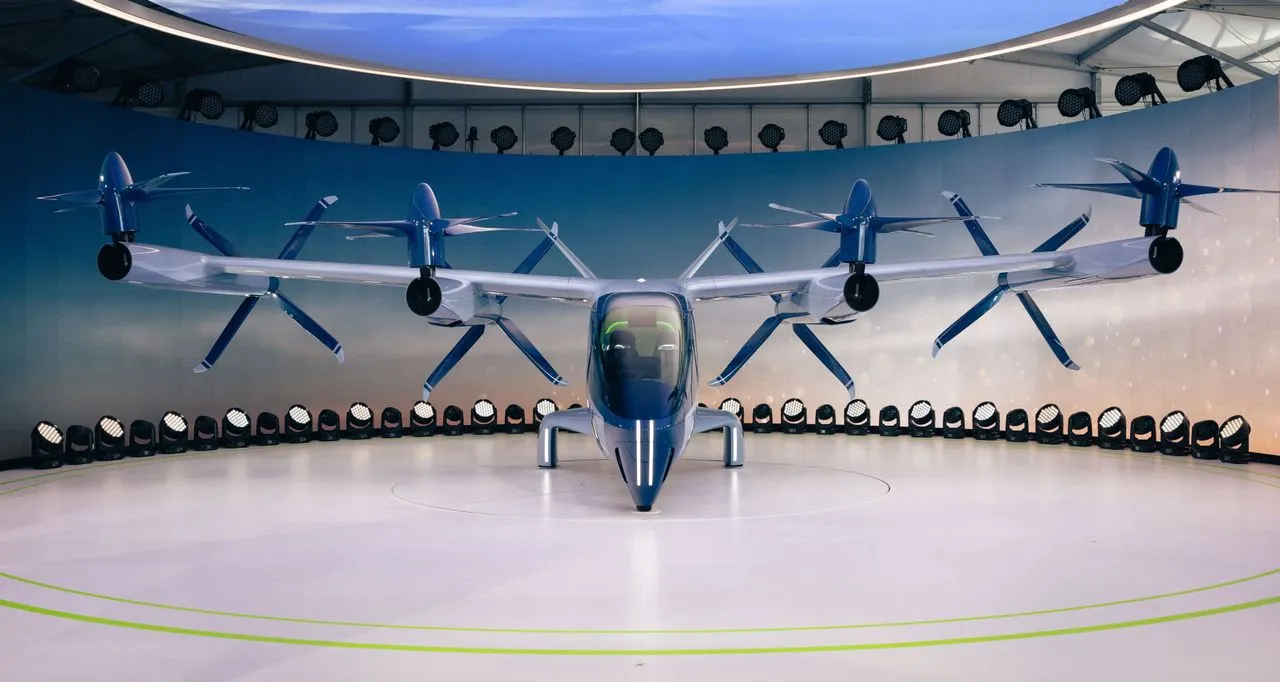
Archer Aviation has completed several days of piloted flights across the San Francisco Bay Area with its all-electric Midnight air taxi, marking a significant milestone in the company’s efforts to demonstrate the potential of electric vertical takeoff and landing (eVTOL) aircraft for urban transportation. The flights, which included multiple journeys over San Francisco Bay with takeoffs and landings at Oakland International Airport, formed part of Archer’s ongoing “No Roads” flight tour across California.
The Bay Area flights concluded the Northern California portion of the tour, during which Archer demonstrated Midnight’s ability to travel between multiple cities and operate in increasingly complex airspace. The aircraft’s journey included stops in Hollister, San Martin, San Jose, Mountain View, Hayward and Oakland, following an earlier departure from Salinas.
Through the tour, Archer aims to showcase how electric air taxis could provide a faster alternative to conventional ground transportation, particularly in metropolitan regions where congested highways and lengthy commutes remain major challenges. The company is also using the flights to demonstrate its progress toward integrating electric aircraft into existing aviation infrastructure and commercial air traffic systems.
Archer’s Midnight aircraft completed multiple piloted flights around San Francisco Bay after arriving at Oakland International Airport. The flights represented the latest stage of a multi-city demonstration designed to highlight the aircraft’s operational capabilities in a region characterized by busy airports, dense urban development and complex air traffic patterns.
The Northern California journey began in Salinas before progressing through several surrounding communities. Midnight made stops in Hollister, San Martin, San Jose, Mountain View and Hayward before reaching Oakland, where it conducted additional flights over the bay.
According to Archer, the aircraft flew into seven cities over a three-day period during the broader multi-city journey and covered more than 200 miles across the region. Midnight also reached a reported top speed of 131 miles per hour, demonstrating its ability to connect locations across Northern California within relatively short flight times.
One of the notable demonstrations involved a flight from Oakland International Airport to San Francisco’s Marina District. The journey took approximately 10 minutes, compared with a road trip that can routinely exceed an hour when traffic conditions are unfavorable.
The demonstration illustrates the potential advantage of using electric aircraft to connect communities separated by congested roads, bridges and other transportation bottlenecks. Although such services would depend on future operating approvals, infrastructure, route availability and passenger demand, Archer believes the technology could offer an additional option for urban and regional mobility.
A central objective of the Northern California leg of Archer’s “No Roads” tour was to demonstrate Midnight’s ability to operate in the complex airspace surrounding three major international airports: San Francisco International Airport, Oakland International Airport and San Jose Mineta International Airport.
The Bay Area is one of the country’s important aviation corridors, with commercial passenger services, cargo operations, general aviation and other aircraft sharing a busy airspace environment. Introducing a new category of electric aircraft into such an environment requires careful coordination with aviation authorities, airport operators and other relevant stakeholders.
Archer said the demonstration flights built on coordination with the Federal Aviation Administration (FAA), along with state and local partners. This collaboration was important to conducting the flights across multiple cities and operating in proximity to established aviation infrastructure.
The flights provided an opportunity to demonstrate how Midnight could navigate the region while operating within the applicable arrangements for the test flights. They also allowed Archer to continue evaluating the practical requirements associated with integrating eVTOL aircraft into existing aviation environments.
For the emerging electric air taxi sector, the ability to operate safely alongside conventional commercial aviation will be an important consideration as companies work toward future passenger services. Beyond aircraft performance, successful deployment will require appropriate airspace procedures, pilot training, operational oversight, infrastructure and coordination with relevant authorities.
Archer’s Northern California flights are part of its broader effort to demonstrate that electric air taxis can be developed for practical use in major metropolitan areas rather than being limited to isolated testing environments.
Archer is developing Midnight around the urban air mobility market, where the aircraft is intended to provide short-distance transportation between selected locations within and around large cities.
Many metropolitan areas face persistent road congestion, particularly on routes connecting business districts, airports, residential communities and regional employment centers. In the San Francisco Bay Area, bridges and major highways are essential transportation links, but heavy traffic can significantly increase journey times.
Archer believes electric air taxis could help address some of these challenges by moving passengers above congested road networks. The company is targeting journeys that may take 60 to 90 minutes by road but could potentially be completed in a fraction of that time by air, depending on the route and operating conditions.
The Oakland-to-Marina District demonstration offered an example of this potential. Archer reported that the flight took approximately 10 minutes, compared with a drive that can routinely take more than an hour in traffic.
The company also highlighted the aircraft’s reported low noise levels and zero operating emissions as potential benefits for communities considering future air taxi operations.
Electric propulsion eliminates direct exhaust emissions during flight, although the overall environmental impact of a service would also depend on electricity generation, aircraft manufacturing, charging infrastructure and other operational factors. Similarly, the practical benefits of an air taxi network would depend on where takeoff and landing facilities are located, how passengers reach those facilities and the total cost of the journey.
If commercial services become available at scale, electric aircraft could complement existing transportation networks by providing connections between selected destinations where road congestion is particularly severe. Archer’s demonstrations are intended to help establish the operational foundation for that longer-term objective.
The San Francisco Bay Area flights form part of Archer’s wider “No Roads” flight tour, which is designed to demonstrate Midnight’s capabilities through piloted operations in different locations.
Before reaching Oakland, the aircraft completed a multi-city journey through Northern California, including stops in Salinas, Hollister, San Martin, San Jose, Mountain View and Hayward. The route allowed Archer to demonstrate the aircraft across a range of urban and regional settings.
The company had previously conducted several piloted flights at the 2026 California International Airshow on September 22. The event provided an opportunity to showcase Midnight to spectators attending the airshow.
Earlier in the tour, Archer also conducted city-to-city round-trip flights connecting Salinas with Monterey and Hollister. These demonstrations formed part of the company’s broader effort to show how the aircraft could connect locations without relying on direct road links.
By progressing from regional routes to flights around the San Francisco Bay Area, Archer is seeking to demonstrate the versatility of its aircraft across different operating environments.
The tour also gives the company opportunities to engage with communities, public-sector stakeholders and aviation partners as interest in advanced air mobility continues to develop. Demonstrations can help familiarize the public with electric aircraft while providing opportunities to assess operational requirements and potential applications.
However, demonstration flights do not by themselves establish the availability of regular passenger services. Commercial deployment will depend on the necessary regulatory approvals, operating arrangements, infrastructure and other requirements.
Midnight is Archer’s all-electric eVTOL aircraft, developed for short-distance urban transportation. The aircraft is designed to take off and land vertically, reducing the need for conventional airport runways and potentially enabling operations from appropriately equipped sites closer to passenger destinations.
Archer’s intended operating model centers on rapid, back-to-back flights for urban and regional journeys. The company aims to use electric propulsion to support quieter operations and eliminate direct operating emissions while providing an alternative to ground transportation for selected routes.
The aircraft’s performance during the Northern California tour, including its reported 131 mph top speed and more than 200 miles of flying across the region, offered an opportunity to demonstrate its capabilities during multi-city operations.
For a future air taxi network, operational efficiency will be a key consideration. Aircraft utilization, turnaround times, charging arrangements, maintenance requirements and passenger demand will all influence the number of journeys a service can offer.
The availability of suitable takeoff and landing locations will also be important. Airports could provide one starting point for integrating electric aircraft into established transportation systems, while other appropriately approved facilities could potentially support connections closer to urban centers.
Archer’s flights from Oakland International Airport and its journey toward San Francisco’s Marina District illustrate the type of airport-to-community connection the company hopes to develop. Whether such routes become commercially viable will depend on future operating plans, regulatory requirements and market conditions.
Following the completion of the Northern California leg, Archer plans to take Midnight to Los Angeles for the next phase of its demonstration program.
Los Angeles presents another major urban transportation market, with extensive road networks and significant congestion across the metropolitan region. The company’s planned flights are intended to continue demonstrating how electric aircraft could operate in large metropolitan environments and integrate with existing commercial air traffic.
The planned Los Angeles activities will also support Archer’s preparation to operate under the White House’s eVTOL Integration Pilot Program (eIPP). The initiative is intended to advance the integration of electric vertical takeoff and landing aircraft into the national transportation system through collaboration involving relevant public authorities and industry participants.
Archer said its Northern California flights built on coordination with the FAA and state and local partners, providing a foundation for additional demonstrations in major cities.
The planned expansion to Los Angeles represents the next step in the company’s efforts to demonstrate its aircraft in increasingly complex operating environments. Further progress will depend on the applicable program requirements, coordination with authorities and the arrangements established for individual flights.
For Archer, the transition from Northern California to Southern California also provides an opportunity to extend public awareness of electric air taxis and demonstrate their potential role in future mobility networks.
Commenting on the Bay Area demonstrations, Archer founder and Chief Executive Officer Adam Goldstein said the region’s reputation for innovation contrasts with the amount of time residents spend navigating congested bridges and highways.
Goldstein said the multi-city flights demonstrated the company’s ambition to connect communities using electric aircraft, reducing reliance on road infrastructure for selected journeys.
The company’s broader vision is to make short-distance air travel a practical option for urban transportation. By developing aircraft capable of vertical takeoff and landing, Archer hopes to provide point-to-point connections between selected destinations while reducing travel times compared with conventional ground routes.
Realizing that vision will require more than aircraft demonstrations. Electric air taxi operators will need to establish reliable services, meet aviation safety requirements, develop suitable infrastructure and demonstrate that routes can attract sufficient passenger demand.
Affordability and accessibility will also influence adoption. The extent to which air taxis can complement existing public transportation, rather than serve only a limited group of travelers, will depend on pricing, network design and connections to other transportation services.
Nevertheless, Archer’s latest flights represent another step in demonstrating the aircraft’s capabilities across multiple cities and in complex airspace environments.
The completion of the San Francisco Bay Area flights marks another milestone in Archer Aviation’s efforts to advance electric air mobility. Through the “No Roads” tour, the company is demonstrating Midnight’s performance while exploring the operational requirements associated with future urban air taxi services.
The Northern California leg combined multi-city flying, airport operations and demonstrations over a major metropolitan region. Archer reported that Midnight reached speeds of up to 131 mph, flew more than 200 miles across the region and completed a flight from Oakland International Airport to San Francisco’s Marina District in approximately 10 minutes.
The company now plans to continue its demonstration activities in Los Angeles as it prepares for potential participation in the federal eVTOL Integration Pilot Program.
As the electric aviation sector develops, demonstrations such as these will help companies evaluate aircraft capabilities, engage with aviation authorities and explore possible routes for future services. Commercial adoption will ultimately depend on safety, regulatory approval, infrastructure, operational reliability and the ability to deliver meaningful benefits to passengers.
For Archer, the Northern California flights support its ambition to make electric air taxis an additional option for urban and regional transportation, offering faster connections across selected routes while reducing dependence on congested road networks.
Archer’s completion of piloted flights across the San Francisco Bay Area marks a further step in demonstrating the potential of electric air taxis for urban transportation. With reported flight times significantly shorter than some comparable road journeys, Midnight highlights how eVTOL aircraft could help address congestion on selected routes. The planned Los Angeles demonstrations will extend Archer’s efforts to establish operational readiness and prepare for future integration into the U.S. transportation network. However, widespread adoption will depend on regulatory approvals, infrastructure development, safety requirements and commercial viability.