


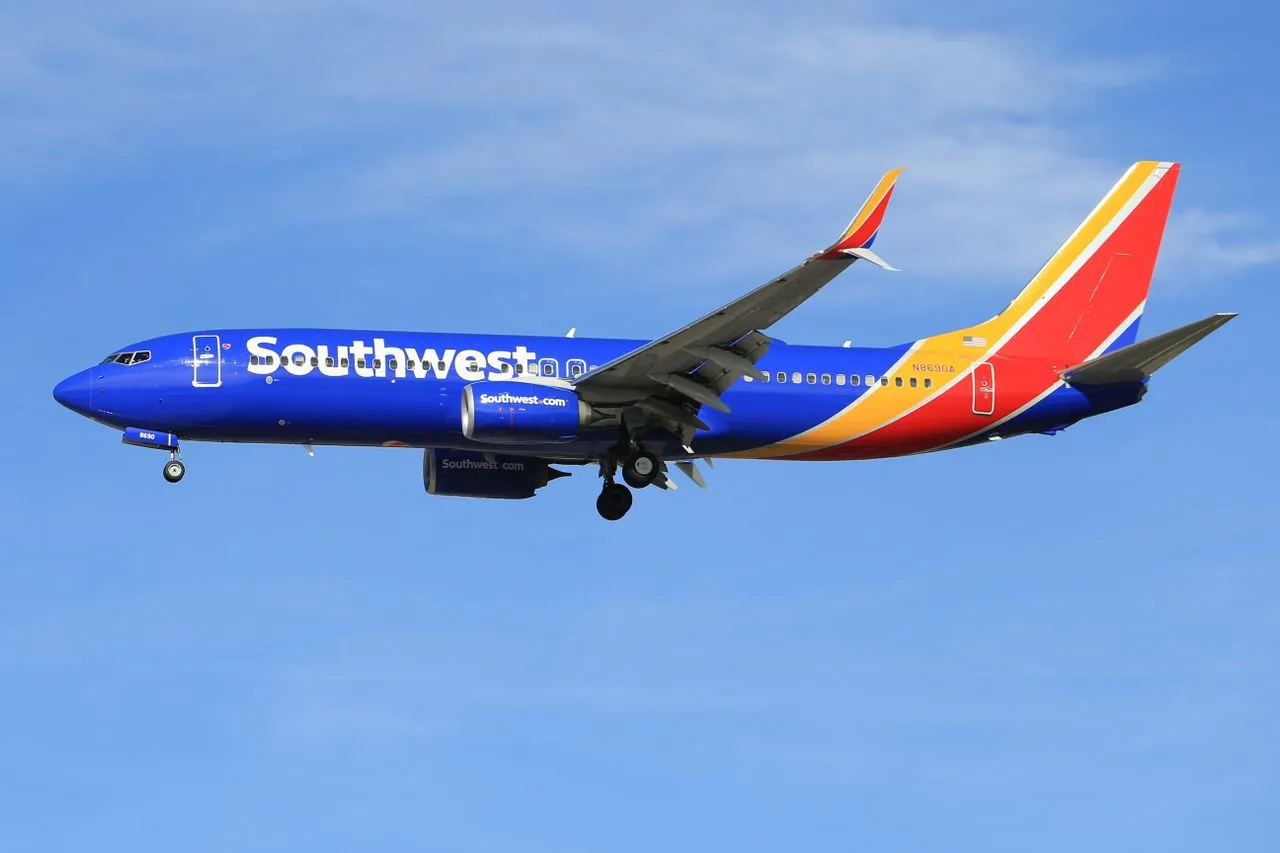
Southwest Airlines Co. reported record operating revenue for the third quarter of 2026, supported by strong customer demand, improved unit revenue performance, and continued progress across its commercial and customer experience initiatives. The Dallas-based airline recorded operating revenues of $8.4 billion, representing a 21.2% increase compared with the same period in 2025. The results reflected the company’s ongoing efforts to strengthen profitability, improve operating margins, and enhance its product offering.
For the quarter ended September 30, 2026, Southwest reported net income of $270 million, equivalent to diluted earnings per share (EPS) of $0.55. Adjusted net income reached $328 million, or adjusted diluted EPS of $0.66. The airline also achieved an operating margin of 4.5%, an improvement of 4.0 percentage points year-over-year. Adjusted operating margin increased to 5.4%, rising 4.8 percentage points despite significantly higher fuel costs.The results demonstrate the airline’s ability to generate stronger revenue and improve operating performance while managing substantial cost pressures. Southwest also reported record passenger revenue and its highest passenger yield in company history, reflecting the strength of its passenger business during the quarter.
Southwest’s third-quarter financial performance was driven by sustained demand for its services and the continued impact of commercial initiatives introduced as part of its business transformation. Operating revenues increased 21.2% year-over-year to $8.4 billion, establishing a new third-quarter record for the company.Unit revenues, measured through revenue per available seat mile (RASM), increased 21.6% compared with the third quarter of 2025. The improvement exceeded the company’s previous guidance and established an all-time record for the metric. Capacity declined by 0.4% year-over-year, indicating that revenue growth was achieved without a corresponding increase in available seat capacity.
Record passenger revenue and the highest passenger yield in the company’s history further highlighted the strength of Southwest’s revenue performance. Passenger yield measures the revenue generated per passenger mile and can be influenced by ticket prices, passenger mix, and travel demand.The company also reported record managed business revenue for the third quarter. Twenty of its 50 highest managed business booking days on record occurred during the quarter, indicating continued engagement from corporate customers.These results reflect the contribution of Southwest’s evolving commercial strategy, which includes changes to its product offering, corporate booking capabilities, loyalty program, and customer experience. The company expects these initiatives to continue supporting revenue performance as it moves into the final quarter of 2026.
Southwest’s operating performance improved significantly during the third quarter, even as fuel expenses increased sharply. Operating expenses rose 16.3% year-over-year to approximately $8.0 billion. Excluding special items, operating expenses increased 15.4% to the same approximate level.The company’s operating margin improved to 4.5%, up 4.0 percentage points from the prior-year period. Adjusted operating margin reached 5.4%, an increase of 4.8 percentage points year-over-year.
However, higher fuel prices remained a substantial financial challenge. Southwest’s third-quarter fuel cost averaged $3.92 per gallon, above its previous assumption of between $3.70 and $3.75 per gallon. Fuel expense increased by $821 million compared with the third quarter of 2025, creating an estimated $1.08 headwind to adjusted earnings per share.
Despite these pressures, operating expenses excluding aircraft fuel and related taxes, special items, and profit-sharing expenses increased 3.4% year-over-year. The company’s CASM-X, a measure of unit operating costs excluding fuel and specified other expenses, increased 3.8%.The figures suggest that Southwest improved its revenue generation and operating margins while maintaining relatively more moderate growth in selected nonfuel operating costs. Nevertheless, fuel prices and operating expenses will remain important factors influencing profitability in the coming quarters.
Southwest continued to develop its customer offering through new loyalty benefits, airport services, and improvements to its digital booking experience. These initiatives are intended to strengthen customer engagement, support repeat business, and improve the airline’s competitiveness across leisure and corporate travel markets.The company announced enhancements to its Rapid Rewards loyalty program, including a new Platinum tier, a faster route to status through credit card spending, additional Milestone Rewards, and new loyalty redemption partners.
The expanded program provides additional opportunities for customers to earn benefits and redeem rewards. For Southwest, these changes are part of a broader effort to increase loyalty participation and encourage customers to engage more frequently with its travel products.The airline also announced plans to introduce the Southwest Icon Lounge network, marking its first entry into airport lounges. The first guests are expected to be welcomed in 2027. The planned lounges represent a further expansion of the customer experience and could help the company attract and retain travelers seeking additional airport services.
Southwest also became the first U.S. airline to make flight shopping available through ChatGPT. The initiative extends the airline’s digital distribution strategy by allowing customers to explore flight options through a conversational interface.In its corporate travel business, Southwest enhanced Southwest Business with the introduction of Business Priority and New Distribution Capability (NDC) connectivity. These developments are designed to make it easier for corporate customers to access and book the airline’s products and services.Together, the initiatives illustrate the company’s shift toward optimizing its business following the completion of its transformation program, with an increased focus on customer experience, loyalty, and commercial opportunities.
Southwest continued expanding its international connectivity through new airline partnerships. During the third quarter, TAP Air Portugal and LOT Polish Airlines became the company’s tenth and eleventh airline partners, respectively.The partnerships expand Southwest’s partner network and create additional opportunities for customers to connect with airlines serving international markets. They also support the company’s broader efforts to improve access to destinations beyond its own route network.Technology investment remained another priority. Southwest continued installing Starlink high-speed Wi-Fi across its aircraft, with fleet-wide installation expected to be completed in fall 2027.
Reliable onboard connectivity can improve the passenger experience by enabling customers to remain connected during flights. The investment also supports Southwest’s broader strategy of modernizing its product offering and responding to changing traveler expectations.These developments complement the company’s loyalty and booking initiatives, positioning customer experience and digital access as important components of its commercial strategy.
Southwest ended the third quarter of 2026 with a fleet of 803 aircraft. During the quarter, the airline received 20 Boeing 737-8 aircraft and retired 20 aircraft. The retirements included the sale of three Boeing 737-800 aircraft and the retirement of 17 Boeing 737-700 aircraft.The company also reported a gain on sale of $214 million during the quarter. This included $96 million primarily associated with aircraft and engine retirements and sales, along with $118 million from sale-leaseback transactions.
Gross capital expenditures totaled approximately $1.0 billion in the third quarter, driven primarily by aircraft-related spending, technology investments, facilities, and operational improvements.For full-year 2026, Southwest expects to receive 67 Boeing 737-8 and 737-7 aircraft deliveries and plans to retire approximately 60 aircraft. The company now expects full-year capacity growth of approximately 1.2%, compared with its previous guidance of approximately 1.5%.Southwest also expects 2026 net capital spending of between $2.5 billion and $2.75 billion. These investments reflect ongoing fleet renewal and efforts to improve operational capabilities while maintaining a disciplined approach to capacity and capital allocation.
Managing aircraft deliveries, retirements, and capital spending will remain important as the airline balances fleet requirements with demand, operating costs, and its longer-term financial objective
Southwest maintained a substantial liquidity position at the end of the third quarter, providing financial flexibility to support operations, capital investment, and shareholder returns.The company ended the quarter with $5.6 billion in liquidity, comprising $3.6 billion in cash and cash equivalents and access to a $2.0 billion revolving credit line. Gross leverage stood at 1.9 times, while unencumbered aircraft and related assets had a net book value of approximately $15.8 billion.
Southwest continued returning capital to shareholders, distributing $176 million in dividends during the quarter. The company also reported that $450 million remained available under its existing $2.0 billion share repurchase authorization.These financial resources provide a foundation for managing operating volatility and funding strategic priorities. However, future capital deployment will need to account for fuel prices, aircraft investments, customer initiatives, and the company’s broader profitability targets.
Southwest expects revenue momentum to continue into the fourth quarter of 2026. Based on its current outlook, fourth-quarter revenue per available seat mile is expected to increase between 19% and 21% year-over-year.
The guidance assumes that the existing fare environment and demand trends remain broadly intact. It is based on the forward fuel curve as of October 15, 2026.
On the cost side, Southwest expects fourth-quarter CASM-X to increase between 4.0% and 4.5% year-over-year. The forecast includes an expected 1.0-percentage-point headwind associated with removing six seats from the Boeing 737-700 fleet to accommodate extra-legroom seating.
The seating adjustment illustrates the company’s effort to balance capacity and unit costs with improvements to the passenger experience. While providing additional legroom may require changes to aircraft configuration, the company expects these enhancements to support its broader customer proposition.
Fuel remains a key uncertainty in the outlook. Southwest assumes fourth-quarter 2026 fuel costs of approximately $4.553 per gallon, based on the forward curve as of October 15. This is above the average fuel cost reported for the third quarter and could create further pressure on operating expenses if realized.
For the full year, the company expects capacity growth of approximately 1.2%, slightly below its previously communicated outlook of approximately 1.5%. Net capital spending is projected to range between $2.5 billion and $2.75 billion.
These projections indicate that Southwest is maintaining a disciplined approach to capacity and investment while seeking to preserve revenue momentum. Actual results will depend on demand, realized fuel prices, operating expenses, and the execution of its commercial initiatives.
Southwest President and Chief Executive Officer Bob Jordan said customers are responding positively to the airline’s enhanced offering, with strong demand reflected in the financial results. He emphasized that the company continued to see demand strength even as it compared results against the previous year’s baggage-fee and other commercial initiatives.
Jordan also highlighted the transition from completing the company’s transformation to optimizing its operations and introducing further customer experience improvements. The focus is now on strengthening earnings, improving returns, and expanding margins over time.
The airline expects to share its multi-year financial framework, management targets, and plans for achieving those objectives at its Capital Markets Day in New York City on March 2, 2027.
The event is expected to provide additional insight into the company’s longer-term priorities and financial ambitions. Investors will be watching how Southwest plans to balance revenue growth, cost management, fleet investment, and customer-focused initiatives as it pursues sustainable earnings improvement.
Southwest Airlines’ third-quarter 2026 results highlight a strong revenue performance, improving operating margins, and continued progress in its commercial transformation. Record operating revenue of $8.4 billion, record passenger revenue, and an all-time-high passenger yield demonstrate the strength of customer demand and the contribution of the airline’s evolving business strategy.Although higher fuel expenses created a significant headwind, Southwest delivered improved operating margins and maintained a solid liquidity position. Its investments in loyalty benefits, airport lounges, digital flight shopping, airline partnerships, and onboard connectivity reflect a continued emphasis on customer experience and long-term competitiveness.
Looking ahead, the airline expects revenue momentum to continue in the fourth quarter, while higher anticipated fuel costs and operating expenses remain important risks. Fleet renewal, disciplined capacity planning, and capital spending will also play central roles in its financial performance.The upcoming Capital Markets Day in March 2027 should provide further clarity on Southwest’s longer-term targets and strategic direction. Ultimately, the company’s ability to convert strong demand into sustained earnings growth, manage cost pressures, and deliver meaningful customer improvements will determine whether its recent progress translates into durable profitability and stronger shareholder returns.