

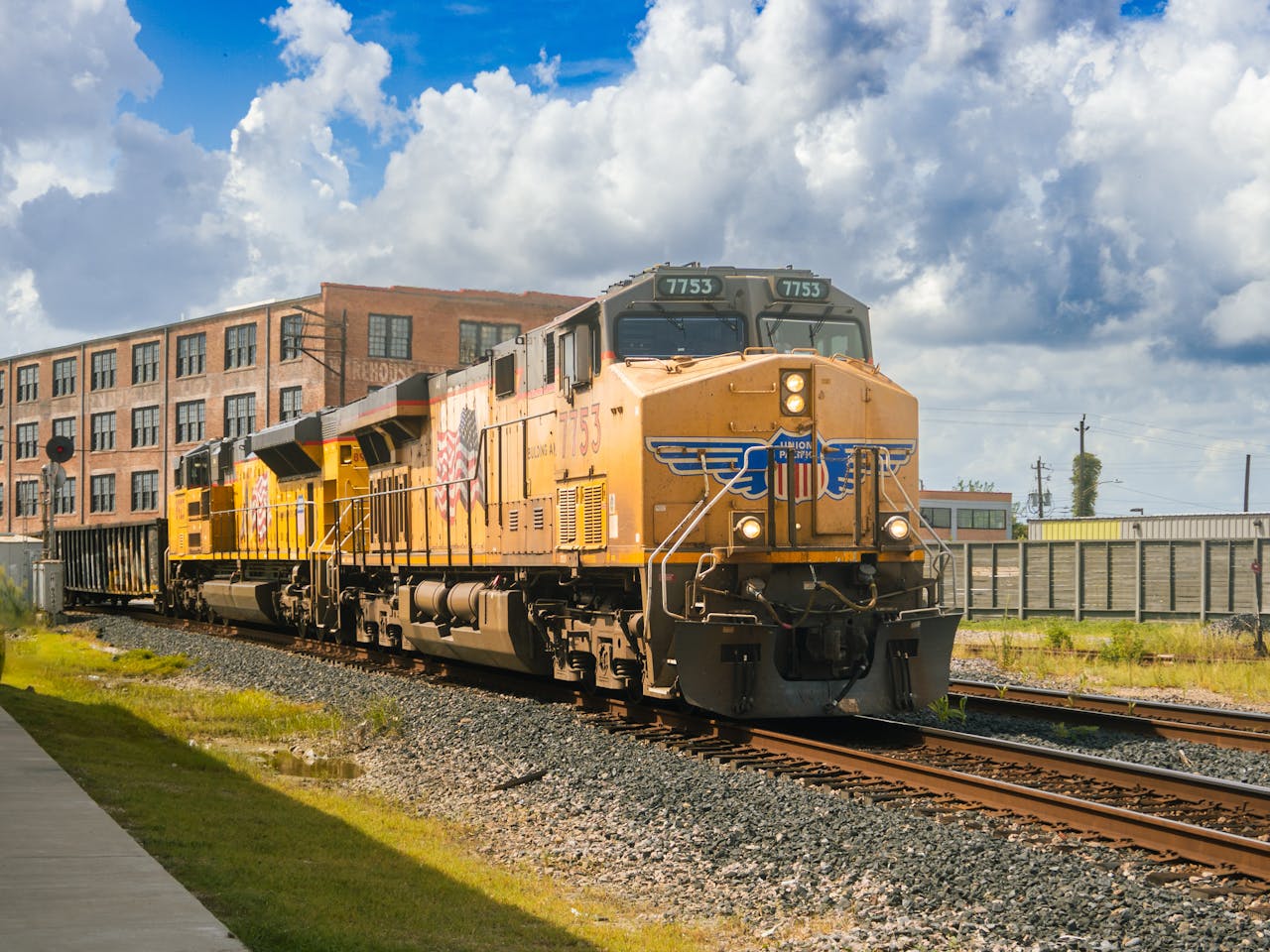
U.S. Labor Secretary Highlights Workforce Development During Visit to Union Pacific Railroad Facilities
Union Pacific Railroad recently welcomed U.S. Secretary of Labor Lori Chavez-DeRemer to its advanced Training Center and the Harriman Dispatching Center, offering an in-depth look at how one of America’s largest railroads is preparing and developing a highly skilled workforce for the future. The visit underscored the vital role workforce training, safety, and innovation play in supporting the nation’s supply chains and long-term economic growth.
Secretary Chavez-DeRemer’s visit formed part of her nationwide “America at Work” listening tour, a 50-state initiative launched last April with the goal of engaging employers, workers, and industry leaders to better understand workforce needs, job creation opportunities, and the challenges facing the modern American labor market. Union Pacific’s facilities provided a powerful example of how large-scale infrastructure companies are investing in people, technology, and training to meet evolving economic demands.
Showcasing World-Class Training and Operational Excellence
During the visit, Secretary Chavez-DeRemer toured Union Pacific’s state-of-the-art Training Center, where employees across multiple disciplines receive comprehensive instruction before stepping into safety-critical roles. The facility represents a cornerstone of Union Pacific’s workforce development strategy, combining classroom education, hands-on technical instruction, simulation-based learning, and continuous professional development.
Union Pacific’s leadership emphasized that the railroad’s workforce is central to its success, particularly as rail transportation continues to play a critical role in moving goods across the United States. With operations spanning 23 states, the company relies on a diverse group of engineers, conductors, dispatchers, mechanics, signal technicians, and support staff to ensure freight moves safely and efficiently around the clock.
Secretary Chavez-DeRemer observed firsthand how Union Pacific integrates advanced technology into its training programs, preparing employees to operate within a modern, high-tech rail environment. From safety protocols and operating rules to digital systems and automated tools, the training reflects the increasing sophistication of today’s rail network.
The Harriman Dispatching Center: The Heart of the Network
A key highlight of the visit was the Harriman Dispatching Center, often described as the “central nervous system” of Union Pacific’s operations. Operating 24 hours a day, seven days a week, the center coordinates train movements, crew assignments, and network flow across Union Pacific’s vast footprint.
At the dispatching center, Secretary Chavez-DeRemer met with dispatchers and operational leaders who manage thousands of train movements daily. The facility’s advanced systems provide real-time visibility into network conditions, allowing dispatchers to respond quickly to changing circumstances such as weather disruptions, maintenance needs, or shifts in customer demand.
Union Pacific leaders explained how dispatchers undergo rigorous training to manage complex operational decisions, balancing efficiency, safety, and service reliability. The Harriman Center exemplifies how technology and human expertise work together to keep freight moving smoothly across the national rail system.
Workforce Growth and a Vision for the Future
The visit also provided an opportunity to discuss Union Pacific’s future workforce needs amid proposed industry developments. Union Pacific and Norfolk Southern have announced plans for a landmark merger that would create the nation’s first coast-to-coast railroad, linking eastern and western rail networks into a seamless transcontinental system.
Company leaders estimate that the merger could result in approximately 900 net new union jobs, driven by anticipated growth in rail demand and expanded operational capabilities. These new roles would span multiple disciplines, further increasing the need for robust training and workforce development programs.
Union Pacific CEO Jim Vena highlighted the importance of preparing today’s workforce for tomorrow’s opportunities.
It is an honor to be part of Secretary Chavez-DeRemer’s impressive nationwide tour and to have the opportunity to talk about growing and developing America’s workforce,” Vena said. “This visit also allowed us to showcase the men and women who form the backbone of America’s supply chain and the extensive safety and operational training they complete to work on a modern, high-tech railroad.”
Vena emphasized that railroads remain essential to the nation’s economic resilience, supporting industries ranging from agriculture and energy to manufacturing and consumer goods. Investing in people, he noted, is just as critical as investing in infrastructure and equipment.
Federal Perspective on Skills and Economic Competitiveness
From the federal government’s perspective, Secretary Chavez-DeRemer underscored the importance of partnerships between industry and workforce institutions to ensure American workers have access to high-quality jobs and long-term career pathways.
“Union Pacific is helping power our economy by investing in the skilled workforce that keeps our supply chains moving,” Chavez-DeRemer said. “I appreciated seeing that commitment up close as part of my 50-state America at Work listening tour.”
She praised Union Pacific’s focus on safety, training, and employee development, noting that these efforts contribute not only to company success but also to national competitiveness. As global supply chains become increasingly complex, the ability to move goods efficiently and safely across the country remains a strategic advantage for the United States.
The Secretary also highlighted how workforce development initiatives at companies like Union Pacific align with broader federal goals to expand job opportunities, strengthen labor participation, and prepare workers for technology-driven industries.
Safety as a Cornerstone of Training
A recurring theme throughout the visit was Union Pacific’s emphasis on safety. Railroad operations involve significant responsibility, and employees must be prepared to manage risks while maintaining high standards of performance. Union Pacific’s training programs are designed to instill a strong safety culture from the first day of employment and reinforce it throughout an employee’s career.
Training includes not only technical skills but also situational awareness, decision-making under pressure, and compliance with federal regulations. Secretary Chavez-DeRemer observed how these programs support both employee well-being and public safety, reinforcing trust in the nation’s rail system.
Honoring History While Looking Ahead
The visit concluded with a symbolic moment that connected Union Pacific’s historic legacy with its future vision. CEO Jim Vena presented Secretary Chavez-DeRemer with a viewing of Union Pacific’s newest commemorative locomotive, No. 1616 Abraham Lincoln.
The locomotive honors Union Pacific’s founder and commemorates the role the railroad played in building the original transcontinental railroad—one of the most transformative infrastructure projects in American history. The locomotive is scheduled to tour the country in celebration of America’s 250th anniversary, serving as a moving tribute to the nation’s industrial heritage and the workers who made it possible.
Union Pacific leaders noted that while technology and operations have evolved dramatically since the 19th century, the railroad’s mission remains rooted in connecting communities, enabling commerce, and creating meaningful employment opportunities.
Reinforcing the Role of Rail in America’s Economy
Secretary Chavez-DeRemer’s visit to Union Pacific highlighted the continued relevance of rail transportation in the 21st century. As the nation faces challenges related to supply chain resilience, sustainability, and workforce readiness, railroads remain a critical component of the solution.
By investing in training, safety, and technology, Union Pacific is positioning itself to meet future demand while supporting high-quality jobs across its network. The visit reinforced the shared commitment between government and industry to ensure that America’s workforce is equipped to support economic growth for decades to come.
As the “America at Work” tour continues across the country, Union Pacific’s facilities stand as a strong example of how workforce development, operational excellence, and national infrastructure can align to build a more competitive and resilient economy.
Source link: https://www.businesswire.com