

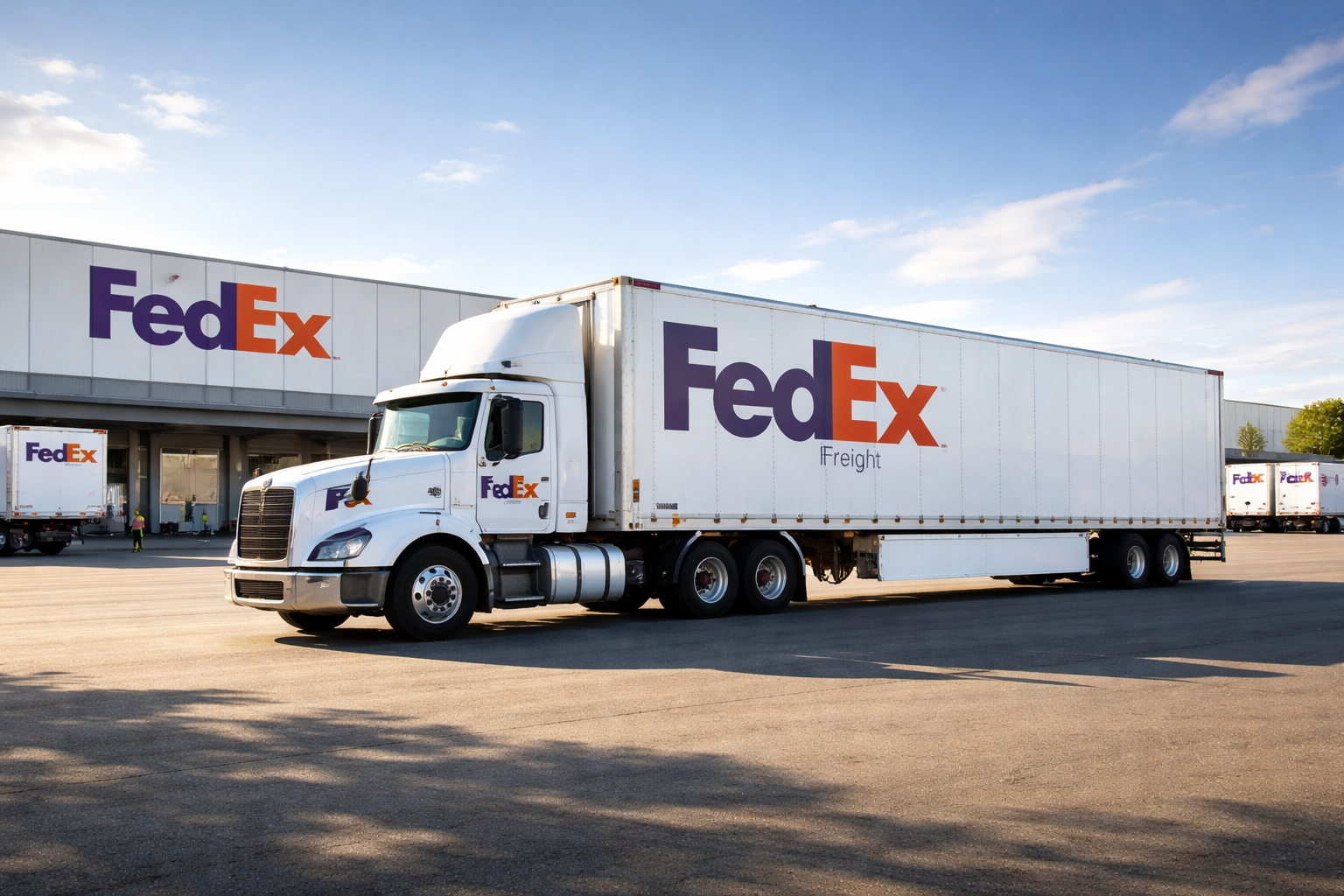
FedEx Launches Senior Notes Offering to Finance Planned Spin-Off of FedEx Freight
FedEx Corp. (NYSE: FDX), a global leader in transportation, logistics, and e-commerce solutions, has announced that FedEx Freight Holding Company, Inc., a wholly owned subsidiary of FedEx, has commenced a private offering of senior notes. The debt issuance represents a key financing step in connection with FedEx’s planned separation of its less-than-truckload (LTL) freight business into a standalone, publicly traded company.
The senior notes offering is being undertaken as part of the broader financial and structural preparations for the proposed spin-off of FedEx Freight, a transaction that is expected to be completed on June 1, 2026, subject to customary conditions and regulatory approvals. Upon completion, FedEx Freight Holding Company will emerge as an independent company, owning and operating FedEx’s LTL freight transportation businesses and related operations.
Supporting the Separation of FedEx Freight
The planned spin-off represents a significant milestone in FedEx’s long-term strategic evolution. Through this transaction, FedEx Freight Holding Company will assume ownership of the company’s LTL freight transportation services, including FedEx Freight Direct, LTL Select, and other businesses currently reported under the FedEx Freight segment. The portfolio also includes FedEx Custom Critical, a specialized transportation unit serving time-sensitive and high-value freight needs.
By separating FedEx Freight into a standalone public entity, FedEx aims to enhance strategic focus, operational flexibility, and capital allocation for both organizations. The transaction is designed to allow each company to pursue tailored growth strategies, sharpen customer offerings, and attract investor bases aligned with their respective business models.
The proceeds from the senior notes offering will play a central role in this process. FedEx Freight Holding Company intends to distribute the net proceeds from the offering to FedEx as part of the consideration for FedEx’s contribution of assets to the Issuer in connection with the spin-off. This capital structure approach is intended to support a smooth transition while maintaining financial discipline for both entities.
Details of the Senior Notes Offering
The senior notes are being offered through a private placement, rather than a registered public offering. As such, the notes have not been registered under the U.S. Securities Act of 1933, as amended, nor under any applicable state securities laws. The offering is being conducted in reliance on established exemptions from registration requirements.
Within the United States, the notes are being offered exclusively to investors reasonably believed to be qualified institutional buyers (QIBs) pursuant to Rule 144A under the Securities Act. Outside the United States, the notes are being offered to non-U.S. persons in accordance with Regulation S under the Securities Act. This structure is commonly used in large corporate debt offerings, particularly in transactions involving complex corporate reorganizations or spin-offs.
FedEx emphasized that the senior notes may not be offered or sold within the United States, or to U.S. persons, except in transactions that are exempt from, or not subject to, registration requirements. Any sale of the notes will be conducted solely through a private offering memorandum, which contains detailed information regarding the terms of the notes, the Issuer, and associated risk factors.
The company also noted that the press release does not constitute an offer to sell or the solicitation of an offer to buy the notes or any other securities, nor does it constitute an offer or sale in any jurisdiction where such activity would be unlawful.
Strengthening Capital Structure Ahead of Independence
The use of debt financing as part of the spin-off process reflects a deliberate capital structure strategy. By issuing senior notes prior to separation, FedEx Freight Holding Company can establish its own balance sheet and funding profile ahead of becoming an independent public company.
Senior notes typically rank ahead of subordinated debt and equity in the capital structure, offering investors a higher level of security while enabling issuers to access capital at competitive rates. For FedEx Freight, the offering is expected to support operational continuity, working capital needs, and long-term investment capacity as the company transitions to standalone operations.
This approach also allows FedEx to receive cash consideration in exchange for assets transferred to the Issuer, helping maintain balance sheet strength at the parent company level while enabling FedEx Freight to begin its independent journey with a defined capital base.
Strategic Rationale Behind the FedEx Freight Spin-Off
FedEx’s decision to separate its LTL freight business reflects broader trends within the transportation and logistics industry, where companies are increasingly seeking to unlock value through focused operating models. The LTL freight market has distinct economics, customer dynamics, and growth drivers compared to FedEx’s global express, ground parcel, and logistics operations.
As an independent company, FedEx Freight is expected to benefit from greater strategic autonomy, allowing management to concentrate exclusively on optimizing LTL network performance, pricing discipline, yield management, and service quality. The separation also provides greater transparency for investors, who will be able to evaluate the LTL business on a standalone basis.
For FedEx Corp., the spin-off supports a streamlined corporate structure, enabling leadership to focus on its integrated global parcel and logistics network while continuing to pursue efficiency, digitalization, and sustainability initiatives.
FedEx Freight’s Role in the Transportation Ecosystem
FedEx Freight is one of the largest LTL freight carriers in North America, providing palletized freight transportation services to a wide range of industries, including manufacturing, retail, healthcare, automotive, and industrial goods. The business operates an extensive network of service centers, tractors, and trailers designed to move freight efficiently across regional and national routes.
In addition to standard LTL services, FedEx Freight offers specialized solutions such as FedEx Freight Direct, which provides residential and job-site deliveries, and LTL Select, designed for customers requiring enhanced visibility and service options. The inclusion of FedEx Custom Critical further expands the company’s capabilities in time-sensitive and specialized transportation.
As supply chains continue to evolve amid e-commerce growth, reshoring trends, and increasing demand for reliability and speed, the LTL segment remains a critical component of the broader freight transportation ecosystem.
Corporate Overview of FedEx Corp.
FedEx Corp. is a global transportation and logistics powerhouse, serving customers and businesses in more than 220 countries and territories. With annual revenue of approximately $90 billion, the company provides a broad portfolio of services spanning express transportation, ground parcel delivery, freight, logistics, e-commerce enablement, and business solutions.
FedEx operates one of the world’s most sophisticated and integrated transportation networks, leveraging advanced technology, data analytics, and automation to deliver reliable and efficient services at scale. The company’s operations are supported by more than 500,000 employees worldwide, who play a central role in maintaining safety, service quality, and operational excellence.
Consistently recognized as one of the world’s most admired and trusted companies, FedEx places a strong emphasis on ethical conduct, corporate responsibility, and community engagement. The company has also made sustainability a core strategic priority, with a stated goal of achieving carbon-neutral operations by 2040 through investments in alternative fuels, electric vehicles, and energy-efficient facilities.
FedEx cautioned that certain statements contained in the announcement may constitute forward-looking statements within the meaning of the Private Securities Litigation Reform Act (PSLRA). These statements include, but are not limited to, expectations regarding the planned spin-off, the timing and completion of the transaction, and the anticipated benefits of the separation.
Forward-looking statements are typically identified by words such as “will,” “may,” “expects,” “believes,” “anticipates,” “plans,” “intends,” “targets,” or similar expressions. While such statements reflect management’s current expectations and assumptions, they are subject to a variety of risks and uncertainties that could cause actual outcomes to differ materially.
Potential risks include the ability to satisfy all required closing conditions for the spin-off, volatility or disruption in global capital and credit markets, operational challenges associated with separating the businesses, and broader economic or industry-specific factors. Additional risk factors are detailed in FedEx’s filings with the U.S. Securities and Exchange Commission, including its Annual Report on Form 10-K for the fiscal year ended May 31, 2025.
FedEx emphasized that forward-looking statements speak only as of the date they are made and that the company undertakes no obligation to update or revise such statements as a result of new information, future events, or otherwise, except as required by law.
Positioning for the Next Phase of Growth
The launch of the senior notes offering marks an important step in FedEx’s execution of its strategic roadmap. By advancing the financial groundwork for the FedEx Freight spin-off, the company is reinforcing its commitment to disciplined capital management, operational focus, and long-term value creation.
As the planned separation moves toward completion in 2026, both FedEx and FedEx Freight are expected to enter their next chapters with clearer strategic identities, enhanced flexibility, and capital structures aligned with their respective markets. For investors, customers, and industry stakeholders, the transaction represents a meaningful development in the ongoing transformation of the global transportation and logistics landscape.
Source link: https://www.businesswire.com