

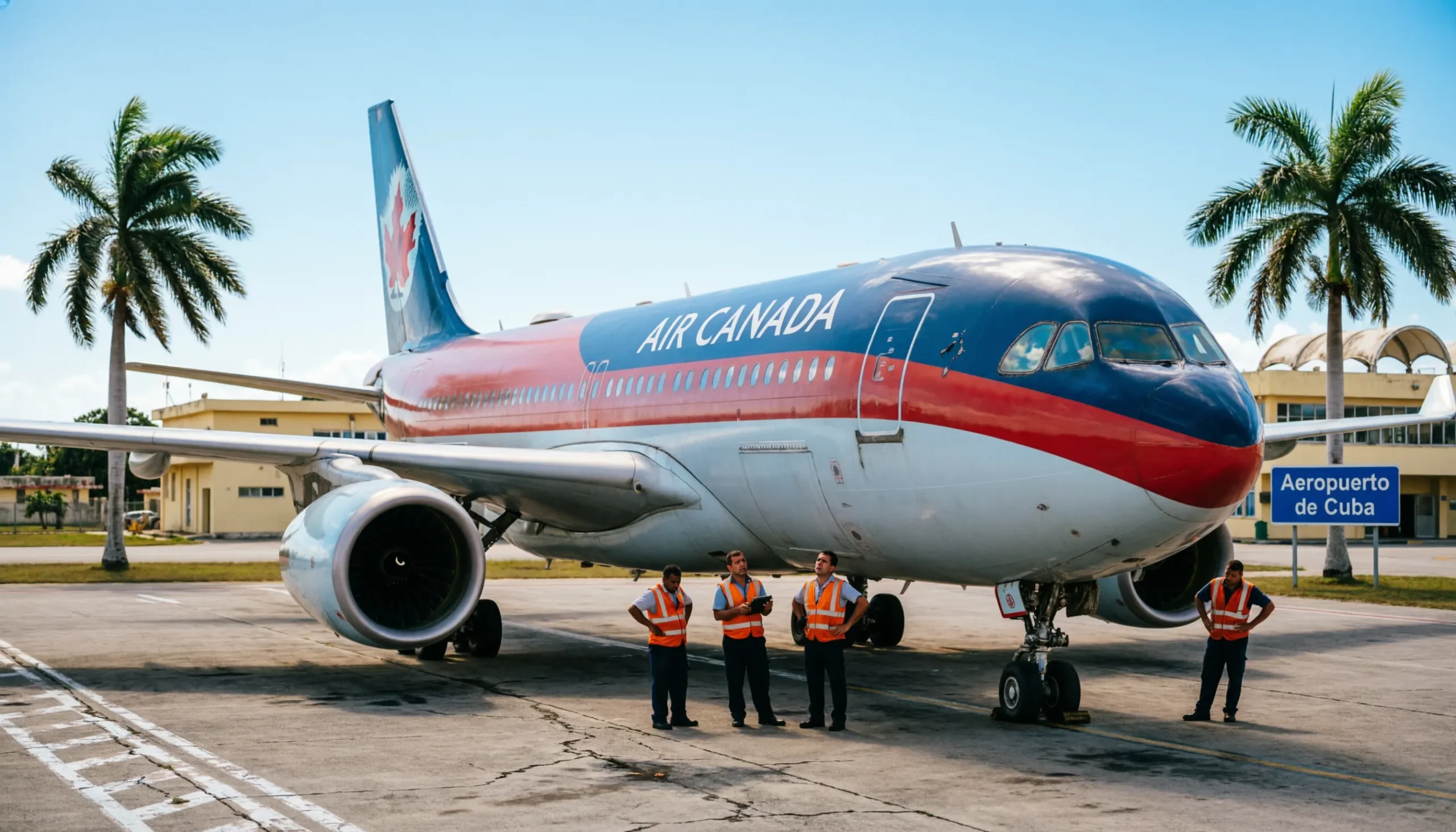
Air Canada Suspends Cuba Operations Amid Ongoing Aviation Fuel Crisis
Air Canada has announced the immediate suspension of its passenger service to Cuba following a worsening aviation fuel shortage on the island, a development that has disrupted airline operations and forced the carrier to take extraordinary measures to protect passengers and maintain safety standards. The decision comes after official government advisory notices, known as NOTAMs (Notices to Air Missions), warned of unreliable jet fuel supplies at Cuban airports and confirmed that, effective February 10, aviation fuel would no longer be available for purchase at the country’s airports. In response to the deteriorating situation, Air Canada has moved swiftly to halt inbound passenger services while organizing a coordinated effort to repatriate approximately 3,000 Canadian customers currently in Cuba.
Government NOTAMs Trigger Operational Decision
The suspension follows formal notifications indicating that fuel supplies at Cuban airports could not be guaranteed. NOTAMs are critical safety communications issued to inform airlines and flight crews about changes or hazards that may affect flight operations. In this case, the advisory clearly stated that aviation fuel availability would cease, creating operational uncertainty for airlines reliant on consistent refueling infrastructure. For Air Canada, maintaining operational safety and schedule reliability in the face of such unpredictability was not feasible.
Given that aviation fuel is fundamental to flight planning, weight management, safety reserves, and contingency routing, the absence of guaranteed refueling options presents significant logistical challenges. While airlines can carry additional fuel into destinations with uncertain supply conditions, doing so affects aircraft payload, operational efficiency, and range calculations. Moreover, consistent reliance on technical refueling stops adds complexity, cost, and potential delays. After evaluating these risks, Air Canada determined that suspending service was the most prudent course of action.
Ferry Flights to Repatriate Approximately 3,000 Customers
Air Canada’s immediate focus has shifted to repatriating customers currently vacationing in Cuba. The airline will operate empty outbound ferry flights to the island over the coming days to retrieve approximately 3,000 passengers and return them safely to Canada. These ferry flights will depart Canada without passengers and arrive in Cuba to transport travelers home under the existing schedule framework in the short term.
The majority of affected travelers are vacationers who booked package holidays through Air Canada Vacations. By maintaining a temporary continuation of return flight schedules, Air Canada aims to minimize disruption and ensure an orderly and timely repatriation process. The airline has emphasized that bringing customers home safely and efficiently remains its top operational priority during this period.
Safety and Operational Adjustments for Remaining Flights
For flights still operating during the transition period, Air Canada has implemented additional operational safeguards. Aircraft servicing Cuban routes will carry extra fuel reserves to reduce dependency on local refueling infrastructure. Where necessary, technical stops may be scheduled on the return leg to allow refueling at alternate airports outside Cuba.
Such measures are not uncommon when operating into regions experiencing supply constraints, but they require careful coordination between flight dispatch teams, pilots, airport authorities, and fuel providers. Carrying additional fuel increases aircraft weight, potentially limiting cargo or passenger capacity and impacting overall economics. Technical stops also extend travel times and introduce additional ground handling arrangements. These interim adjustments underscore the seriousness of the fuel shortage and the airline’s commitment to maintaining safety standards while managing customer needs.
Flexible Rebooking and Automatic Refund Policy
Throughout the unfolding fuel crisis, Air Canada and Air Canada Vacations have closely monitored developments and proactively introduced customer support measures. Initially, a flexible rebooking policy was implemented to allow travelers scheduled to depart for Cuba to modify their plans without penalty. As the situation intensified and service suspension became unavoidable, Air Canada Vacations moved to implement a comprehensive refund policy.
Customers whose flights to Cuba have been canceled will automatically receive a full refund to their original form of payment. Importantly, affected travelers are not required to contact the Air Canada Vacations Service Centre to initiate this process. By automating refunds, the company aims to reduce call centre congestion and streamline resolution for impacted customers.
Travelers currently in Cuba who booked Air Canada Vacations packages have access to on-the-ground assistance from local Air Canada Vacations representatives. These representatives are available to address concerns, provide updates, and assist with return travel logistics. This localized support structure ensures that customers abroad receive direct assistance without relying solely on remote service channels.
Overview of Air Canada’s Cuba Network
Prior to the suspension, Air Canada operated an average of 16 weekly flights connecting Canada to four popular Cuban destinations from its Toronto and Montreal hubs. The network primarily served leisure travelers, particularly during peak winter travel seasons when Canadian tourists seek warm-weather destinations.
From Toronto, Air Canada offered four weekly flights to Jardines del Rey Airport in Cayo Coco, two weekly flights to Frank País Airport in Holguín, four weekly flights to Juan Gualberto Gómez Airport in Varadero, and one weekly flight to Abel Santamaría Airport in Santa Clara. From Montreal, the airline operated three weekly flights to Jardines del Rey Airport in Cayo Coco and two weekly flights to Juan Gualberto Gómez Airport in Varadero.
These services were typically operated using Air Canada and Air Canada Rouge narrow-body aircraft, well-suited for medium-haul leisure routes. The Cuba network has historically represented an important component of Air Canada’s sun destination portfolio, catering to strong seasonal demand from both Ontario and Quebec markets.
Seasonal Cancellations and Tentative Resumption Plans
Even prior to the full suspension, seasonal services to Holguín and Santa Clara had been canceled for the remainder of the current season. Year-round routes to Varadero and Cayo Coco, which represent some of the most popular Cuban resort destinations for Canadian travelers, are now suspended as well.
At present, Air Canada has identified May 1 as a tentative resumption date for year-round flights to Varadero and Cayo Coco, though this timeline remains subject to ongoing review. The airline has made clear that service will only resume once aviation fuel supplies stabilize and operational reliability can be assured. Continuous monitoring of the situation will guide any decision to reinstate routes.
Aircraft Reallocation and Network Optimization
With Cuba operations suspended, Air Canada will seek to redeploy the affected aircraft to alternative destinations within its network. Narrow-body aircraft previously assigned to Cuban routes may be reassigned to other leisure markets, domestic routes, or transborder services depending on seasonal demand and network planning priorities.
Airlines routinely adjust fleet allocation in response to geopolitical events, operational constraints, or shifts in demand. By reallocating aircraft, Air Canada can mitigate revenue impact while maintaining capacity balance across its broader network. Such flexibility is particularly important during peak travel seasons, when demand for sun destinations remains strong.
Broader Implications of the Cuban Fuel Shortage
The aviation fuel shortage in Cuba highlights the vulnerability of airline operations to infrastructure and supply chain disruptions. Fuel availability is a critical component of aviation logistics, and interruptions can quickly cascade into schedule cancellations, passenger inconvenience, and financial strain for carriers and tourism-dependent economies alike.
For Cuba, which relies heavily on international tourism, particularly from Canada, disruptions in air connectivity may have wider economic consequences. Canadian travelers represent one of the largest visitor segments to the island. A sustained reduction in air service could affect hotels, resorts, tour operators, and local businesses dependent on tourism revenue.
From an airline perspective, maintaining safety, regulatory compliance, and customer trust remains paramount. Air Canada’s decision to suspend service rather than risk operational uncertainty reflects a cautious approach grounded in safety principles and regulatory adherence.
Continued Monitoring and Path Forward
Air Canada has stated that it will continue to closely monitor developments regarding aviation fuel supplies in Cuba. Coordination with local authorities, fuel suppliers, and international aviation bodies will inform any future decisions regarding route reinstatement.
In the meantime, the airline’s priority remains clear: ensuring the safe return of customers currently in Cuba, providing transparent communication, and minimizing financial inconvenience through automated refunds and customer support services. While the suspension represents a significant disruption to winter travel plans, the measures taken underscore Air Canada’s commitment to operational integrity and passenger safety.
As the situation evolves, the airline will reassess conditions and determine when reliable fuel supplies can once again support regular scheduled operations to Cuba. Until then, Air Canada’s Cuba network remains temporarily grounded, reflecting the critical role that stable fuel infrastructure plays in sustaining global air connectivity.
Source Link:https://www.globenewswire.com/