

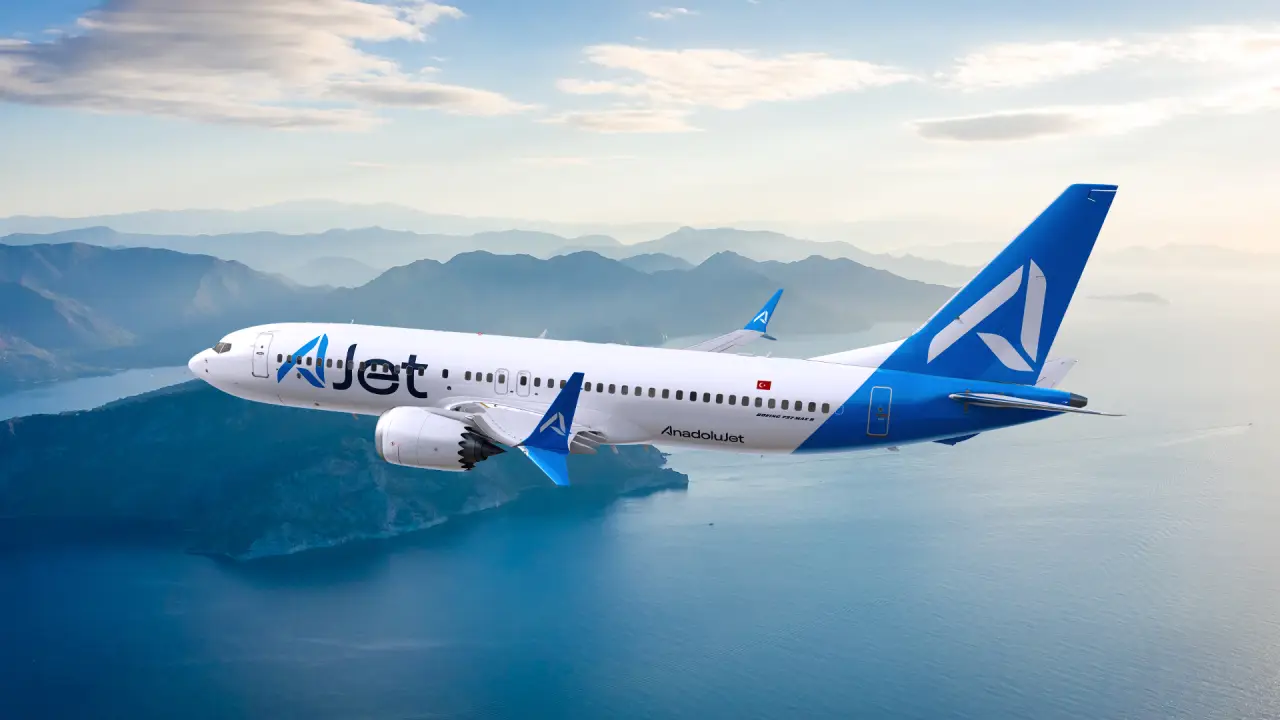
AJet Celebrates Two Years of Rapid Growth and Expansion
AJet, the low-cost carrier established as a subsidiary of Turkish Airlines, has marked its second anniversary with a remarkable record of rapid growth, network expansion, and operational improvement. Since launching its inaugural flight on March 31, 2024, the airline has evolved from a newly introduced brand into a significant player in both domestic and international aviation markets. In just two years, AJet has demonstrated an ambitious trajectory, driven by strategic planning, fleet modernization, and a clear focus on affordability and passenger experience.
Rapid Expansion Across International Markets
From the outset, AJet positioned international expansion at the heart of its strategy. While maintaining a strong domestic presence within Türkiye, the airline has aggressively pursued new opportunities beyond its home market. This approach has enabled AJet to establish a broad footprint across Europe, the Middle East, the Turkic Republics, and North Africa.
Within its first two years of operations, AJet successfully launched 28 new routes spanning 18 countries. This rapid expansion reflects not only the airline’s ambition but also its ability to execute network growth efficiently in a highly competitive environment. By carefully selecting destinations with strong demand potential and leveraging its parent company’s ecosystem, AJet has built a network that connects key regional and international markets.
As of 2026, AJet operates flights to a total of 106 destinations. This includes 39 domestic routes that ensure comprehensive connectivity across Türkiye, alongside 67 international routes that link passengers to major cities and emerging travel hubs abroad. The airline’s dual focus on domestic strength and international reach has been instrumental in establishing its market presence.
Strategic Hub Development Strengthens Connectivity
AJet’s operational model is anchored by its primary hubs at Istanbul Sabiha Gökçen Airport and Ankara Esenboğa Airport. These strategically located airports serve as critical gateways, enabling efficient connections and supporting the airline’s expanding route network.
In a notable development for the 2026 summer season, AJet has designated Milas-Bodrum Airport as its third main hub. This move underscores the airline’s commitment to enhancing connectivity to key leisure destinations, particularly along Türkiye’s popular southwestern coast. From this new hub, AJet offers direct flights to 23 destinations, both domestic and international, further strengthening its network and catering to seasonal travel demand.
The addition of Milas-Bodrum as a hub also highlights AJet’s flexibility in adapting its operational strategy to market trends, including the growing importance of leisure travel and tourism-driven routes.
Strong Passenger Growth in Just Two Years
AJet’s rapid expansion has been matched by impressive passenger growth. Positioned as an affordable airline offering competitive fares, the carrier has quickly gained popularity among a wide range of travelers, from budget-conscious passengers to those seeking reliable regional connections.
Over its first two years of operation, AJet carried a total of 42.5 million passengers. Of these, 14.5 million traveled on domestic routes, reflecting strong demand within Türkiye, while 28 million passengers flew on international routes, highlighting the airline’s success in expanding beyond its home market.
This balanced growth between domestic and international segments demonstrates AJet’s ability to capture demand across different travel categories. It also reflects the effectiveness of its pricing strategy and network planning.
Looking ahead, AJet has set an ambitious target of transporting 25 million passengers in 2026 alone. Achieving this goal would represent a significant milestone and further solidify the airline’s position in the low-cost carrier segment.
Fleet Modernization Drives Efficiency and Sustainability
A key pillar of AJet’s growth strategy is the modernization of its fleet. The airline has made substantial investments in next-generation aircraft to enhance efficiency, reduce operating costs, and improve the overall passenger experience.
In the past eight months alone, AJet has added 18 Boeing 737-8 MAX aircraft to its fleet. These modern aircraft are known for their fuel efficiency, reduced emissions, and improved performance, making them well-suited for both short- and medium-haul routes.
The airline’s expansion plans for 2026 are even more ambitious. AJet intends to add 46 new aircraft during the year, including a mix of Boeing 737-8 MAX and Airbus NEO models. This diversified approach allows the airline to optimize its fleet for different route profiles while maintaining operational flexibility.
By the end of 2026, 76% of AJet’s fleet is expected to consist of next-generation aircraft. This transition not only supports the airline’s growth but also aligns with broader industry trends toward sustainability and environmental responsibility.
In addition to technological upgrades, AJet has introduced domestically produced “Miligram” seats across its aircraft since August 2025. These seats are designed to enhance passenger comfort while supporting local manufacturing initiatives, reflecting the airline’s commitment to both quality and national industry development.
Continuous Improvement in Operational Performance
Operational reliability is a critical factor in the success of any airline, and AJet has made notable progress in this area over its first two years. The carrier has steadily improved its on-time departure performance, demonstrating its ability to refine operations and enhance efficiency.
In 2024, AJet recorded an on-time departure rate of 75%. This improved to 80% in 2025, and by March 2026, the airline achieved an impressive 87% on-time performance. This figure exceeds the average performance across European airspace managed by Eurocontrol, highlighting AJet’s operational excellence.
Such improvements are the result of ongoing investments in operational processes, staff training, and technology. They also reflect the airline’s commitment to providing a reliable travel experience for its passengers.
Commitment to Safety and Industry Standards
Safety remains a top priority for AJet, and the airline has taken significant steps to ensure compliance with international standards. Before completing its second year of operations, AJet successfully passed the IOSA (IATA Operational Safety Audit), one of the most rigorous safety assessments in the aviation industry.
Following this achievement, the airline became a member of the International Air Transport Association (IATA), further reinforcing its credibility and commitment to global best practices.
In addition to safety recognition, AJet has also been acknowledged for its passenger experience. The airline received the “Four-Star Low-Cost Airline” award from the Airline Passenger Experience Association (APEX) for the second time. This accolade reflects positive feedback from passengers and underscores AJet’s focus on delivering quality service within the low-cost segment.
Ambitious Goals for the Third Year and Beyond
As AJet enters its third year of operations, the airline is setting its sights on continued growth and expansion. With a current fleet of 85 aircraft, the planned addition of 46 new aircraft in 2026 will significantly increase capacity and support further network development.
The airline’s long-term vision includes a substantial expansion of its route network. By 2026, AJet aims to maintain flights to 106 destinations across 36 countries. Looking further ahead, the airline has outlined plans to reach 199 destinations in 56 countries by 2033. This ambitious roadmap reflects AJet’s aspiration to become a major global low-cost carrier.
Enhancing Passenger Experience with Connectivity
In addition to expanding its network and fleet, AJet is investing in passenger experience, particularly in the area of in-flight connectivity. Through a partnership with Türksat, the airline plans to introduce high-speed, uninterrupted internet service onboard its aircraft.
This initiative will enable passengers to stay connected throughout their journey, whether for work or leisure. As connectivity becomes an increasingly important aspect of air travel, AJet’s investment in this area positions it to meet evolving customer expectations.
A Promising Future Ahead
AJet’s first two years have been defined by rapid growth, strategic expansion, and a strong commitment to operational excellence. From launching dozens of new routes to carrying millions of passengers and modernizing its fleet, the airline has achieved significant milestones in a short period.
As it moves into its third year, AJet is well-positioned to build on this momentum. With ambitious plans for fleet expansion, network growth, and enhanced passenger services, the airline is poised to play an increasingly important role in the global aviation landscape.
Backed by the strength and expertise of Turkish Airlines, AJet’s journey so far suggests a promising future—one defined by innovation, connectivity, and continued growth in the competitive world of low-cost air travel.
Source link: https://www.aviationturkey.com/