


DHL Express is strengthening its international logistics network in China through a major expansion of its infrastructure and air freight capacity, reinforcing the company’s ability to support businesses operating across one of the world’s most important manufacturing, sourcing and consumer markets.
The logistics company has expanded its Shenzhen “Super Gateway” at Shenzhen Bao’an International Airport following an investment of €177 million. The project represents DHL’s largest investment in mainland China to date and significantly increases the facility’s ability to process international shipments.
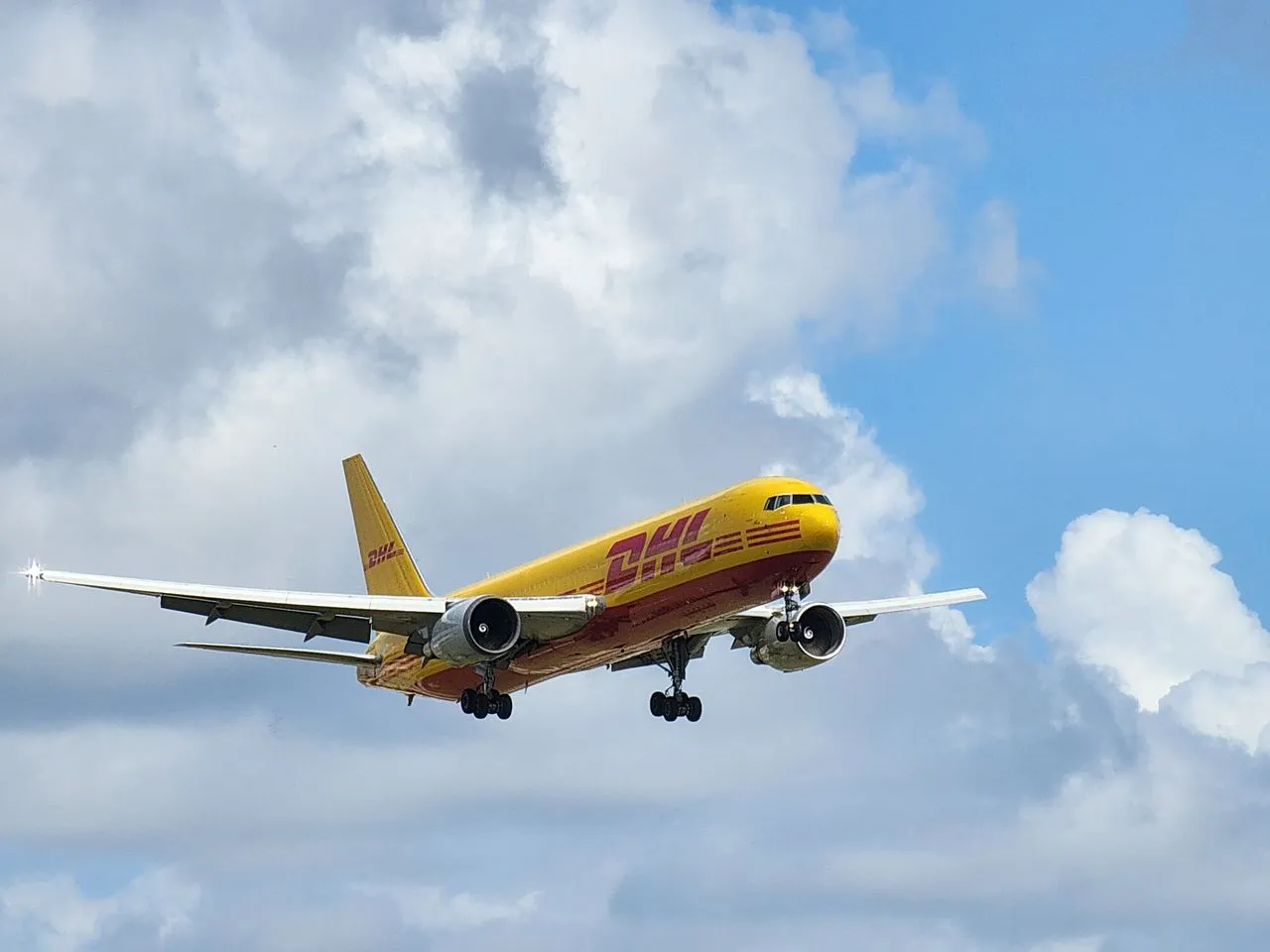
Alongside the infrastructure expansion, DHL Express has introduced a new dedicated daily air route connecting Shanghai, Bangkok, Bahrain and Brussels. Operated with a Boeing 767 freighter, the service adds additional capacity between China and important markets across Southeast Asia, the Middle East and Europe.
Together, the two investments are designed to strengthen DHL’s international express network while providing customers with additional capacity, greater connectivity and improved flexibility as global trade patterns continue to change.
China continues to play a central role in global manufacturing, sourcing, innovation and international trade. Although businesses around the world are diversifying their supply chains and exploring additional production locations, China remains an important component of many international supply networks.
Manufacturers, technology companies, retailers and other businesses continue to rely on Chinese suppliers and production facilities to serve customers in domestic and international markets.
This creates continued demand for reliable logistics connections between Chinese manufacturing centers and international destinations.
DHL’s latest investments are intended to support these requirements by expanding shipment-processing capabilities in Southern China and increasing air freight capacity between Shanghai and major international logistics hubs.
The company believes that global supply chains are continuing to adapt to economic conditions, geopolitical developments and changing customer expectations.
John Pearson, CEO of DHL Express, said supply chains are evolving in response to changing economic conditions, geopolitical disruption and customer requirements. He emphasized the importance of providing customers with flexible and reliable logistics networks capable of connecting suppliers, production facilities and consumers worldwide.
According to Pearson, the latest investments strengthen connections between China and global markets while supporting DHL’s position in international e-commerce and several rapidly growing sectors.
A central part of DHL’s latest investment program is the expansion of its Shenzhen “Super Gateway” at Shenzhen Bao’an International Airport.
DHL has invested €177 million in the facility, making it the company’s largest investment in mainland China.
The expansion has tripled the gateway’s shipment-processing capacity to approximately 900 tons per day.
The increase represents a significant enhancement for DHL’s international express operations in Southern China. Shenzhen is one of the country’s most important manufacturing and export centers and is home to a wide range of technology, electronics, industrial and consumer businesses.
The region’s position within China’s manufacturing ecosystem generates substantial demand for international transportation services.
By expanding its gateway capacity, DHL can process a larger volume of international shipments while strengthening the connection between businesses in Southern China and overseas markets.
The expanded Shenzhen gateway is expected to play an important role in supporting cross-border trade and international e-commerce.
Online commerce has significantly increased the need for fast and reliable international parcel transportation. Businesses selling products across borders require logistics networks that can manage high shipment volumes while providing predictable transit times and visibility.
DHL’s expanded facility is designed to support these requirements through increased processing capacity and access to the company’s international express network.
Time-definite transportation is particularly important for businesses that operate in competitive e-commerce markets. Customers increasingly expect fast delivery, accurate tracking and predictable arrival times regardless of where goods are purchased or manufactured.
The Shenzhen gateway expansion provides additional infrastructure to support these expectations.
The investment is also expected to create more than 1,000 jobs, adding employment opportunities in the Southern China logistics market.
Large logistics facilities require a wide range of employees, including operations specialists, shipment-processing teams, technical personnel, transportation coordinators and management staff.
The additional workforce will support DHL’s expanded operational capabilities while contributing to the development of the region’s logistics ecosystem.
The investment therefore has significance beyond shipment capacity. It also reinforces DHL’s long-term presence in Southern China and its commitment to supporting the region’s international trade activity.
The Shenzhen gateway expansion is complemented by DHL Express’s introduction of a new daily Boeing 767 freighter service.
The aircraft operates on a route connecting Shanghai, Bangkok, Bahrain and Brussels before returning to Shanghai.
The new service provides additional air cargo capacity linking China with Southeast Asia, the Middle East and Europe.
The route is designed to provide greater connectivity across several important international trade corridors.
Shanghai is one of China’s largest economic and commercial centers and an important international logistics hub. Bangkok provides connectivity into Southeast Asia, while Bahrain serves as a strategic connection point for the Middle East. Brussels is a major European logistics center and an important gateway for international freight.
By linking these locations through a dedicated freighter service, DHL can provide customers with additional options for moving shipments across multiple regions.
The new Boeing 767 freighter service adds up to 50 tons of daily capacity to DHL’s network.
Additional air freight capacity is particularly important for businesses shipping high-value, time-sensitive or urgent goods.
The increase gives customers more available uplift on key trade lanes while providing greater scheduling flexibility.
For manufacturers and technology companies, transportation delays can affect production schedules and customer deliveries. Additional air cargo capacity can therefore provide an important alternative when businesses need to move goods quickly between manufacturing facilities, suppliers and markets.
The new route also complements DHL’s broader international express network, which is designed around time-definite transportation and door-to-door shipment visibility.
The additional aircraft capacity will also support DHL Express’s growing Heavyweight Express offering.
Heavyweight shipments can include larger or more substantial consignments that require the speed and visibility associated with international express transportation.
Industries such as technology, industrial manufacturing, semiconductor production, healthcare and data center infrastructure frequently require specialized equipment and components to be moved quickly between locations.
The availability of additional air freight capacity allows DHL to provide greater support for these shipments while maintaining international express capabilities.
Customers using the Heavyweight Express service can benefit from door-to-door visibility, customs expertise and predictable transit times.
These capabilities are increasingly important as supply chains become more interconnected and businesses seek logistics providers that can manage international shipments from origin through final destination.
Technology and semiconductor companies are among the sectors benefiting from stronger logistics connections with China and Asia.
Semiconductor supply chains involve highly specialized components, equipment and materials that may cross multiple borders before reaching their final destination.
The industry often requires reliable and time-sensitive transportation because production schedules can be affected by delays in the delivery of critical components.
China and other Asian markets remain important parts of the global electronics and technology manufacturing ecosystem.
DHL’s expanded gateway capacity and additional air connections provide more options for companies operating within these supply chains.
Another sector experiencing growing logistics requirements is data center infrastructure.
The rapid expansion of digital services, cloud computing and artificial intelligence is driving investment in data centers in many regions.
Data center projects require the movement of servers, networking equipment, electrical systems, cooling technology and other specialized infrastructure.
Many of these products are manufactured or sourced from Asian supply networks and need to be transported to construction and operating locations around the world.
DHL’s expanded air and express capacity can help support these movements by providing faster transportation options and shipment visibility.
Healthcare and life sciences are also important sectors for international express logistics.
Medical equipment, pharmaceutical products, laboratory materials and other healthcare-related shipments can require reliable transportation and careful handling.
International logistics networks need to provide predictable transit times and strong shipment visibility when supporting these industries.
DHL’s investments in China therefore extend beyond traditional manufacturing and e-commerce applications, providing additional capacity for sectors where transportation reliability can have significant commercial and operational consequences.
The new energy sector is another area generating increased demand for international logistics.
The transition toward electric mobility, renewable energy and advanced energy technologies has created increasingly complex global supply chains.
Companies involved in batteries, electric vehicles, charging systems and other clean-energy technologies rely on international networks for components, materials and finished products.
China remains an important manufacturing center for many areas of the new energy economy.
The combination of expanded gateway capacity and increased air freight connectivity provides DHL with additional resources to support these evolving supply chains.
The latest investments reflect DHL’s broader strategy of strengthening logistics networks in regions where trade flows are changing.
Global supply chains have become more complex as businesses respond to geopolitical developments, economic uncertainty, shifting consumer demand and the need for greater resilience.
Companies are increasingly looking for logistics partners that can provide flexibility when transportation requirements change.
DHL’s investment in China is intended to provide that flexibility while maintaining strong connections with international markets.
The expanded Shenzhen gateway increases processing capacity within mainland China, while the new Shanghai air route expands transportation capacity between China, Asia, the Middle East and Europe.
Together, the investments strengthen both the physical infrastructure and transportation network supporting DHL’s international express operations.
DHL operates an international logistics network connecting more than 220 countries and territories.
The company’s global infrastructure allows customers to move goods across international borders while accessing services such as customs expertise, shipment tracking and time-definite delivery.
The company continues to invest in facilities and transportation capabilities designed to help customers respond to changing supply chain conditions.
China remains an important part of this network because of its role in global manufacturing and international commerce.
DHL’s latest China investments are part of a broader investment strategy targeting regions expected to benefit from changes in global trade.
The company has highlighted what it describes as “geographic tailwinds” in markets including Africa, the Middle East, Latin America and India.
These regions are becoming increasingly important as companies diversify manufacturing and sourcing networks and seek new consumer markets.
By expanding logistics infrastructure in strategically important locations, DHL aims to position its network to respond to these shifts.
DHL’s latest investments in China demonstrate how international logistics providers are adapting to changes in global trade.
The €177 million expansion of the Shenzhen Super Gateway substantially increases shipment-processing capacity and strengthens DHL’s presence in one of China’s most important manufacturing and export regions.
At the same time, the new Boeing 767 freighter route between Shanghai, Bangkok, Bahrain and Brussels provides up to 50 tons of additional daily capacity across major trade corridors.
The combined investments support a wide range of industries, including e-commerce, technology, semiconductor manufacturing, data center infrastructure, healthcare, industrial production and new energy.
As businesses continue to adapt their supply chains, demand for reliable international transportation networks is expected to remain important.
DHL’s expanded infrastructure and air network provide additional capacity for customers moving goods between China and global markets while supporting the company’s broader strategy of strengthening connections across major international trade lanes.
With supply chains becoming more diversified but China continuing to play a major role in global manufacturing and commerce, DHL is positioning its network to support the next phase of international trade.
The investments in Shenzhen and Shanghai ultimately underline the growing importance of logistics infrastructure in enabling global businesses to remain connected. By combining expanded processing capabilities, additional air freight capacity, digital visibility and international customs expertise, DHL is strengthening its ability to serve customers as global supply chains continue to evolve.
Source link: https://group.dhl.com/