

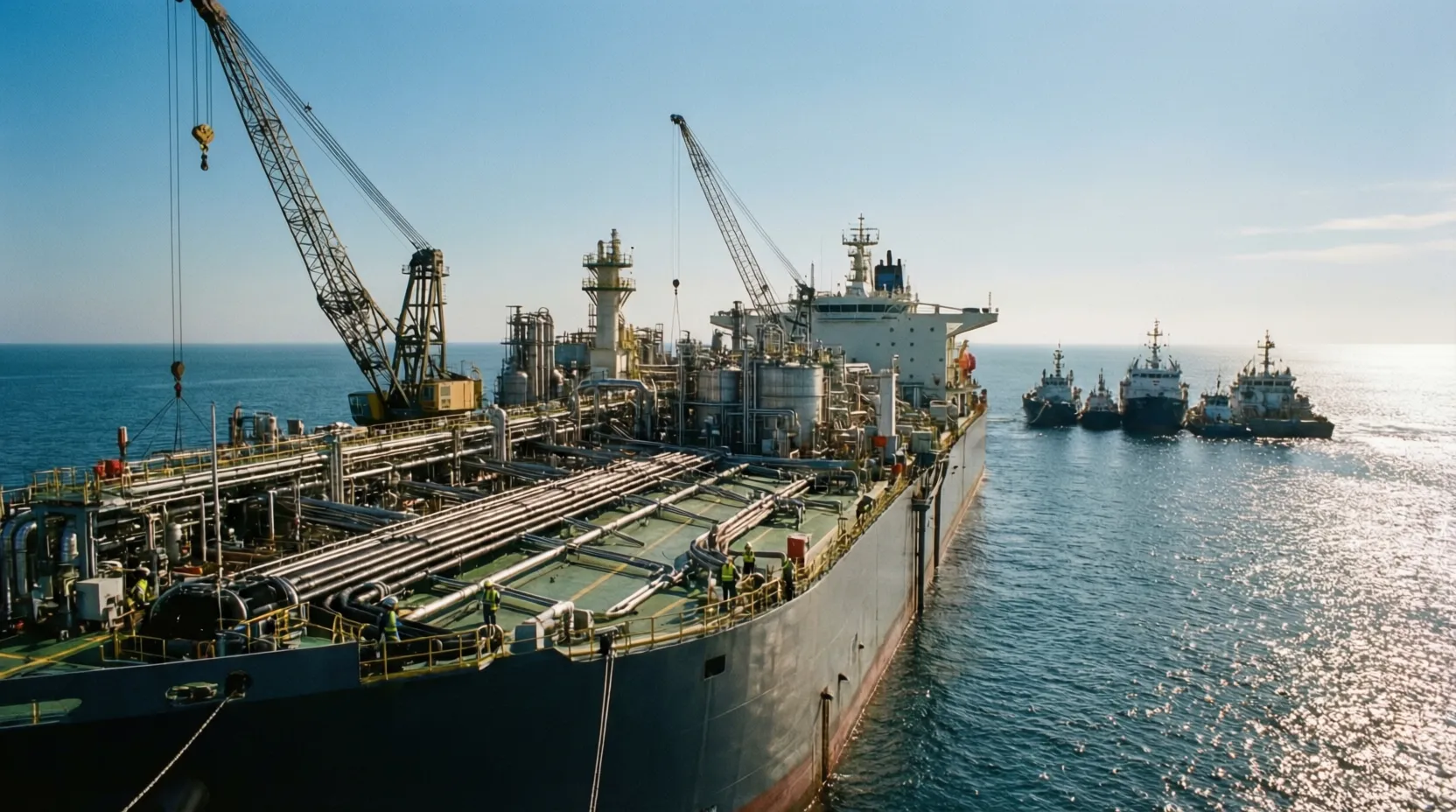
Cedar LNG: The World’s First Indigenous Majority-Owned LNG Facility and EXMAR’s Strategic Role in FLNG Operations
The global liquefied natural gas (LNG) industry is entering a new era—one defined not only by technological innovation and energy security, but also by sustainability, inclusivity, and partnership with Indigenous communities. At the forefront of this transformation stands Cedar LNG, the world’s first Indigenous majority-owned LNG facility, a groundbreaking project that combines advanced floating LNG (FLNG) technology with renewable energy integration and Indigenous leadership. Central to the successful execution and long-term performance of this pioneering development is EXMAR, a globally recognized leader in floating gas infrastructure, which has been awarded the contract for marine operations and maintenance.
This collaboration marks a significant milestone for both organizations and sets a new benchmark for how large-scale energy infrastructure projects can be developed responsibly, efficiently, and inclusively.
A Historic Milestone in Indigenous-Led Energy Development
Cedar LNG is majority-owned by the Haisla Nation, in partnership with Pembina Pipeline Corporation, representing a historic first for the global LNG sector. Never before has an LNG export facility been majority-owned by an Indigenous group. This ownership structure reflects a broader shift toward Indigenous participation and leadership in major infrastructure and natural resource projects across Canada and beyond.
The project is located in Kitimat, British Columbia, within the traditional territory of the Haisla Nation, reinforcing the deep cultural, economic, and environmental connection between the development and the local Indigenous community. By positioning the Haisla Nation as a majority owner and decision-maker, Cedar LNG sets a precedent for equitable partnerships that deliver long-term benefits to Indigenous peoples while supporting global energy markets.
A Low-Carbon LNG Facility Powered by Renewable Energy
In addition to its groundbreaking ownership model, Cedar LNG is distinguished by its environmental credentials. The facility will be powered by renewable electricity, making it one of the lowest carbon intensity LNG facilities in the world. This approach significantly reduces greenhouse gas emissions compared to traditional LNG projects that rely on gas-fired power for liquefaction.
As governments, investors, and customers increasingly prioritize decarbonization, Cedar LNG’s design aligns closely with global climate objectives and evolving regulatory expectations. The project demonstrates that LNG—often viewed as a transition fuel—can be produced with a substantially reduced environmental footprint when innovative technology and clean energy sources are combined.
Floating LNG: A Strategic Choice
Cedar LNG is being developed as a floating LNG (FLNG) facility, a solution that offers several advantages over conventional onshore LNG plants. FLNG minimizes land use, reduces construction complexity on sensitive coastal terrain, and allows for more flexible deployment.
The FLNG unit, named FLNG megúgu, is currently under construction at Samsung Heavy Industries in South Korea, one of the world’s leading shipyards with extensive experience in building complex offshore energy assets. Once completed, the facility will be transported to Kitimat, where it will be moored and integrated into the broader LNG export system.
The use of FLNG technology underscores Cedar LNG’s commitment to innovation, efficiency, and environmental stewardship.
EXMAR: A Strategic Partner in Marine Operations and Maintenance
To ensure the safe, reliable, and efficient operation of this sophisticated floating asset, Cedar LNG has selected EXMAR as its strategic partner for marine operations and maintenance (O&M).
EXMAR is widely recognized as a pioneer in the ownership, operation, and maintenance of floating gas infrastructure, with decades of experience spanning LNG carriers, floating storage regasification units (FSRUs), and FLNG assets. The company’s proven track record in managing complex offshore and nearshore facilities made it a natural choice for a project of Cedar LNG’s scale and significance.
Under the agreement, EXMAR will be responsible for managing all aspects of marine operations and maintenance, including the development of dedicated operational procedures tailored specifically to FLNG megúgu. These procedures will cover safety, reliability, asset integrity, and environmental protection, ensuring that the facility operates to the highest international standards throughout its lifecycle.
Early Engagement Across the Project Lifecycle
One of the defining features of EXMAR’s role is its early involvement in the project. Rather than being brought in only at the operational stage, EXMAR’s teams will be engaged immediately, starting during the construction and pre-operations phases.
This early participation allows EXMAR to work closely with Cedar LNG and Samsung Heavy Industries to ensure that operational considerations are embedded into the design, construction, and commissioning processes. By identifying potential operational challenges early and implementing best practices from the outset, EXMAR helps reduce long-term risk and enhance asset performance.
Throughout the project lifecycle, EXMAR will collaborate closely with the Cedar team, fostering knowledge transfer, alignment on safety culture, and operational readiness.
A Milestone Aligned with EXMAR’s Core Expertise
For EXMAR, the Cedar LNG project represents an important milestone that aligns seamlessly with the company’s historical strengths. EXMAR has built its reputation on operational excellence in managing sophisticated floating LNG and gas infrastructure assets in diverse and challenging environments around the world.
The company’s expertise spans marine operations, technical maintenance, crew management, safety systems, and regulatory compliance. By applying this deep experience to Cedar LNG, EXMAR aims to deliver a level of operational reliability that supports long-term value creation for all stakeholders.
The project also reinforces EXMAR’s strategic focus on LNG and floating infrastructure as key components of the global energy transition.
Leadership Perspective: Confidence in a Unique Partnership
Commenting on the partnership, Carl-Antoine Saverys, Chief Executive Officer of EXMAR, highlighted the significance of the project and the trust placed in the company:
EXMAR is proud to be selected as strategic partner and embark on this unique, first-of-its-kind FLNG project. Our unique track record for safe and reliable operations has been thoroughly valued by Cedar. We are confident this partnership will create a strong base for future FLNG operations.
This statement underscores both the uniqueness of the Cedar LNG project and EXMAR’s confidence in its ability to support the facility over the long term. The partnership is not viewed as a single-project engagement, but as a foundation for potential future collaboration in the growing FLNG market.
Strengthening Canada’s Role in Global LNG Markets
Cedar LNG also plays an important role in strengthening Canada’s position in global LNG markets, particularly in serving customers in Asia seeking reliable and lower-carbon energy supplies. British Columbia’s west coast location provides direct access to Pacific markets, reducing shipping distances and associated emissions compared to other LNG-exporting regions.
By combining Indigenous leadership, renewable power, and advanced FLNG technology, Cedar LNG enhances Canada’s reputation as a responsible and innovative energy supplier.
Setting a New Standard for Future LNG Projects
Beyond its immediate commercial impact, Cedar LNG is widely viewed as a model for future LNG developments. The project demonstrates how meaningful Indigenous ownership, environmental responsibility, and world-class operational expertise can coexist within a commercially viable framework.
EXMAR’s involvement further strengthens this model by ensuring that operational excellence and safety are prioritized from the earliest stages of development through decades of operation.
As the LNG industry continues to evolve, projects like Cedar LNG are likely to influence how developers, governments, and communities approach new energy infrastructure—placing greater emphasis on collaboration, sustainability, and long-term stewardship.
Source Link:https://exmar.com/