


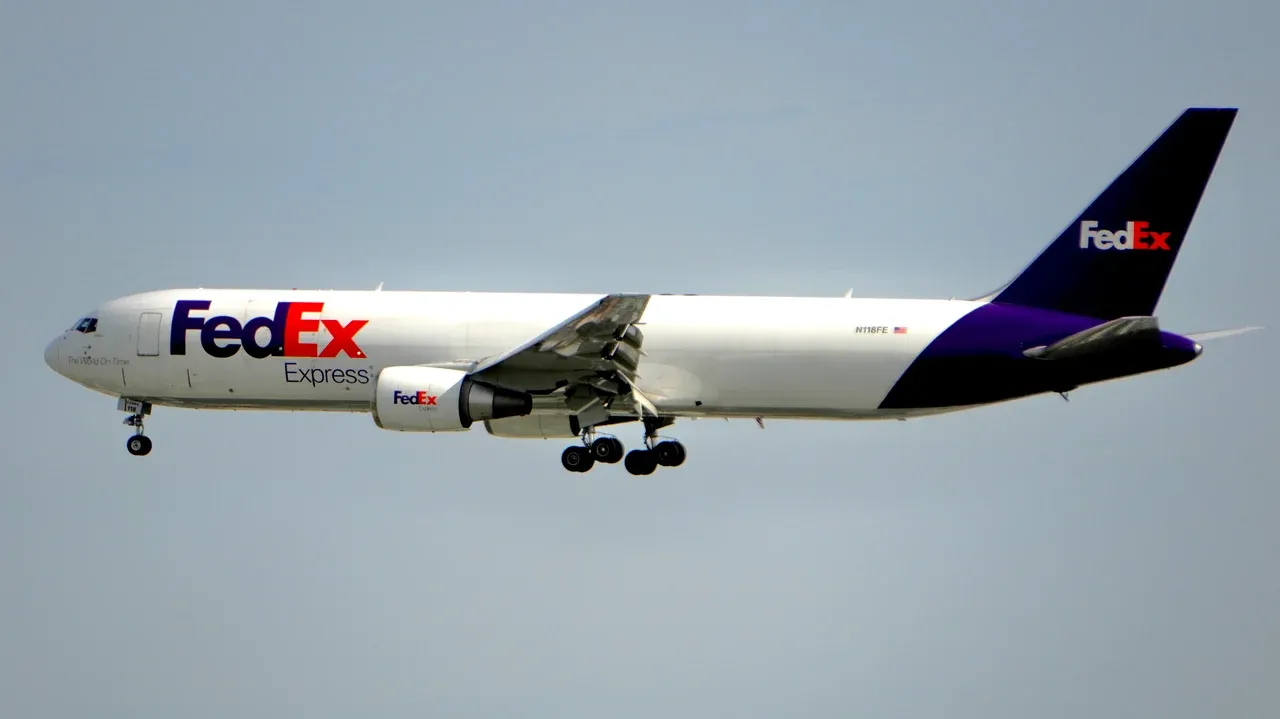
FedEx Corp. has officially completed the long-anticipated spin-off of FedEx Freight Holding Company, Inc., marking a significant milestone in the company’s strategic transformation and creating two independent publicly traded organizations focused on their respective markets. The separation establishes FedEx Freight as a standalone company dedicated to the North American less-than-truckload (LTL) transportation sector, while allowing FedEx to sharpen its focus on its global transportation, e-commerce, and logistics network.
The completion of the transaction represents one of the most notable corporate developments in the transportation and logistics industry in recent years. Industry observers have closely monitored the move, viewing it as a strategic effort to unlock shareholder value, enhance operational focus, and provide each business with greater flexibility to pursue growth opportunities independently.
With the separation now finalized, FedEx Freight common stock has begun regular-way trading on the New York Stock Exchange under the ticker symbol “FDXF.” Meanwhile, FedEx Corp. continues to trade on the NYSE under its long-established ticker symbol “FDX.”
The spin-off signals the beginning of a new chapter for both organizations. For FedEx Freight, independence provides the opportunity to concentrate exclusively on strengthening its leadership position in the highly competitive LTL market. As a standalone company, it can focus its resources, investments, and strategic initiatives on delivering enhanced freight transportation solutions while responding more effectively to customer needs and evolving market conditions.
For FedEx Corp., the transaction allows the company to further streamline its operations and focus on expanding its role as a global logistics and transportation powerhouse. The company has spent recent years implementing a range of transformation initiatives designed to improve efficiency, optimize network performance, and support long-term profitability.
Raj Subramaniam, President and Chief Executive Officer of FedEx, described the completion of the spin-off as a landmark achievement for both organizations.
“The successful separation of FedEx Freight is a pivotal milestone, positioning two independent companies to lead their respective industries and create long-term value for their stockholders,” said Subramaniam.
He emphasized that the transaction provides FedEx Freight with the freedom to build upon its established strengths, including its extensive network, operational scale, and customer-focused culture. At the same time, the separation enables FedEx to continue advancing its broader mission of connecting people and businesses through a powerful global transportation infrastructure.
Subramaniam added that the spin-off positions FedEx Freight to capitalize on future opportunities while allowing FedEx to focus on its role as a critical industrial network that supports global commerce and economic growth.
The separation was completed through a pro rata distribution of FedEx Freight shares to existing FedEx shareholders. Under the terms of the transaction, FedEx distributed approximately 80.1% of the outstanding shares of FedEx Freight common stock to holders of FedEx common stock.
Shareholders who owned FedEx stock as of the close of business on May 15, 2026, received one share of FedEx Freight common stock for every two shares of FedEx common stock they held on the record date.
The distribution was structured to ensure that FedEx shareholders maintained an ownership interest in the newly independent freight company while continuing to hold their shares in FedEx Corp. This approach is commonly used in corporate spin-offs to provide shareholders with exposure to both businesses following a separation.
In cases where shareholders were entitled to fractional shares of FedEx Freight stock, cash payments will be provided in lieu of issuing fractional shares. This standard practice simplifies the administration of the distribution and ensures a smooth transition for investors.
The spin-off immediately creates a new publicly traded company with its own management team, board of directors, financial reporting structure, and strategic priorities.
FedEx Freight enters its new phase as one of the most recognized and established operators in the North American less-than-truckload market. The company has built a reputation for reliable service, extensive network coverage, and strong customer relationships across a wide range of industries.
The LTL sector plays a critical role in the broader freight transportation ecosystem by enabling businesses to ship smaller freight loads that do not require a full truckload. This service model helps companies manage transportation costs while maintaining supply chain efficiency.
As an independent organization, FedEx Freight is expected to gain greater flexibility in making strategic decisions related to capital allocation, operational investments, technology deployment, and network expansion. Independence may also enable the company to pursue growth opportunities and partnerships specifically tailored to the unique dynamics of the LTL market.
Industry analysts have frequently noted that pure-play transportation companies can benefit from enhanced investor visibility and valuation transparency because their financial performance is easier to assess compared to diversified organizations with multiple business segments.
FedEx Freight’s market-leading position, extensive service network, and strong brand recognition provide a solid foundation for future growth as an independent company.
While FedEx Freight embarks on its journey as a standalone company, FedEx Corp. will continue focusing on its core operations spanning express transportation, ground delivery, e-commerce services, international shipping, and integrated logistics solutions.
The company has consistently emphasized its commitment to network optimization, technological innovation, and operational efficiency. By separating the freight business, FedEx gains additional flexibility to concentrate on strategic initiatives that support its long-term vision.
FedEx remains one of the world’s largest transportation and logistics companies, serving customers across more than 220 countries and territories. Its extensive network plays a vital role in facilitating international trade, supporting supply chains, and enabling businesses to connect with customers worldwide.
The separation aligns with broader trends across corporate America, where companies increasingly seek to unlock value through focused business structures and specialized operating models.
Although the majority of FedEx Freight shares have been distributed to shareholders, FedEx has retained ownership of approximately 19.9% of the outstanding shares of FedEx Freight common stock.
The company indicated that it intends to dispose of these remaining shares within 24 months following the completion of the separation. The planned disposition may occur through one or more subsequent transactions designed to support FedEx’s broader financial strategy.
According to the company, the retained stake may be used in exchanges involving certain FedEx debt held by creditors. Alternatively, the shares may be distributed directly to FedEx shareholders through future dividend distributions or exchanged for outstanding shares of FedEx common stock.
This phased approach provides flexibility in managing the remaining ownership interest while supporting balance sheet objectives and shareholder value creation initiatives.
Retaining a minority stake following a spin-off is a common practice among corporations undertaking major separations, as it can facilitate tax-efficient transaction structures and provide additional strategic options during the transition period.
The successful completion of the spin-off is expected to have important implications for investors, customers, employees, and the broader transportation sector.
For investors, the creation of two independent companies provides the opportunity to evaluate and invest in distinct business models with different growth profiles and market dynamics. Some investors may be attracted to FedEx Freight’s focused exposure to the North American freight market, while others may prefer FedEx’s diversified global transportation and logistics platform.
For customers, both organizations have emphasized continuity and service reliability throughout the transition process. The separation is not expected to disrupt operations, and each company remains committed to maintaining strong customer relationships and service quality.
The transaction also highlights the growing importance of strategic specialization within the transportation industry. As supply chains become increasingly complex and customer expectations continue to evolve, companies are seeking organizational structures that enable greater agility, innovation, and responsiveness.
The spin-off involved extensive planning, regulatory compliance, financial analysis, and legal coordination. To support the transaction, FedEx engaged leading advisory firms with significant experience in corporate separations and capital markets transactions.
Goldman Sachs & Co. LLC and J.P. Morgan Securities LLC served as financial advisors, providing strategic guidance throughout the process. Their roles included evaluating transaction structures, assessing financial implications, and supporting execution planning.
Legal counsel for the transaction was provided by Skadden, Arps, Slate, Meagher & Flom LLP, one of the world’s leading law firms in corporate restructuring, mergers and acquisitions, and securities matters.
The involvement of these advisors reflects the complexity and significance of the transaction, which required careful coordination across multiple financial, legal, regulatory, and operational dimensions.
With the spin-off now complete, both FedEx and FedEx Freight begin a new phase as independent publicly traded companies focused on delivering value to shareholders and customers.
FedEx Freight starts its journey as a dedicated LTL transportation leader with the flexibility to pursue opportunities tailored specifically to the freight market. Meanwhile, FedEx continues to strengthen its position as a global logistics and transportation network supporting commerce around the world.
The successful separation underscores the company’s commitment to strategic transformation and long-term value creation. As both organizations move forward independently, investors and industry stakeholders will closely watch how each company leverages its focused business model to drive growth, innovation, and competitive advantage in the years ahead.
Source link: https://www.businesswire.com/