

GenFlat Completes First Commercial Production Run of Patented Collapsible Shipping Containers
GenFlat Holdings, a company focused on transforming global logistics through innovative and sustainable container technology, has announced the successful completion of its first commercial-scale manufacturing run of 100 patented 40-foot high-cube collapsible shipping containers. The achievement marks a significant milestone in the company’s transition from product development and testing to full-scale commercial production and deployment.
The completion of this inaugural production run comes at a time when the global shipping and logistics industry continues to grapple with rising operating costs, increasing environmental pressures, and longstanding inefficiencies related to the movement and storage of empty containers. GenFlat’s collapsible container technology has been developed specifically to address these challenges by dramatically reducing the space occupied by empty containers during transport and storage.
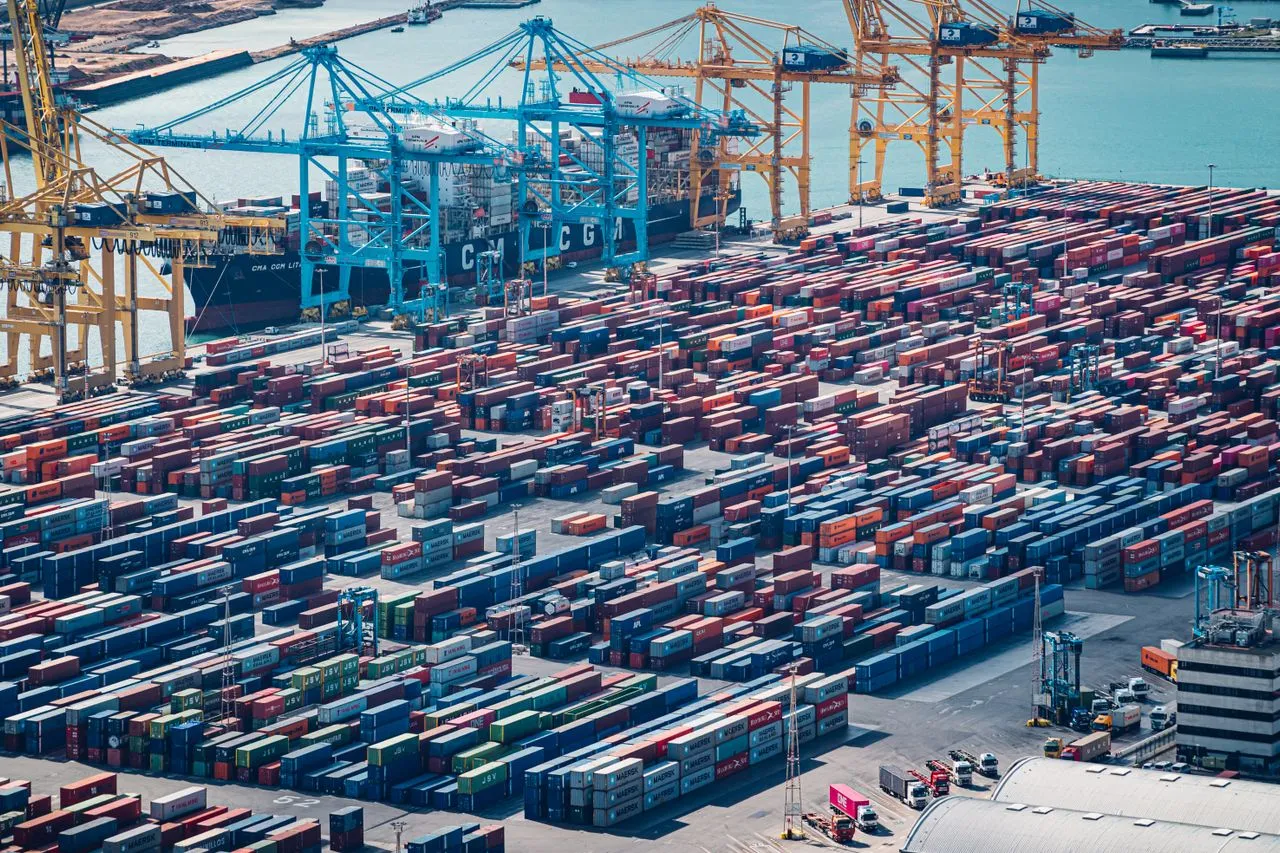
Industry experts estimate that shipping companies spend approximately $20 billion annually repositioning empty containers around the world. These costs arise due to trade imbalances between regions, where containers frequently accumulate in import-heavy markets and must be transported back to export hubs. The movement of empty containers consumes valuable vessel, rail, and trucking capacity while generating significant operational expenses and greenhouse gas emissions.
GenFlat’s patented solution seeks to eliminate much of this inefficiency. Unlike conventional shipping containers, which occupy the same amount of space whether full or empty, GenFlat containers can collapse in less than 80 seconds and be stacked four units high. This allows four empty containers to fit into the footprint normally occupied by a single standard container, creating a 4:1 space-saving ratio.
According to the company, this innovative design has the potential to reduce freight, handling, and storage expenses by as much as 75 percent. In addition to lowering costs, the technology can contribute to sustainability goals by reducing the number of truck trips, rail movements, and ocean vessel voyages required to transport empty containers.
Addressing a Costly Global Challenge
The issue of empty container repositioning has long been one of the shipping industry’s most persistent operational headaches. Global trade flows are rarely balanced, creating significant disparities between regions that export more goods than they import and those that import more than they export.
As a result, millions of empty containers are constantly moved around the world to ensure that exporters have sufficient equipment available. During periods of supply chain disruption, such as those experienced during the COVID-19 pandemic, container imbalances became even more pronounced, highlighting the need for more efficient solutions.
The financial impact of these inefficiencies extends beyond shipping lines. Port operators, logistics providers, freight forwarders, and cargo owners all bear indirect costs associated with congestion, equipment shortages, and delays caused by container repositioning activities.
GenFlat believes its technology can play a meaningful role in reducing these inefficiencies by enabling more containers to be moved using fewer transportation assets. By shrinking the physical footprint of empty containers, carriers can free up valuable cargo space and improve overall network efficiency.
Commercial Manufacturing Milestone
The production of the first 100 commercial units represents a major achievement for the company after years of research, engineering, testing, and certification efforts. Moving from prototype development to commercial manufacturing is often one of the most challenging stages for technology-focused companies, requiring robust production processes and quality controls to ensure consistent performance at scale.
Drew Hall, Chief Executive Officer of GenFlat, described the completion of the manufacturing run as a pivotal moment in the company’s evolution.
“Producing these first 100 containers is a defining moment for GenFlat,” Hall said. “We’ve successfully transitioned from development and testing into full commercial manufacturing and delivery.”
The milestone demonstrates the company’s readiness to supply its technology to commercial customers and begin broader deployment across global transportation networks.
Hall emphasized that the shipping industry is facing increasing pressure from multiple directions, including higher fuel prices, congested ports, rising terminal costs, and stricter environmental regulations. These challenges are encouraging carriers and logistics providers to seek innovative solutions that can improve operational efficiency while supporting sustainability initiatives.
According to Hall, GenFlat’s collapsible container system directly addresses one of the industry’s largest sources of waste and inefficiency.
The company also revealed that it has already secured several orders for the new containers and that multiple major shipping carriers are preparing real-world operational trials. These evaluations will assess the containers’ performance in both ocean freight and intermodal rail transportation environments.
Maintaining Industry Standards
While collapsibility is the defining feature of GenFlat’s design, maintaining the structural integrity and reliability expected of standard shipping containers has been equally important during development.
Shipping containers must withstand harsh operating conditions, including heavy loads, rough handling, and exposure to extreme weather during international transportation. Any alternative design must meet rigorous safety and performance requirements to gain acceptance across the industry.
GenFlat reports that its containers maintain full ISO strength and rigidity standards when deployed. This ensures compatibility with existing shipping infrastructure and enables seamless movement across multiple transportation modes, including ships, trains, and trucks.
Because the containers conform to established international standards, they can be integrated into existing logistics operations without requiring significant infrastructure modifications. This compatibility may help accelerate adoption among carriers and terminal operators seeking practical ways to improve efficiency.
The company’s engineering approach focuses on ensuring that the containers perform identically to conventional units when in use while offering substantial advantages when empty.
The Genny Actuator System
A key component of the GenFlat solution is the company’s proprietary Genny actuator system. Designed to simplify the collapse and deployment process, the system allows operators to fold containers quickly and safely without requiring specialized equipment or external power sources.
The actuator system attaches directly to standard forklifts, making it easy for terminal operators and logistics providers to incorporate the process into existing workflows.
Once attached, the system can collapse a container in under 80 seconds. After folding, the container locks securely into place, enabling safe stacking and transport. Four collapsed containers can then be stacked together, occupying the same space as a single traditional container.
This capability has important implications for storage yards, port terminals, rail depots, and distribution centers where space constraints can create operational bottlenecks. By reducing the amount of land and infrastructure required to store empty containers, operators may be able to increase capacity without major facility expansions.
Furthermore, the ability to move multiple empty containers simultaneously can improve asset utilization and reduce transportation costs throughout the supply chain.
Supporting Sustainability Goals
Environmental sustainability has become an increasingly important priority for the global shipping industry. Governments, regulators, investors, and customers are demanding lower carbon emissions and greater efficiency across transportation networks.
The maritime sector faces growing pressure to reduce greenhouse gas emissions through a combination of cleaner fuels, improved vessel technologies, and more efficient operations. Container repositioning presents a significant opportunity for emissions reduction because empty movements generate costs and emissions without directly transporting cargo.
By reducing the number of trips required to move empty equipment, GenFlat’s technology has the potential to contribute to industry-wide decarbonization efforts. Fewer truck journeys, rail shipments, and vessel slots dedicated to empty containers translate into lower fuel consumption and reduced emissions.
The space-saving benefits can also improve utilization rates across transportation assets, allowing operators to maximize efficiency while minimizing environmental impact.
As environmental regulations continue to tighten worldwide, solutions that simultaneously reduce costs and emissions are expected to attract increasing attention from shipping companies and logistics providers.
The successful completion of GenFlat’s first commercial production run signals the beginning of a new phase for the company as it seeks to scale adoption of its technology across global transportation markets.
With commercial orders already secured and major carrier trials scheduled, the company is positioning itself to demonstrate the real-world value of collapsible container technology in operational environments. Positive trial results could pave the way for broader adoption among shipping lines, port operators, rail companies, and logistics providers seeking solutions to longstanding container management challenges.
As global trade continues to expand and supply chains become increasingly complex, the need for more efficient and sustainable logistics solutions remains a top priority. GenFlat’s patented collapsible shipping containers represent a novel approach to addressing one of the industry’s most expensive and environmentally impactful problems.
By combining ISO-compliant performance with significant space-saving capabilities, the company aims to help reshape the way empty containers are handled throughout the global supply chain. The completion of the first commercial-scale manufacturing run marks an important step toward that vision and demonstrates the growing momentum behind innovative technologies designed to improve efficiency, reduce costs, and support a more sustainable future for international trade.
Source link: https://www.businesswire.com/