

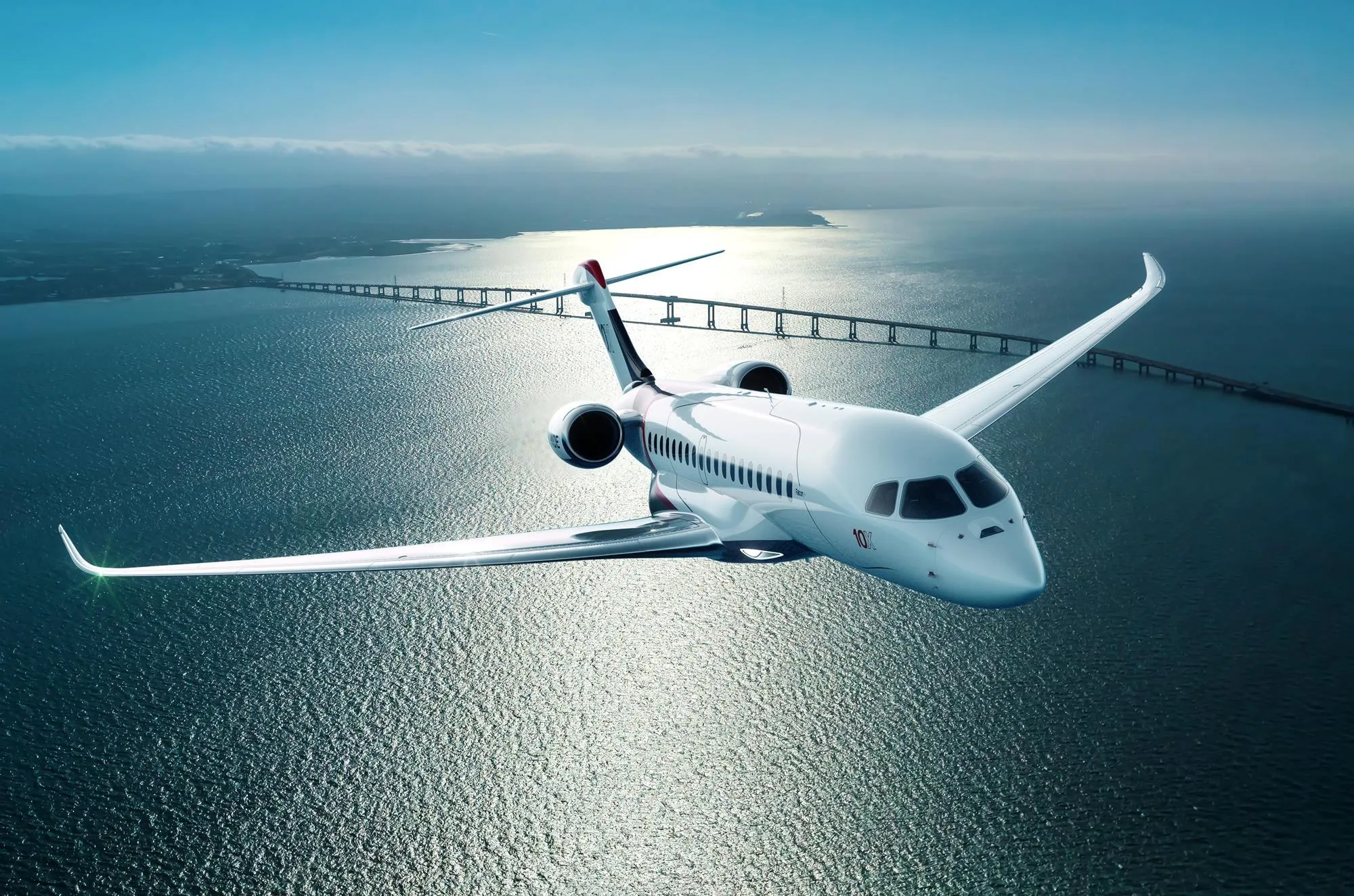
Hexcel Corporation has extended its congratulations to Dassault Aviation following the successful roll-out of the groundbreaking Dassault Falcon 10X, a milestone that marks a major step forward in the evolution of next-generation business aviation. The unveiling of the aircraft represents not only a technological achievement for the aviation industry but also highlights the strength of the long-standing partnership between the two aerospace companies. As Dassault’s newest ultra-long-range business jet progresses toward its entry into service, Hexcel’s advanced composite materials will play a critical role in shaping the aircraft’s performance, durability, and efficiency.
The Falcon 10X program represents one of the most ambitious projects in the business jet sector in recent years. Designed to set new benchmarks in range, comfort, and operational efficiency, the aircraft features an all-new wing architecture that relies heavily on advanced composite materials. In 2022, Hexcel was selected to supply structural prepregs used in the manufacturing of the entire wing for the Falcon 10X, demonstrating the confidence Dassault Aviation has in Hexcel’s expertise and materials technology. This selection reflects a collaborative relationship that has evolved over many years and has contributed to multiple successful aircraft programs.
A Major Milestone in Business Aviation
The roll-out of the Falcon 10X marks a significant phase in the aircraft’s development journey. A roll-out event typically signifies that the primary structural assembly of the aircraft has been completed and that the aircraft is ready to enter the next stages of ground testing and flight testing. For Dassault Aviation, the milestone demonstrates the steady progress of a program designed to redefine expectations in the ultra-long-range business jet segment.
The Falcon 10X was first introduced by Dassault as a flagship aircraft intended to deliver exceptional performance combined with unparalleled passenger comfort. The jet is expected to provide intercontinental range capabilities, enabling direct connections between major global business hubs while maintaining fuel efficiency and operational flexibility. Achieving these performance goals requires cutting-edge aerodynamics and lightweight materials—areas where Hexcel’s carbon fiber composite technologies play a central role.
Strengthening a Long-Standing Partnership
The relationship between Hexcel and Dassault Aviation spans decades and is built on a shared commitment to innovation in aerospace materials and aircraft design. Over the years, the two companies have collaborated on several aircraft programs, contributing to advancements in composite structures that improve aircraft performance while reducing weight.
Hexcel Chairman, President, and Chief Executive Officer Tom Gentile emphasized the importance of this collaboration in advancing aerospace technology. According to Gentile, the partnership illustrates how Hexcel’s expertise in lightweight carbon fiber composite solutions can help drive the development of high-performance aircraft platforms.
Lightweight composite materials have become essential in modern aviation because they allow aircraft manufacturers to reduce structural weight while maintaining strength and durability. Lower aircraft weight translates into improved fuel efficiency, extended range, and reduced environmental impact. In the case of the Falcon 10X, these advantages are particularly important because the aircraft is designed to operate across long distances while offering a spacious cabin and high levels of passenger comfort.
Hexcel’s role in the Falcon 10X program reinforces its position as a key supplier to leading aerospace manufacturers worldwide. The company has built a reputation for producing advanced composite materials that meet the demanding requirements of modern aircraft, including high strength-to-weight ratios, resistance to fatigue, and long-term durability.
Advanced Composite Technology for the Falcon 10X
At the heart of Hexcel’s contribution to the Falcon 10X program is its advanced M21E/IMA prepreg technology. Prepregs are composite materials in which reinforcing fibers, such as carbon fiber, are pre-impregnated with a resin system before being formed into structural components. These materials are widely used in aerospace manufacturing because they provide consistent quality, superior mechanical properties, and precise control during the production process.
The M21E/IMA prepreg system was developed through close collaboration between Hexcel engineers and Dassault Aviation’s technical teams. This partnership allowed both companies to tailor the material’s characteristics to meet the specific structural requirements of the Falcon 10X wing.
Aircraft wings must withstand a wide range of stresses during operation, including aerodynamic loads, turbulence, and repeated cycles of takeoff and landing. To perform reliably under these conditions, wing structures must be both lightweight and exceptionally strong. Hexcel’s prepreg materials provide the stiffness and fatigue resistance needed to ensure the structural integrity of the wing over the aircraft’s operational lifespan.
Another key advantage of the composite wing design is improved aerodynamic efficiency. Lighter structures allow engineers to optimize the shape and flexibility of the wing, which can enhance lift and reduce drag. These improvements contribute directly to better fuel efficiency and longer flight range, both of which are critical factors for business jet operators.
Secure Supply Chain and Industry Adoption
Beyond the performance characteristics of its materials, Hexcel also brings a secure and reliable supply chain to the Falcon 10X program. Aerospace manufacturing requires strict quality standards and dependable production capabilities to ensure that aircraft components meet safety regulations and certification requirements.
Hexcel’s established global manufacturing network and quality control processes provide Dassault Aviation with confidence that materials will be delivered consistently and on schedule. This reliability is especially important in large aircraft programs where delays in material supply could impact the overall development timeline.
Additionally, Hexcel’s prepreg technologies are widely adopted across the aerospace industry, further demonstrating their proven performance and reliability. The extensive use of these materials in commercial, defense, and business aviation programs highlights their versatility and effectiveness in demanding aerospace applications.
Advancing Sustainability and Efficiency
As the aviation industry continues to pursue greater sustainability, advanced composite materials are playing an increasingly important role. By reducing aircraft weight, composites help lower fuel consumption and reduce carbon emissions. For long-range aircraft like the Falcon 10X, these improvements can have a significant impact over the aircraft’s lifetime.
The use of a full composite wing in the Falcon 10X aligns with broader industry efforts to develop more efficient aircraft capable of meeting evolving environmental expectations. Manufacturers are investing heavily in new materials, improved aerodynamics, and more efficient propulsion systems to achieve these goals.
Hexcel’s advanced composites support these efforts by enabling aircraft designs that maximize performance while minimizing environmental impact. The company continues to invest in research and development to create next-generation materials that offer even greater strength, durability, and sustainability.
Looking Ahead to Flight Testing and Certification
With the Falcon 10X now rolled out, the program will move into the next stages of development, including ground testing and flight trials. These phases are essential for validating the aircraft’s design, systems, and performance capabilities before it enters commercial service.
Flight testing will allow engineers to evaluate how the aircraft performs under real-world conditions, including its aerodynamic efficiency, structural behavior, and handling characteristics. The composite wing supplied by Hexcel will be a central component in these evaluations, as it plays a critical role in the aircraft’s overall performance.
If testing proceeds as planned, the Falcon 10X is expected to set new standards for the ultra-long-range business jet category. Its combination of advanced aerodynamics, composite structures, and spacious cabin design aims to deliver a superior travel experience for business aviation customers.
A Flagship Aircraft for the Future
For Dassault Aviation, the Falcon 10X represents the next chapter in its legacy of designing innovative business aircraft. The company has long been known for producing high-performance jets that combine advanced engineering with luxurious cabin features. The Falcon 10X builds on this tradition while introducing new technologies that push the boundaries of what is possible in business aviation.
For Hexcel, participation in the program further strengthens its role as a strategic partner to leading aircraft manufacturers. By supplying the advanced composite materials used in the Falcon 10X wing, the company is helping shape the future of aerospace engineering.
The successful roll-out of the Falcon 10X demonstrates what can be achieved when materials innovation and aircraft design expertise come together. Through their continued collaboration, Hexcel and Dassault Aviation are not only advancing the capabilities of modern business jets but also contributing to the broader evolution of the global aerospace industry.
As the Falcon 10X progresses toward its first flight and eventual entry into service, the partnership between the two companies will remain central to ensuring the aircraft meets its ambitious performance goals. The combination of Dassault’s design excellence and Hexcel’s advanced composite technologies promises to deliver a flagship business jet that will stand at the forefront of aviation innovation for years to come.
Source link: https://www.businesswire.com/