


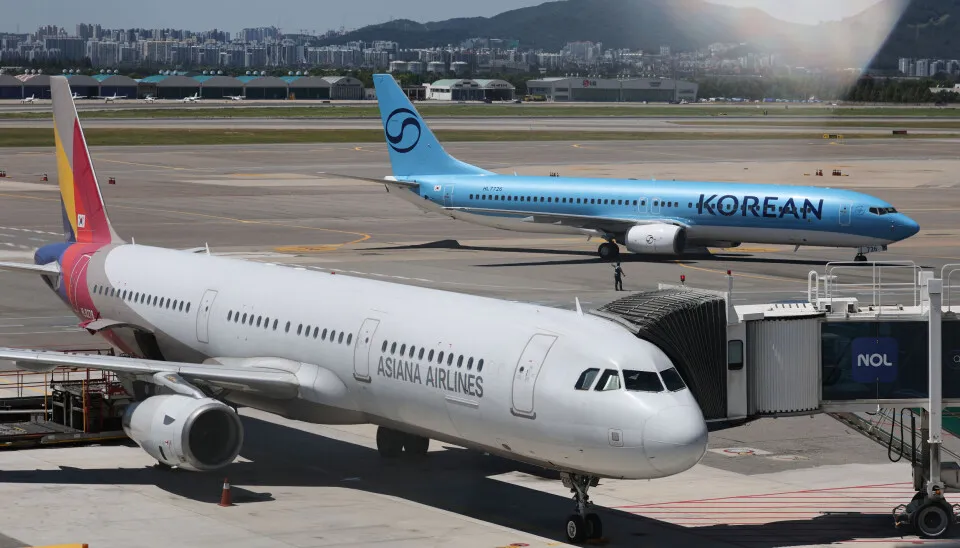
Korean Air and Asiana Airlines have reached another significant milestone in their long-running merger process after securing the necessary board and shareholder approvals for their proposed corporate combination. The approvals bring the two South Korean airlines closer to establishing an integrated carrier, with the formal launch of the merged airline scheduled for December 17, 2026.
The latest developments mark an important stage in a transaction that is expected to reshape South Korea’s aviation landscape. Korean Air’s board of directors formally ratified the merger agreement on August 12, while Asiana Airlines obtained approval from its shareholders at an extraordinary general meeting.
The approvals fulfill key corporate requirements and allow the airlines to move forward with the remaining administrative and operational preparations. Korean Air and Asiana Airlines are now accelerating their post-merger integration activities, including systems integration, employee training, operational preparations and regulatory procedures.
The companies’ efforts come as they work toward bringing two major airline operations together while maintaining the necessary standards for safety, regulatory compliance and customer service.
Korean Air’s board approved and ratified the merger agreement on August 12. The decision fulfilled the requirements applicable to a small-scale merger under Article 527-3 of Korea’s Commercial Act.
At the same time, Asiana Airlines conducted an extraordinary general meeting to seek shareholder approval for the transaction.
The shareholder meeting recorded 81.86% attendance, demonstrating significant participation in the decision. Of the shares represented at the meeting, 99.3%, equivalent to 167,436,677 shares, voted in favor of the merger.
The overwhelming shareholder support represents a major step forward for the transaction and provides the corporate approval needed for the airlines to continue toward formal integration.
The latest approvals formally ratify the merger agreement that was executed by the boards of both airlines in May 2026.
With the agreement now approved by the relevant corporate bodies, Korean Air and Asiana Airlines can continue preparations for the formal completion of the merger.
Following the completion of creditor protection procedures and other remaining administrative formalities, the corporate merger registration is expected to be completed on December 17, 2026.
That date represents an important point in the integration timetable because it is when the two airlines are scheduled to formally become an integrated corporate entity.
The merger process has required extensive preparation because combining two large airlines involves considerably more than consolidating corporate ownership.
Airlines depend on complex operational systems covering reservations, ticketing, flight planning, airport operations, crew management, aircraft maintenance, loyalty programs, customer service and safety management.
Bringing these systems together requires detailed planning and extensive testing to minimize disruption.
Korean Air and Asiana Airlines have therefore been preparing their post-merger integration plans while working through the regulatory and corporate approval process.
Korean Air has continued to progress with its Post-Merger Integration, or PMI, roadmap.
The integration program is designed to prepare the airlines for the transition from two separate organizations into a unified airline operation.
The PMI process covers a wide range of areas, including operational systems, employee training, organizational coordination and regulatory requirements.
The latest corporate approvals allow the airlines to accelerate these activities as the December integration date approaches.
One of the most important elements of the preparation is ensuring that employees across both airlines understand the processes, systems and responsibilities that will apply after the merger.
Joint training is therefore expected to play an important role in the coming months.
The merger process has also involved extensive regulatory oversight.
Korean Air received conditional merger approval from South Korea’s Ministry of Land, Infrastructure and Transport on June 25.
The airline subsequently received clearance of its merger registration statement on July 24.
These regulatory developments have provided important foundations for the next phase of the transaction.
However, airline mergers require continued regulatory coordination even after major corporate approvals have been obtained.
The combined airline must ensure that its operations meet applicable aviation requirements and that the necessary certifications and permits are in place.
Korean Air is therefore continuing to work with relevant authorities on Air Operator Certificate amendments and international operational permits.
The Air Operator Certificate, or AOC, is a fundamental component of airline operations.
It confirms that an airline is authorized to conduct commercial air transportation under applicable aviation regulations and demonstrates that the carrier meets required operational and safety standards.
As Korean Air and Asiana Airlines move toward integration, changes to their operational structure require corresponding regulatory work.
Korean Air is proceeding with AOC amendments in consultation with relevant authorities.
The process is important because the airline must ensure that operational procedures, aircraft, personnel and other elements of the integrated organization are properly reflected in its regulatory documentation.
The work also demonstrates that the merger is progressing beyond corporate approval and into the practical stages of airline integration.
In addition to AOC-related work, Korean Air is pursuing international operational permits required for the integrated airline.
International aviation is governed by a network of bilateral and multilateral agreements, national regulations and airport requirements.
Airlines operating international routes must therefore maintain the appropriate authorizations for the markets they serve.
The integration of two carriers with established international networks requires careful coordination to ensure that the combined airline can continue serving its destinations while complying with the requirements of individual countries and aviation authorities.
Korean Air is working closely with relevant authorities to manage these requirements ahead of the planned December 17 integration.
With the corporate approvals now finalized, systems integration is becoming one of the key priorities for the two airlines.
Modern airline operations depend on highly interconnected information technology platforms.
Reservation systems, departure control, ticketing, baggage handling, revenue management, flight operations and customer communication systems all need to work together.
The integration process must be carefully planned because even a temporary disruption to critical airline systems can affect passengers, employees and airport operations.
Korean Air and Asiana Airlines are therefore expected to conduct extensive preparation and testing before the integrated airline begins operating.
The objective is to ensure that the transition is as seamless as possible for customers and employees.
Employee preparation is another major component of the integration roadmap.
The merger brings together two large workforces with different organizational structures, operating procedures and corporate cultures.
Joint training can help employees become familiar with the processes and systems that will be used following integration.
Training will be particularly important for employees involved directly in flight operations, airport services, customer support, aircraft maintenance and other safety-critical functions.
The integration of airline personnel must be managed carefully to ensure that employees are prepared for their responsibilities under the new organization.
Korean Air has identified joint training and team engagement as important priorities as the December launch approaches.
Beyond technical and operational preparation, the airlines are also focusing on team engagement.
Corporate mergers can involve substantial organizational change, making communication and employee engagement important factors in successful integration.
Employees need to understand how the merger will affect their roles, reporting structures, work processes and interaction with colleagues from the other airline.
Encouraging cooperation between teams can help establish a unified organizational culture.
For Korean Air and Asiana Airlines, building a shared team environment will be particularly important because the combined airline is expected to bring together employees with extensive experience in different areas of commercial aviation.
The merger represents a major development for South Korea’s aviation industry.
Korean Air and Asiana Airlines are two of the country’s most established full-service carriers, and their integration will create a larger combined airline with a broader network and significant operational scale.
The combination could influence the structure of South Korea’s international aviation market and strengthen the country’s position as an important aviation hub in Northeast Asia.
A larger integrated airline may have opportunities to optimize route networks, aircraft utilization and international connectivity.
However, realizing these potential benefits will depend on successful integration and continued compliance with regulatory requirements.
Both airlines have established international operations, serving destinations across Asia and other global regions.
The merger creates an opportunity to combine complementary networks and strengthen connectivity for passengers and cargo customers.
For travelers, an integrated network could provide access to a broader range of destinations through a unified airline.
For cargo customers, the combination could provide additional network options and greater connectivity between South Korea and international markets.
Air cargo is an important part of the aviation industry, particularly for high-value and time-sensitive goods such as electronics, semiconductors, pharmaceuticals and other specialized products.
The integrated airline could therefore play an important role in supporting South Korea’s international trade and supply chains.
The December 17, 2026 integration date is now approaching, making operational readiness a central priority.
The latest corporate approvals remove another important step from the merger process and allow the airlines to concentrate increasingly on practical integration activities.
Systems need to be prepared and tested, employees need to complete relevant training, regulatory documentation needs to be finalized and international operating permissions must be secured.
Each of these elements must be coordinated to ensure that the transition does not disrupt regular airline operations.
The scale of the project means that preparation will continue across multiple departments and operational areas.
The continued involvement of aviation authorities is essential throughout the process.
Korean Air is working closely with relevant authorities as it proceeds with AOC amendments and international operational permits.
This coordination is designed to ensure that the integrated airline satisfies all necessary safety, operational and regulatory requirements.
Aviation is one of the most highly regulated transportation industries, and mergers involving major airlines require particularly detailed oversight.
Regulators must consider issues ranging from safety and operational capability to competition and consumer interests.
The completion of the required regulatory processes will therefore remain a key element of the integration timeline.
The board and shareholder approvals represent a significant achievement for Korean Air and Asiana Airlines.
Korean Air’s board ratification and Asiana Airlines’ overwhelming shareholder approval provide formal corporate backing for the merger agreement signed by the two airlines in May 2026.
The approvals also establish a clearer path toward the planned corporate merger registration on December 17.
Although important administrative and operational tasks remain, the airlines are now entering a phase in which practical integration becomes increasingly important.
The focus will shift toward making sure that systems, employees, aircraft operations and customer-facing services are ready for the transition.
Korean Air and Asiana Airlines are moving closer to the creation of an integrated airline following the latest board and shareholder approvals.
The 99.3% shareholder support at Asiana Airlines’ extraordinary general meeting demonstrates strong backing for the merger among shareholders represented at the meeting. Meanwhile, Korean Air’s board ratification satisfies the relevant requirements under Korea’s Commercial Act for the planned small-scale merger process.
The companies are targeting December 17, 2026 for completion of the corporate merger registration, subject to the remaining creditor protection procedures and administrative requirements.
In preparation, Korean Air continues to advance its Post-Merger Integration roadmap, including systems integration, joint employee training and team engagement.
The airline is also working with aviation authorities on Air Operator Certificate amendments and international operational permits.
The coming months will therefore be critical as Korean Air and Asiana Airlines move from corporate approvals toward operational integration.
Successfully combining the two carriers will require close coordination across virtually every part of the airline business, from flight operations and airport services to technology, customer support, maintenance and corporate functions.
The completion of the merger would represent a major transformation for South Korea’s aviation sector and create a new chapter for both airlines.
With the corporate approvals now secured, Korean Air and Asiana Airlines are positioned to accelerate preparations for their planned December 2026 integration. Their immediate priority will be ensuring that the combined organization is operationally prepared, regulatory compliant and capable of delivering a smooth transition for employees, passengers and business partners.
As the December 17 target approaches, attention will increasingly turn toward the final stages of integration and the launch of the unified airline, marking one of the most significant developments in South Korea’s aviation industry in recent years.
Source link: https://www.koreanair.com/