

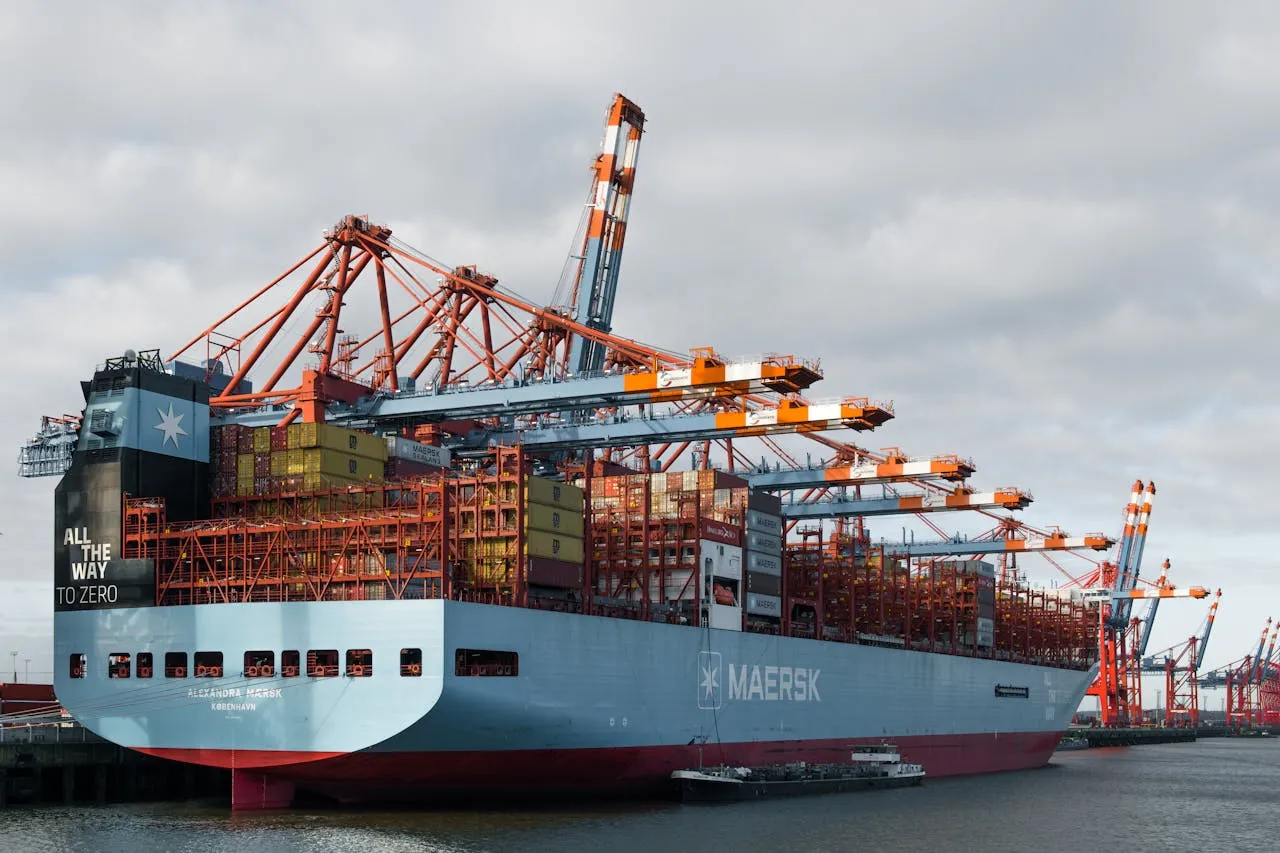
Maersk Delivers Strong 2025 Performance, Advancing Across All Business Segments Amid Shifting Global Trade
A.P. Moller – Maersk A/S delivered a resilient and broadly strong performance in 2025, demonstrating the strength of its integrated business model as global supply chains continued to evolve under geopolitical, economic, and market pressures. Supported by solid volume growth, high asset utilisation, disciplined cost management, and continued operational execution, Maersk’s financial results reached the top end of the company’s guidance range for the year.
Despite persistent volatility in global trade and freight markets, Maersk recorded growth across its Ocean, Logistics & Services, and Terminals businesses, reinforcing its position as one of the world’s leading integrated logistics providers. The company’s performance underscored the relevance of its long-term strategy focused on end-to-end supply chain solutions, infrastructure investment, and operational excellence.
Executive Overview: A Year of Operational Strength and Strategic Progress
In 2025, Maersk delivered strong value to customers while navigating an environment shaped by geopolitical uncertainty, trade route disruptions, and structural changes in global shipping. Volumes increased across operations, asset utilisation remained exceptionally high, and the company made tangible progress in strengthening reliability, efficiency, and cost discipline.
Vincent Clerc, Chief Executive Officer of Maersk, emphasized the strategic significance of the year’s achievements:
We delivered a strong performance and high value for our customers in a year where supply chains and global trade continued to be reshaped by evolving geopolitics. Across our operations, volumes grew and asset utilisation was very high. Our Ocean business set a new benchmark for reliability, Terminals delivered record results, and Logistics & Services continued to advance. The year highlighted the need to strengthen and modernise global supply chains and critical infrastructure, further emphasising the relevance of our strategy.
Clerc added that Maersk’s success continues to be driven by close customer partnerships, a unique global asset footprint, and a relentless focus on operational excellence and cost discipline.
Financial Performance: Results at the Top End of Guidance
Maersk’s full-year financial results for 2025 reflected the company’s ability to convert scale and integration into competitive advantage. Revenue for the year reached USD 54.0 billion, compared with USD 55.5 billion in the prior year. EBITDA totaled USD 9.5 billion, down from USD 12.1 billion, while EBIT reached USD 3.5 billion, compared with USD 6.5 billion in 2024. Despite the year-on-year decline, results landed at the upper end of Maersk’s financial guidance.
The performance highlighted Maersk’s capacity to remain profitable in a market characterized by excess capacity, lower freight rates, and cost inflation, while continuing to invest in long-term growth initiatives.
Ocean Business: Volume Growth and Industry-Leading Reliability
The Ocean segment delivered volume growth broadly in line with the global container market, achieving a 4.9% increase in volumes in 2025 despite highly volatile conditions. While profitability declined due to lower freight rates driven by supply overcapacity, the business strengthened its competitive position through high asset utilisation and improved operational efficiency.
A major milestone during the year was the launch of Maersk’s new East–West network. The network delivered industry-leading reliability, with on-time arrivals exceeding 90% on average—setting a new benchmark for the container shipping sector. The redesigned network also generated cost savings above initial expectations, reinforcing Maersk’s focus on efficiency and service quality.
However, pricing pressure continued to weigh on profitability, highlighting the ongoing challenges facing the container shipping industry amid fleet growth and uneven demand recovery.
Logistics & Services: Continued Progress Toward Full Potential
Maersk’s Logistics & Services segment continued its multi-year transformation in 2025, delivering improved profitability and operational performance. The business benefited from targeted refocusing efforts, particularly in areas such as warehousing and e-fulfilment, which contributed to margin expansion.
While the segment has made steady progress, Maersk acknowledged that Logistics & Services has not yet reached its full potential. Further performance improvements remain a priority as the company continues to refine its product offering, operating model, and customer value proposition.
The segment’s evolution remains central to Maersk’s ambition to provide integrated, end-to-end supply chain solutions that reduce complexity and improve resilience for customers.
Terminals: Record Results and Strategic Infrastructure Growth
Maersk’s Terminals business delivered its strongest financial performance ever in 2025, underscoring the strategic importance of port infrastructure as the backbone of global trade. Revenue increased by 20%, driven by record-high volumes, improved rates, and higher storage revenue.
The segment benefited from strong demand across key markets, particularly in the Americas and Europe, as well as from ongoing investments in new terminal developments, modernization of existing facilities, and the securing of strategic concessions worldwide.
These factors supported record revenue and EBIT, confirming Terminals as a major earnings contributor and a critical enabler of Maersk’s integrated logistics strategy.
Fourth Quarter 2025: Segment Highlights
In the fourth quarter of 2025, Maersk’s performance reflected both continued volume growth and ongoing market pressure on rates.
Ocean
The Ocean business achieved strong volume growth of 8.0% during the quarter. However, sustained pressure on freight rates drove EBIT into negative territory, with EBIT of USD -153 million, compared with USD 567 million in the previous quarter and USD 1.6 billion in Q4 2024.
Logistics & Services
Logistics & Services delivered revenue growth of 1.9% compared with Q4 2024 and recorded year-on-year profitability improvement for the seventh consecutive quarter. The EBIT margin increased by 0.8 percentage points to 4.9%, supported particularly by strong performance in Warehousing and E-fulfilment. EBIT totaled USD 194 million, compared with USD 218 million in the prior quarter and USD 158 million in Q4 2024.
Terminals
The Terminals segment reported revenue growth of 13% year-on-year, with volumes up 8.4% driven by strong demand in the Americas and Europe. EBIT reached USD 321 million, compared with USD 571 million in the previous quarter and USD 338 million in Q4 2024. The quarter was impacted by one-off items, while the EBIT margin excluding impairments stood at a robust 30.1%.
Capital Allocation: Dividend and Share Buy-Back Program
In line with its capital allocation policy, Maersk’s Board of Directors will propose a dividend of DKK 480 per share for approval at the Annual General Meeting. The dividend corresponds to approximately USD 1.1 billion and represents a payout ratio of 40%, consistent with the prior year.
In addition, the Board has approved a share buy-back program of up to DKK 6.3 billion (approximately USD 1.0 billion) to be executed over a 12-month period. The first phase, totaling DKK 3.15 billion (around USD 500 million), will run from 9 February to 5 August 2026.
These measures reflect Maersk’s commitment to disciplined capital allocation and shareholder returns while maintaining financial flexibility.
Organisational Simplification and Cost Reductions
To support continuous productivity improvements and reinforce cost discipline, Maersk announced plans to simplify its organizational structure and reduce corporate overhead costs by USD 180 million annually. As part of this initiative, approximately 15% of corporate roles—around 1,000 positions out of roughly 6,000—will be eliminated across headquarters, regional, and country-level functions.
The required notification and consultation processes have been initiated, with the aim of creating a leaner, more agile organization better aligned with Maersk’s strategic priorities.
Regrouping Logistics & Services Products
Maersk also announced a restructuring of its Logistics & Services product portfolio into three distinct subsegments: Landside, Forwarding, and Solutions. The new structure reflects industry-standard segmentation and the fundamental differences in how various logistics products create customer value.
Under the new model, Landside products will be managed locally at the country level, while Forwarding and Solutions will operate as global product organizations. Leadership responsibilities have been aligned accordingly, with Narin Phol appointed Head of Solutions and Christoph Hemmann named Head of Forwarding. Hemmann will join Maersk’s Executive Leadership Team alongside Phol.
Financial Guidance for 2026
Maersk expects global container market volume growth of between 2% and 4% in 2026 and anticipates growing broadly in line with the market. The outlook reflects expectations of continued overcapacity in the shipping industry and scenarios involving a gradual reopening of the Red Sea trade routes during 2026.
The financial guidance also incorporates the impact of a change in the estimated useful life of vessels from 20 to 25 years, effective 1 January 2026. This adjustment is expected to reduce depreciation expenses by approximately USD 700 million in 2026, supporting underlying EBIT performance.
Positioning for the Future
Maersk’s 2025 performance demonstrated the resilience of its integrated business model and its ability to adapt to a rapidly changing global trade environment. With continued investment in infrastructure, digital capabilities, and customer-centric solutions, the company remains focused on building stronger, more modern, and more resilient supply chains for the future.
Source Link:https://www.maersk.com/news/