


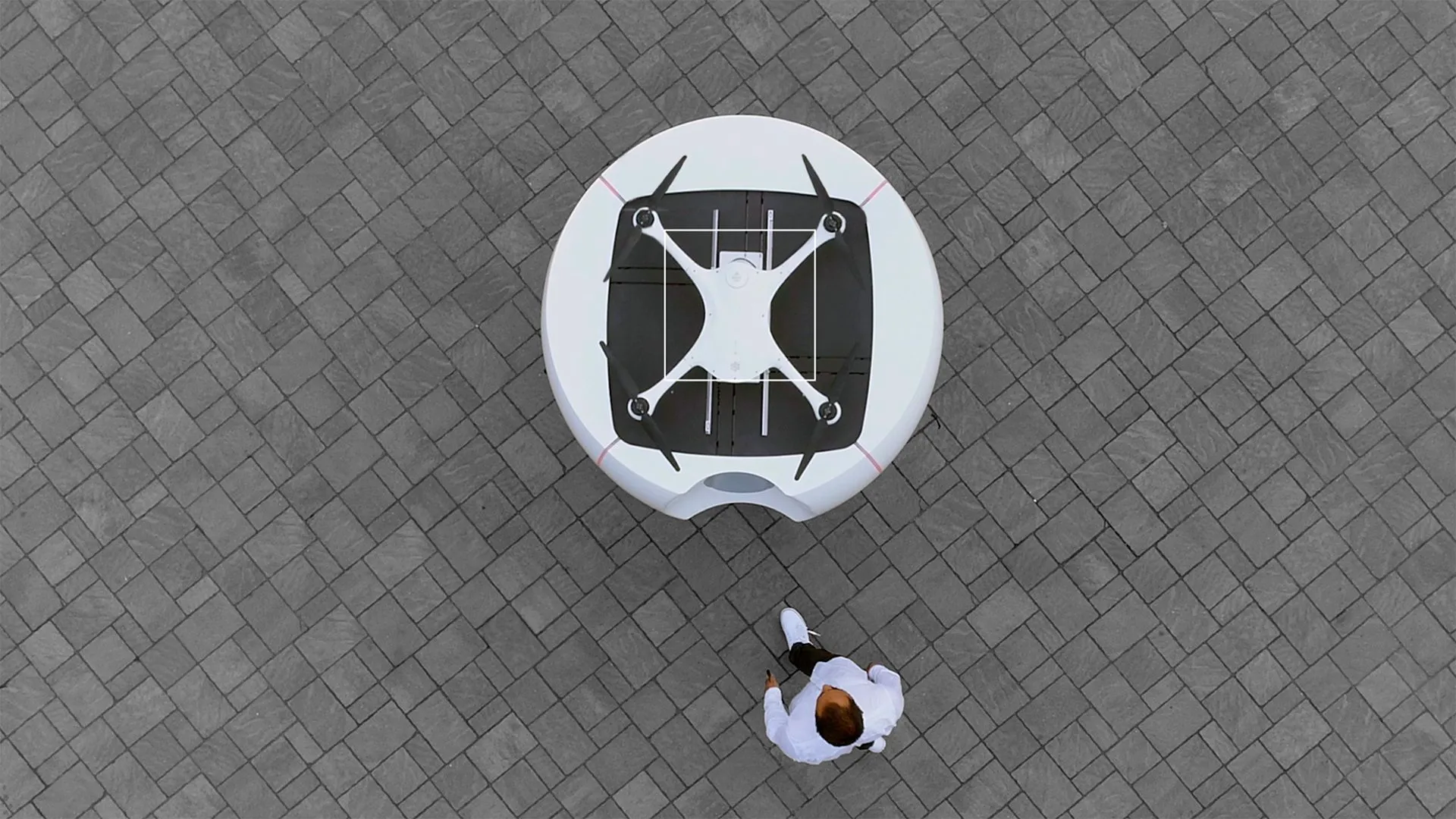
Matternet and SoftBank Robotics America have announced a new strategic partnership aimed at expanding the deployment of autonomous drone delivery solutions for healthcare, retail, and enterprise logistics customers. The collaboration signals growing momentum in the commercial drone delivery sector, where companies are increasingly looking to automation to solve persistent last-mile delivery challenges.
The partnership combines Matternet’s proven autonomous drone logistics technology with SoftBank Robotics America’s expertise in scaling, commercializing, and supporting advanced robotics solutions. Together, the two companies plan to bring drone delivery networks to a wider range of enterprise users, helping organizations improve speed, reduce costs, and modernize supply chain operations.
Last-mile delivery remains one of the most expensive and operationally complex parts of the supply chain. Businesses across industries are dealing with rising transportation costs, labor shortages, increasing urban congestion, and customer expectations for faster delivery times.
Traditional delivery methods that rely on vans, trucks, or couriers often struggle to keep pace with modern demand, especially in dense urban areas or regions where infrastructure limitations create delays. Companies are therefore seeking alternative solutions that can deliver goods more efficiently and with greater consistency.
Autonomous drone delivery is increasingly viewed as a practical answer to many of these issues. By moving small and time-sensitive goods through the air, drone networks can bypass road congestion, shorten transit times, and reduce reliance on manual labor.
The Matternet and SoftBank Robotics America partnership is designed to capitalize on this shift by helping enterprises adopt drone delivery systems at scale.
The first phase of the partnership will focus on healthcare and commercial logistics, two sectors where rapid, dependable transportation is especially valuable.
In healthcare, the ability to move laboratory samples, medications, blood products, and urgent medical supplies quickly can directly impact patient outcomes. Hospitals and healthcare networks often need fast transfers between campuses, laboratories, pharmacies, and care facilities. Drone systems can reduce delays while maintaining consistent service.
Retail and commercial customers can also benefit from faster local delivery, inventory movement between facilities, and improved service levels for urgent or same-day shipments. As e-commerce competition intensifies, businesses are looking for new ways to differentiate themselves through speed and reliability.
By targeting these high-value use cases first, the companies aim to demonstrate measurable operational benefits that can later support expansion into additional industries.
The partnership brings together complementary strengths from both organizations.
Matternet has spent years building autonomous drone logistics platforms that include aircraft, routing software, landing stations, and network management systems. Its systems are designed to operate safely in urban and suburban environments while meeting stringent regulatory standards.
SoftBank Robotics America, meanwhile, has experience helping businesses adopt robotics and automation technologies in real-world environments. The company focuses not only on introducing new technologies, but also ensuring they are integrated effectively into day-to-day operations.
This combination is critical because successful drone delivery requires more than aircraft alone. It also demands installation, maintenance, training, workflow integration, and ongoing operational support.
Under the agreement, SoftBank Robotics America will help manufacture, install, and maintain Matternet’s ground systems. This gives enterprise customers a more complete deployment model with end-to-end support.
While drones often attract attention as flying machines, the supporting ground systems are equally important to a successful logistics network.
Ground infrastructure includes takeoff and landing stations, secure package handling systems, charging solutions, monitoring tools, and software connections to customer logistics platforms. These components help ensure packages move smoothly from warehouse or hospital staff into the drone network and then to the final recipient.
By involving SoftBank Robotics America in manufacturing and maintaining these systems, the partnership aims to reduce complexity for customers and speed up implementation timelines.
Reliable infrastructure also supports scalability. Organizations may begin with one route or one facility, but later expand to multiple sites across cities or regions. Standardized installation and maintenance services make that growth more practical.
Matternet is widely recognized as one of the early pioneers in commercial drone logistics. The company has achieved several regulatory milestones that distinguish it within the industry.
Notably, Matternet became the first drone delivery company to secure both FAA Type Certification and Production Certification. These approvals are significant because they demonstrate that the company’s aircraft meet rigorous safety and manufacturing standards.
Matternet’s systems have already supported tens of thousands of commercial flights across the United States and Europe, including operations in urban and suburban settings where safety, reliability, and regulatory compliance are essential.
This operational experience gives enterprise customers greater confidence when considering drone adoption. Rather than testing unproven systems, organizations can work with a provider that has already demonstrated commercial readiness.
Andreas Raptopoulos, Founder and CEO of Matternet, described the partnership as part of a larger technological shift.
He said the world is entering the age of “Physical AI,” where intelligent autonomous systems do more than process digital information—they also move goods and interact with the physical world.
According to Raptopoulos, Matternet’s long-term vision has been to build autonomous networks capable of moving physical items efficiently, much like data moves across digital networks today.
The partnership with SoftBank Robotics America is expected to accelerate that vision by helping establish real-world delivery infrastructure for healthcare, commerce, and industrial users.
This concept reflects a broader trend in automation, where AI-powered systems are being applied not just in software but also in warehouses, factories, vehicles, and logistics networks.
Brady Watkins, President and General Manager of SoftBank Robotics America, emphasized that the challenge for emerging logistics technologies is no longer simply inventing them.
Instead, the next stage is operationalization—ensuring that advanced systems can deliver consistent, measurable business outcomes in everyday environments.
That means integrating drone platforms into existing workflows, managing maintenance schedules, training staff, ensuring uptime, and meeting service-level expectations.
Many promising technologies fail because they cannot scale beyond pilot programs. By combining Matternet’s aviation and software expertise with SoftBank Robotics America’s deployment capabilities, the two companies aim to overcome this common barrier.
Katya Akudovich, Vice President of New Ventures at SoftBank Robotics America, noted that the company focuses on bringing breakthrough technologies into large-scale commercial use.
She said the partnership with Matternet will help move autonomous drone delivery from isolated demonstrations into routine business operations.
This is especially relevant for sectors such as healthcare, where every minute can matter, and logistics reliability is critical. Hospitals, laboratories, and medical networks need dependable systems rather than experimental tools.
Likewise, retailers and enterprises increasingly need flexible delivery options that can adapt to changing demand patterns and labor constraints.
Drone delivery may also offer environmental benefits when compared with some conventional delivery methods.
Small electric drones can potentially reduce emissions for short-distance deliveries that would otherwise require fuel-powered vehicles. They may also lessen traffic congestion by shifting certain package movements away from roads.
Although drones will not replace all delivery vehicles, they can become a complementary logistics layer for suitable shipments such as lightweight, urgent, or high-value goods.
As businesses pursue sustainability goals, this added efficiency may become another driver of adoption.
The partnership between Matternet and SoftBank Robotics America reflects increasing maturity in the drone delivery market. The focus is shifting from experimentation to commercialization, infrastructure deployment, and operational scale.
If successful, the collaboration could accelerate adoption across hospitals, retailers, campuses, industrial facilities, and other enterprise environments.
As regulations continue to evolve and customer expectations for speed rise, autonomous delivery networks are likely to play a growing role in future logistics systems.
By combining advanced drone technology with deployment expertise and service support, Matternet and SoftBank Robotics America are positioning themselves to help shape that next phase of logistics transformation.
Source link: https://www.businesswire.com/