


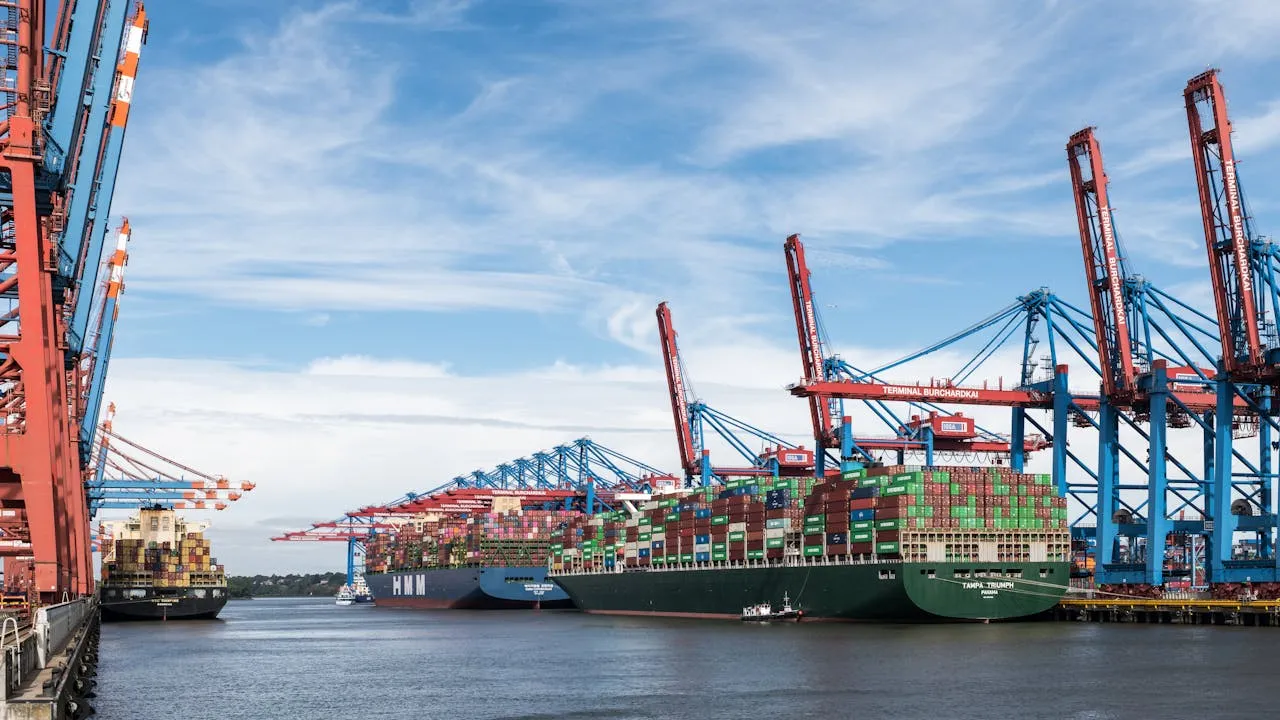
Port Houston has secured a $48 million federal grant from the U.S. Department of Transportation’s Maritime Administration (MARAD) to advance major expansion and modernization work at its Bayport Container Terminal. The funding will support the construction of a new container yard and the development of a new exit gate, both of which are designed to significantly improve cargo flow, operational efficiency, and long-term resilience at one of the busiest container facilities in the United States.
The award is part of the Maritime Administration’s Port Infrastructure Development Program (PIDP), a competitive federal initiative aimed at strengthening the nation’s port system and improving the movement of goods across critical maritime gateways. For this funding cycle, MARAD allocated approximately $450 million in total grants nationwide, with Port Houston receiving $48 million to support its Bayport Terminal expansion strategy.
Port Houston will complement the federal award with approximately $56 million in local matching funds, bringing the total investment package for the Bayport upgrades to more than $100 million. The combined funding will accelerate construction activities tied to Port Houston’s Strategic Terminal Operations & Resilience Measures (STORM) program, which is focused on preparing the terminal for sustained growth in container volumes while improving safety, efficiency, and infrastructure durability.
The Bayport Container Terminal has been one of the fastest-growing port facilities in the United States over the past decade, driven by increasing international trade flows, supply chain diversification, and demand for Gulf Coast logistics capacity. As container volumes continue to rise, Port Houston has identified the need to expand yard capacity and improve landside operations to prevent congestion and maintain competitive turnaround times.
The new container yard funded through the PIDP grant will add significant handling capacity, enabling the terminal to accommodate an additional 440,000 twenty-foot equivalent units (TEUs) annually. This expansion is expected to reduce operational bottlenecks and allow the port to better manage peak shipping periods without sacrificing efficiency.
Alongside the yard expansion, the construction of a new East Exit Gate is expected to be a major improvement for truck movement within the terminal. The upgraded gate system is designed to streamline truck entry and exit processes, reduce wait times, and improve traffic distribution across the facility. Port officials estimate that the improved flow could save more than 11 million truck operating hours over the life of the project, resulting in substantial efficiency gains for carriers, shippers, and logistics operators.
Port officials emphasized that the grant reflects strong collaboration between federal agencies and Texas congressional leaders who supported the funding request. Port Commission Chairman Ric Campo highlighted the importance of coordinated advocacy in securing the investment, noting the role of key lawmakers in advancing infrastructure funding priorities for the Houston Ship Channel region.
“Port Houston is grateful for the continued support from our local and federal officials who advocate on our behalf to steer federal investments to the Port and the Houston Ship Channel,” Campo said. He specifically acknowledged U.S. Senators John Cornyn and Ted Cruz, along with Representatives Brian Babin and Sylvia Garcia, for their efforts in supporting the project.
Federal lawmakers also underscored the strategic importance of the investment. U.S. Senator Ted Cruz described Port Houston as a critical trade gateway linking Texas to global markets and emphasized the importance of expanding terminal infrastructure to maintain supply chain strength. He noted that the funding will support a 47-acre expansion at Bayport, along with infrastructure improvements including upgraded gates, reinforced facilities, and enhanced communications and electrical systems.
Representative Brian Babin echoed similar sentiments, framing the investment as a key driver of regional economic growth. He highlighted the role of expanded terminal capacity in strengthening supply chains, creating jobs, and ensuring long-term competitiveness for Southeast Texas. Babin also emphasized the importance of continued federal investment in maritime infrastructure to support American trade leadership.
Representative Sylvia Garcia emphasized the broader economic and national significance of the project. She noted that expanding Bayport’s capacity will help improve cargo movement efficiency, strengthen supply chain resilience, and support business growth across the Houston region. Garcia also pointed to infrastructure modernization as a critical step in maintaining Houston’s position as a leading global trade hub.
The PIDP-funded improvements at Bayport are part of Port Houston’s broader STORM initiative, which is designed to modernize operations and prepare the terminal for future growth in both domestic and international cargo demand. The program focuses on four primary objectives:
Capacity Expansion: The project will significantly increase the terminal’s ability to handle container volumes, adding approximately 440,000 TEUs in annual capacity. This expansion is essential to accommodate projected long-term growth in global trade and port activity.
Trucking Efficiency Improvements: The construction of a new East Exit Gate is expected to reduce congestion and improve truck processing times. By optimizing gate operations and traffic flow, the port aims to reduce delays, improve reliability, and enhance overall landside logistics performance.
Infrastructure Resilience: The project includes upgrades to utilities and drainage systems to strengthen the terminal’s resilience against both natural disasters and operational disruptions. These improvements are intended to ensure continued operations during extreme weather events and other potential hazards.
Technology and Safety Enhancements: The funding will also support upgrades to electrical and communications infrastructure, enabling the deployment of modern cargo-handling equipment and enhanced terminal security systems. These improvements will help the port integrate advanced technologies and improve overall operational safety.
As one of the largest and most strategically important port systems in the United States, Port Houston plays a central role in facilitating international trade through the Gulf of Mexico. The Bayport Container Terminal, in particular, serves as a key hub for containerized cargo moving between Asia, Europe, and the Americas.
With continued growth in global shipping volumes and evolving supply chain dynamics, investments in port infrastructure have become increasingly important. The PIDP grant is expected to strengthen Bayport’s multimodal connectivity by improving the integration of maritime, rail, and trucking networks. This, in turn, will help reduce landside congestion and improve cargo throughput efficiency.
Port Houston is currently the fifth-largest container port in the United States and has recorded the fastest container volume growth among major U.S. ports over the past ten years. This growth trajectory has increased the urgency of infrastructure upgrades to ensure that the port can continue meeting demand while maintaining competitive service levels.
The combined federal and local investment in the Bayport Container Terminal is expected to deliver long-term benefits for both regional and national economies. By expanding capacity and improving operational efficiency, the project will help reduce supply chain delays, lower logistics costs, and improve the reliability of cargo movement through the Gulf Coast corridor.
In addition to trade benefits, the project is expected to support job creation during both construction and long-term operations. Infrastructure expansion at major ports typically generates employment opportunities across construction, logistics, transportation, and related industries.
The modernization efforts are also expected to enhance Port Houston’s ability to attract new shipping lines and expand existing trade routes, further strengthening its position in global maritime networks.
With this latest federal investment, Port Houston is reinforcing its long-term strategy of expanding capacity while modernizing infrastructure to meet future demand. The Bayport Container Terminal expansion represents a critical step in ensuring that the port remains competitive in an increasingly complex global logistics environment.
By combining federal funding with local investment and strategic planning, Port Houston is positioning itself to handle higher cargo volumes, improve efficiency, and maintain resilience in the face of evolving trade patterns and operational challenges.
As global supply chains continue to shift and demand for efficient port infrastructure increases, projects like the Bayport expansion are expected to play a central role in sustaining economic growth and strengthening U.S. trade competitiveness in the decades ahead.
Source link: https://www.businesswire.com/