


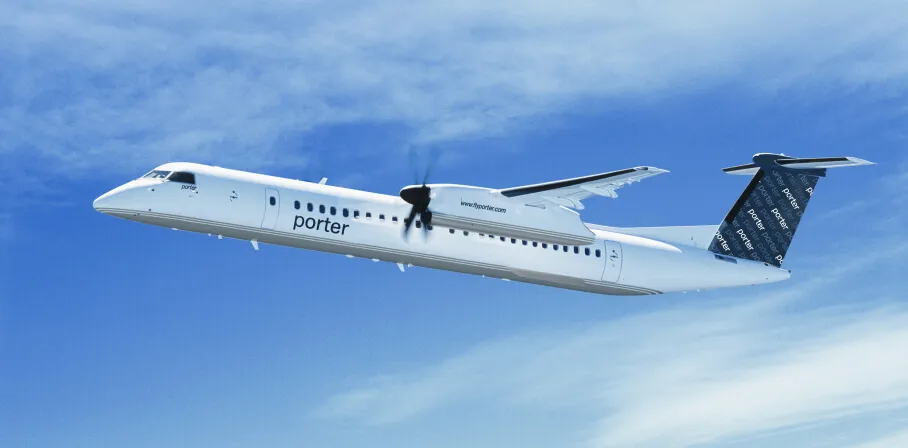
Porter Airlines has officially become a member of the International Air Transport Association (IATA), marking a major milestone in the Canadian carrier’s long-term growth strategy and its increasing integration into the global aviation ecosystem. The move underscores Porter’s transition from a successful regional operator into a more globally connected airline with expanding international ambitions.
The announcement comes at a pivotal time for the airline, which has been steadily scaling its operations, modernizing its fleet, and broadening its network across North America, the Caribbean, and Central America. Membership in IATA is widely regarded as a significant achievement in the aviation industry, as it connects airlines to a global platform that influences safety standards, operational practices, commercial frameworks, and industry-wide policy development.
Porter Airlines’ entry into IATA follows its successful completion of the International Air Transport Association Operational Safety Audit (IOSA) for its Embraer E195-E2 fleet in February 2026. The IOSA certification is considered the global benchmark for airline safety evaluation and operational management systems. Achieving this certification is a prerequisite for full IATA membership and signals that the airline meets internationally recognized safety and operational performance standards.
The completion of IOSA for the E195-E2 fleet reflects Porter’s growing operational maturity, particularly as it expands its jet operations beyond its traditional turboprop-based network. The Embraer E195-E2 aircraft, known for its fuel efficiency, range, and passenger comfort, has become central to Porter’s transformation into a more competitive North American carrier.
Together, IOSA certification and IATA membership position Porter Airlines as a stronger participant in global aviation, enabling it to deepen partnerships and expand its international reach.
Porter Airlines CEO Michael Deluce highlighted the significance of the achievement, noting that it reflects both the airline’s two-decade journey and its rapid evolution in recent years.
“Throughout Porter’s 20-year history, we have sought to elevate the flying experience for our passengers, while working collaboratively with partners and the broader industry. Joining IATA is recognition of the airline we have become and the expansive growth we have undergone in recent years,” said Deluce. He further emphasized that Porter has already been experiencing strong interest from international carriers and that IATA membership will provide a stronger platform to develop those relationships. According to him, this step will also allow the airline to contribute more actively to shaping the future direction of global aviation.
From IATA’s perspective, the inclusion of Porter Airlines adds another growing North American carrier to its extensive network of members. Willie Walsh, Director General of IATA, welcomed the airline’s entry, emphasizing the value of Porter’s participation in global aviation discussions. He noted that the organization looks forward to Porter’s active involvement in shaping industry priorities and contributing to the continued growth of aviation in Canada and worldwide.
With its new status as an IATA member, Porter Airlines gains access to a wide range of commercial and operational advantages. One of the most important benefits is a stronger platform for building interline and codeshare agreements with other international airlines. These types of partnerships allow passengers to book seamless, single-ticket journeys across multiple carriers, improving connectivity and travel convenience.
In addition, IATA membership provides Porter with a formal voice in discussions surrounding global aviation standards, regulatory frameworks, and industry innovation. This includes participation in committees and working groups that influence areas such as safety protocols, passenger experience standards, sustainability initiatives, and digital transformation in aviation.
For Porter, which has already established partnerships with 15 airlines across North America, Europe, and Asia Pacific, this membership could accelerate further collaboration opportunities. These partnerships currently enable passengers to connect across different carriers on integrated itineraries, often with reciprocal loyalty program benefits.
As global travel demand continues to recover and evolve, such alliances are becoming increasingly important for mid-sized carriers seeking to expand their international reach without relying solely on direct long-haul operations.
Founded in 2006, Porter Airlines has steadily grown into one of Canada’s most recognized and distinctive carriers. Initially known for its regional turboprop operations centered at Billy Bishop Toronto City Airport, the airline has significantly expanded its footprint over the years.
Its growth trajectory has been marked by both fleet modernization and network expansion. Today, Porter operates a combined fleet of 82 aircraft, including Embraer E195-E2 jets and De Havilland Dash 8-400 turboprops. The introduction of the E195-E2 has been especially transformative, enabling the airline to operate longer routes with enhanced efficiency and improved passenger comfort.
The airline’s route network now spans major destinations across North America, the Caribbean, and Central America. This expansion reflects Porter’s strategy of evolving beyond a purely regional identity into a broader North American carrier with selective international reach.
Over the years, Porter has also built a strong brand reputation in the aviation industry. It has received recognition such as Best Regional Airline in North America by Skytrax and has consistently ranked among the top regional airlines globally in APEX industry evaluations. These accolades have reinforced its positioning as a customer-focused airline with a strong emphasis on service quality.
One of Porter Airlines’ defining features is its premium-focused economy service model, which differentiates it from many traditional low-cost carriers. The airline has built its brand around offering a more comfortable and refined experience without moving into full business-class pricing structures.
Passengers benefit from a no-middle-seat configuration on its Embraer E195-E2 aircraft, contributing to greater comfort and personal space. Complimentary premium snacks and beverages are offered on all flights, including beer and wine served in real glassware, which has become a signature element of the Porter experience.
On its E195-E2 fleet, Porter further enhances the onboard experience with fresh meal options and complimentary high-speed WiFi, aligning with growing passenger expectations for connectivity and convenience during travel.
This approach has helped Porter carve out a unique position in the competitive North American aviation market, appealing to travelers who prioritize comfort and service quality even when flying in economy class.
As Porter Airlines integrates into the IATA framework, the airline is expected to benefit from increased visibility and credibility within the global aviation industry. The membership not only strengthens its operational standing but also supports its long-term strategy of expanding partnerships, improving connectivity, and exploring new international opportunities.
In a highly competitive airline industry, where alliances and partnerships often define market access and network reach, Porter’s inclusion in IATA provides a foundation for accelerated collaboration and growth.
With a modern fleet, expanding route network, and a strong emphasis on customer experience, Porter Airlines is positioning itself as a rising player in the international aviation landscape. Its entry into IATA marks not just a symbolic achievement, but a strategic step toward deeper global integration and long-term industry relevance.
Source link: https://www.businesswire.com/