


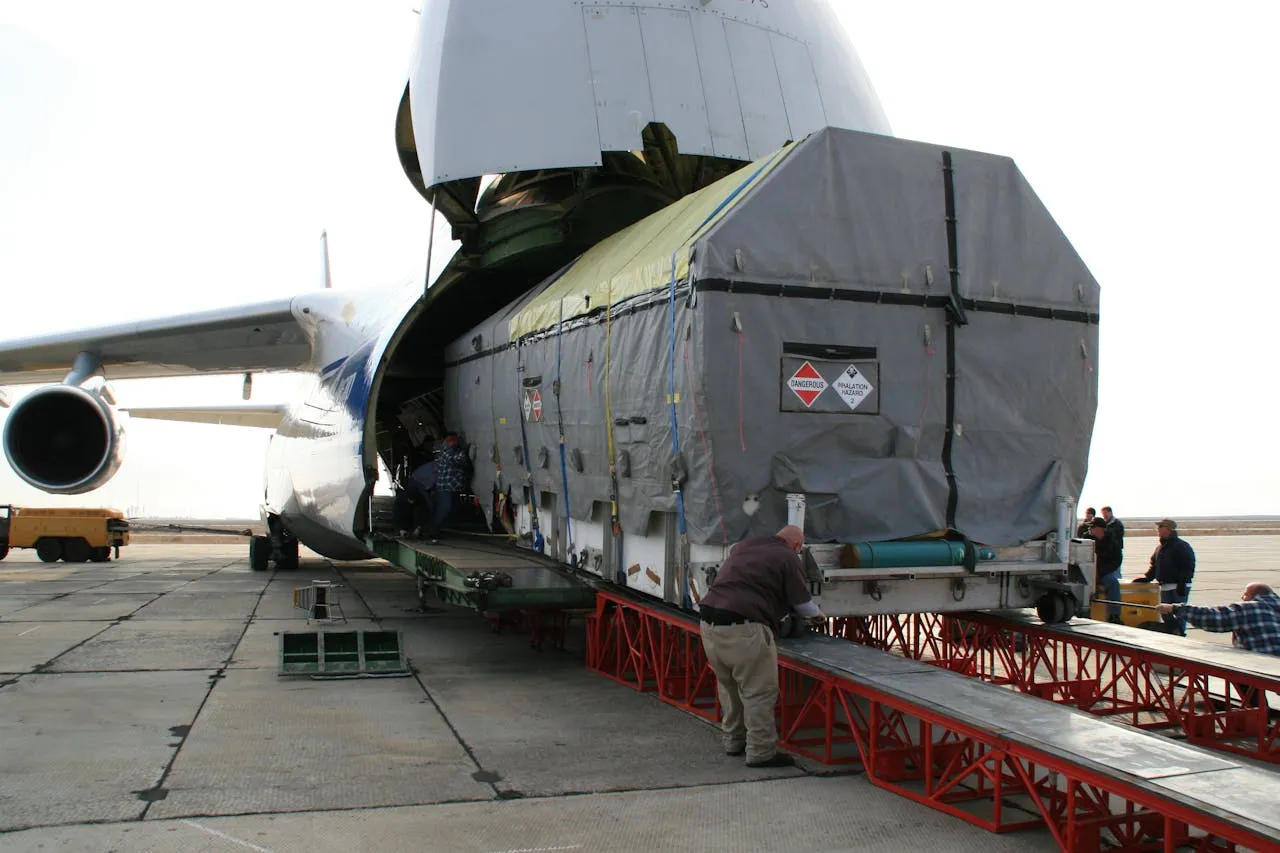
Ramps Logistics Ltd. has successfully completed the complex transportation of critical compressor equipment for Touchstone Exploration Trinidad Limited’s Cascadura Project, marking a significant operational achievement in the continued development of one of Trinidad and Tobago’s most important onshore natural gas initiatives. The project underscores both the growing momentum of domestic energy expansion and the increasing role of specialist logistics providers in enabling large-scale infrastructure execution.
The equipment was transported from Houston, United States, to Trinidad and subsequently delivered to the Cascadura site located in Poole, Rio Claro. This shipment represents a key component of the next development phase of the Cascadura field, which is positioned within the Ortoire block in southern Trinidad. Once fully integrated, the compressor units are expected to enhance production efficiency by supporting increased natural gas output, reducing wellhead pressure, and improving overall operational stability across the field.
The successful execution of this move highlights not only the technical complexity of modern energy logistics but also the importance of coordinated planning across international and domestic supply chains.
The Cascadura field has emerged as one of Trinidad and Tobago’s most significant recent onshore gas discoveries and developments. As global energy markets continue to evolve and regional demand for natural gas remains strong, projects like Cascadura are critical for sustaining domestic energy production and maintaining export capacity.
Situated within the Ortoire exploration block, Cascadura is part of a broader initiative to develop onshore hydrocarbon resources in a region historically dominated by offshore production. Its development has been closely watched by industry stakeholders due to its potential to bolster national energy security, support downstream industries, and contribute to government revenue through increased gas output.
The arrival of this compressor equipment represents a tangible advancement in the field’s development lifecycle. These units are essential for optimizing reservoir performance, enabling more efficient extraction processes, and ensuring stable production levels over time.
The transportation of the compressor equipment required a highly specialized logistics strategy due to the size, weight, and engineering complexity of the cargo. The shipment included oversized industrial components, with the heaviest piece weighing more than 57 tons. Other units measured over 50 feet in length and more than 15 feet in height, while width dimensions required careful route planning and specialized handling equipment.
Such cargo falls into the category of heavy-lift and out-of-gauge transport, which demands advanced engineering assessments, regulatory approvals, and precision execution at every stage of movement. The operation involved a multi-phase logistics chain beginning in Houston, where cargo was carefully prepared, secured, and loaded for international shipment.
From there, the equipment was transported via ocean freight to Trinidad before arriving at the Port of Point Lisas. Upon arrival, the cargo underwent controlled offloading operations, followed by transfer onto specialized trailers designed to handle extreme weight distribution and structural stress.
The success of the operation depended on meticulous planning across several critical phases, including:
Each stage required close coordination between engineering teams, port authorities, transport operators, and safety regulators. Given the scale of the cargo, even minor deviations in planning could have resulted in delays or operational risks, making precision execution essential.
The transport route from the port to the Cascadura site also required detailed road assessments to ensure infrastructure could accommodate the weight and dimensions of the equipment. This included bridge load analysis, turning radius calculations, and temporary traffic management protocols.
The significance of the operation was further underscored by the presence of senior government and industry representatives at the Port of Point Lisas during the offloading phase on Friday, April 24, 2026.
Among those in attendance was the Honourable Dr. Roodal Moonilal, MP, Minister of Energy and Energy Industries, who visited the port to observe the arrival of the equipment before its onward transport to the Cascadura field.
He was joined by key stakeholders from across the energy and logistics sectors, including Deoraj Mahase, Acting President of PLIPDECO; Yuri Jardine, Managing Director of UAL Trinidad; Brian Hollingshead, Executive Vice President; Dr. Priya Marajh, Board Director; and Xavier Moonan, Exploration Manager of Touchstone Exploration Trinidad Limited.
Also present were senior representatives from Ramps Logistics, including Dale Lutchman, Vice President of Sales and Marketing, and Gagendra Ramkissoon, Vice President of Projects and Safety.
Their presence highlighted the collaborative nature of the operation and the strategic importance of ensuring safe and efficient delivery of critical energy infrastructure.
Commenting on the successful execution of the project, Shaun Rampersad, Chief Executive Officer of Ramps Logistics Ltd., emphasized the broader significance of the operation for both the energy sector and regional development.
“This is a major step forward for the Cascadura Project and a visible sign of continued investment in Rio Claro and South East Trinidad. It reflects the scale of execution required to move critical energy development forward in Trinidad and Tobago,” Rampersad said.
His remarks underline the growing complexity of logistics operations in the energy sector, where the movement of heavy industrial equipment is directly tied to production timelines, investment cycles, and national energy output.
Ramps Logistics credited the success of the operation to close collaboration between multiple stakeholders, including port authorities, transport contractors, engineering teams, and project developers.
Special acknowledgment was given to PLIPDECO for its facilitation and operational support at the Port of Point Lisas, ensuring that offloading and staging processes were carried out efficiently and safely. The company also recognized UAL Trinidad for its role in managing transit operations and maintaining strict adherence to safety protocols throughout the movement.
Safety remained a core priority throughout the project. Given the scale of the equipment and the complexity of the transport route, risk mitigation strategies were implemented at every stage. These included escort coordination, structural monitoring, weather assessment planning, and real-time operational communication between all teams involved.
The successful delivery of this compressor equipment is expected to have a direct impact on the operational performance of the Cascadura field. By enhancing compression capabilities, the infrastructure will support improved gas flow rates and more stable production output.
At a national level, projects such as Cascadura contribute to the strengthening of Trinidad and Tobago’s energy sector, which remains a cornerstone of the country’s economy. Continued investment in infrastructure and logistics capability is essential to ensuring that production targets are met and that the country maintains its competitive position in regional and global energy markets.
The operation also highlights the increasing importance of advanced logistics providers in enabling energy development. As projects become larger and more technically demanding, the ability to safely transport oversized industrial equipment across international and domestic routes has become a critical component of project success.
The transportation of compressor equipment for Touchstone Exploration’s Cascadura Project represents a significant milestone in both project development and logistics execution in Trinidad and Tobago. Delivered through a highly coordinated effort involving international shipping, port operations, engineering design, and overland transport, the operation demonstrates the complexity and precision required in modern energy infrastructure projects.
With continued collaboration between industry stakeholders, government authorities, and logistics specialists like Ramps Logistics, the Cascadura Project is positioned to move forward into its next phase of development, contributing to enhanced domestic energy production and long-term sector growth.
Source link: https://www.businesswire.com/