

Smiths Detection Sets New Global Benchmark With Fully Automated International Remote Baggage Screening System Linking South Korea and the United States
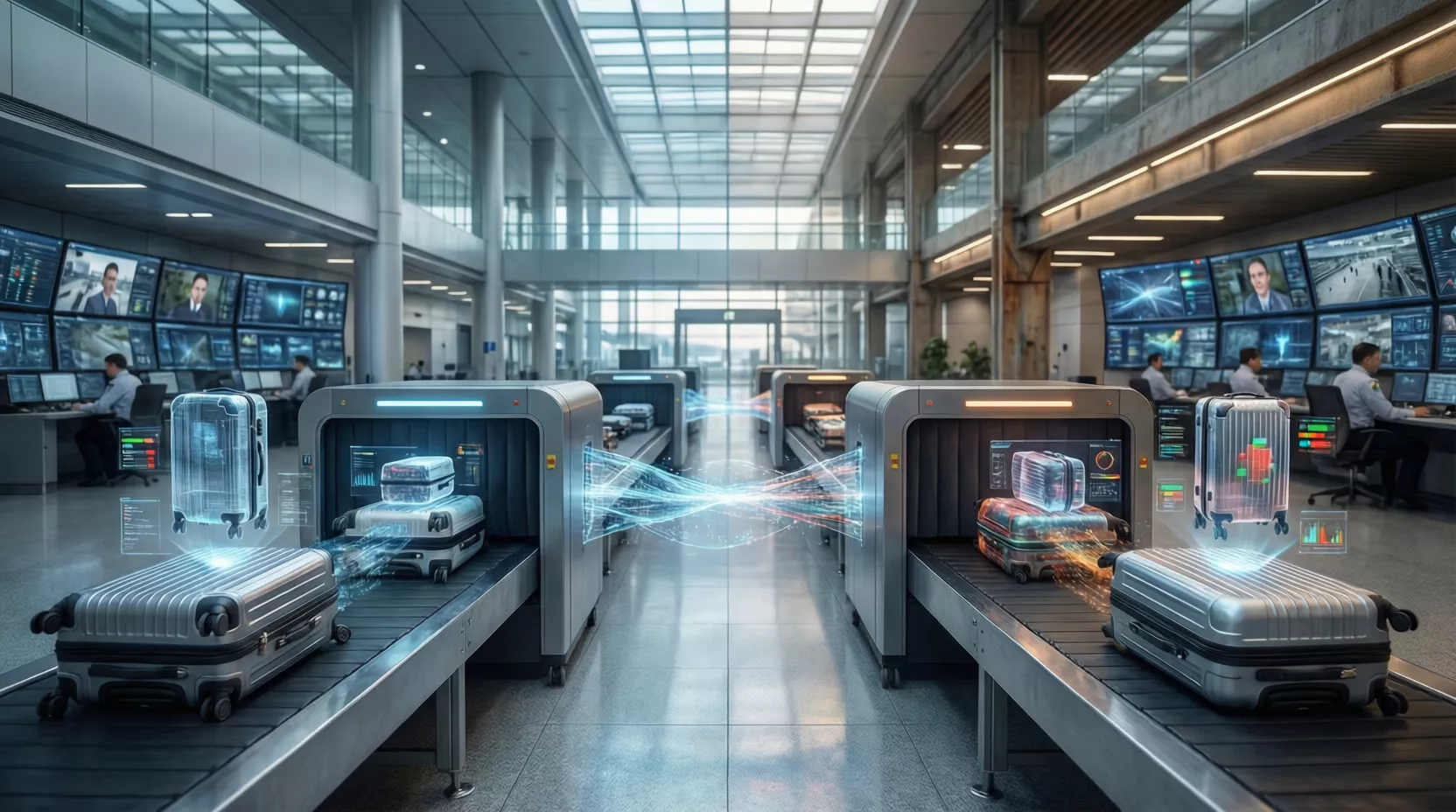
Smiths Detection, a global leader in threat detection and security screening technologies, has achieved a major milestone in international aviation security with the successful deployment of a fully automated International Remote Baggage Screening System (IRBS) connecting South Korea and the United States. The pioneering system enables U.S. Customs and Border Protection (CBP) to screen checked baggage remotely before aircraft arrival, fundamentally reshaping how international passenger processing and security collaboration are conducted across borders.
The launch of this next-generation screening model represents a first-of-its-kind implementation between two sovereign nations and establishes a new global reference point for airport security, operational efficiency, and passenger experience. By eliminating long-standing bottlenecks associated with international-to-domestic transfers, the system signals a significant evolution in how airports, airlines, and border authorities can collaborate in a digitally connected aviation ecosystem.
Incheon International Airport at the Forefront of Global Innovation
The IRBS initiative is spearheaded by Incheon International Airport Corporation (IIAC), widely recognized as one of the world’s most advanced and consistently top-ranked airports. Incheon International Airport has long invested in digital transformation, automation, and smart infrastructure, positioning itself as a global testbed for cutting-edge aviation technologies.
By becoming the first airport in the world to operationalize a fully automated, DICOS-based international remote baggage screening workflow with the United States, Incheon has further cemented its role as a leader in innovation and operational excellence. The deployment not only strengthens security standards but also demonstrates how technology can streamline complex cross-border processes without compromising regulatory rigor or data protection.
This initiative reflects IIAC’s long-term strategy to redefine airport operations through intelligent systems, advanced analytics, and seamless collaboration with global aviation stakeholders. Rather than reacting to future demands, Incheon is proactively shaping the next phase of international air travel.
Transforming International-to-Domestic Connections
At the heart of the IRBS model is a fundamental shift in how checked baggage is handled for passengers traveling from South Korea to the United States. Traditionally, international passengers arriving in the U.S. are required to reclaim their checked baggage at the first port of entry, clear customs, and then recheck their bags for onward domestic connections. This process often results in congestion, missed connections, and passenger frustration.
Under the new IRBS framework, checked baggage belonging to passengers departing from or transiting through Incheon International Airport Terminal 2 is screened remotely by U.S. Customs and Border Protection prior to arrival in the United States. Once CBP clearance is granted, baggage can be transferred directly to its final destination without the need for manual reclaim and recheck at the first U.S. airport.
This breakthrough significantly reduces transfer complexity for International-to-Domestic (I2D) passengers, cutting connection times by up to 20 minutes while easing congestion at arrival terminals. For airports and airlines, the operational benefits include improved throughput, better baggage flow management, and enhanced schedule reliability.
Although the system is currently operational on the Atlanta route, expansion plans are already underway. IRBS-enabled services are expected to gradually extend to additional U.S. destinations including Minneapolis, Seattle, Los Angeles, Detroit, and Salt Lake City, further amplifying the impact of the initiative.
Advanced Technology at the Core of IRBS
The system is powered by SecurePort-IRBS-K, Smiths Detection’s specialized remote screening platform designed to enable secure, high-performance cross-border screening operations. At Incheon Terminal 2, the platform has been deployed with 22 software licenses and is fully integrated with HI-SCAN 10080 XCT computed tomography (CT) X-ray systems.
The HI-SCAN 10080 XCT delivers high-resolution, three-dimensional volumetric imaging of checked baggage, allowing for advanced threat detection and image analysis. Its performance supports the demanding requirements of remote screening while maintaining high throughput and image clarity. The system is seamlessly connected to Incheon’s sophisticated baggage handling systems, automated screening lanes, and broader airport IT infrastructure.
All baggage images and associated metadata are exported using the DICOS V3.0 standard, the globally recognized format for aviation security image exchange. Data is transmitted securely to U.S. CBP through a fully compliant and encrypted data-exchange environment, ensuring adherence to strict cybersecurity and information protection protocols.
This digital backbone enables real-time collaboration between screening authorities located thousands of kilometers apart, proving that physical distance is no longer a constraint in maintaining robust aviation security standards.
A Milestone for Global Aviation Security
Industry leaders have described the IRBS deployment as a defining moment for aviation security worldwide. According to Smiths Detection, this marks the first time a fully automated, standards-based baggage screening workflow has been successfully executed between two countries with independent regulatory frameworks and sovereign authority.
Sunghoon Eom, Country Manager for South Korea at Smiths Detection, highlighted the significance of the achievement, noting that the project demonstrates what is possible when innovation, regulatory alignment, and operational vision converge. The success of IRBS reflects years of collaboration, technical development, and trust between international partners.
From a broader industry perspective, the initiative offers a replicable model for other global aviation hubs seeking to improve efficiency while meeting increasingly complex security requirements. As passenger volumes continue to rise and border authorities face mounting pressure to process travelers safely and efficiently, remote screening solutions are likely to play a central role in future airport strategies.
A Blueprint for the Future of Airports
Smiths Detection views IRBS as more than a single system deployment—it represents a blueprint for the future of global aviation. By combining advanced CT imaging, secure digital connectivity, and interoperable data standards, the model demonstrates how airports can eliminate friction points while strengthening security outcomes.
Cymoril Métivier, Global Digital Portfolio Director at Smiths Detection, emphasized that the project illustrates how digital transformation can be scaled responsibly across borders. By leveraging the performance of the HI-SCAN 10080 XCT and secure remote connectivity, Incheon International Airport Corporation has shown how airports can adapt to growing passenger demand without sacrificing safety or efficiency.
This approach aligns closely with emerging trends in aviation, including risk-based security, predictive analytics, and integrated passenger journeys. As regulators and airports worldwide seek solutions that balance security with convenience, IRBS provides a tangible example of how technology can bridge that gap.
Preparing for the Next Generation of Screening
Looking ahead, Smiths Detection has confirmed its readiness to support Incheon’s continued modernization with the SDX 10080 SCT, the next-generation successor to the HI-SCAN 10080 XCT. Designed to be future-ready, the SDX 10080 SCT offers enhanced image quality, improved operational efficiency, lower energy consumption, and compliance with evolving global regulatory requirements.
The system’s seamless upgrade path ensures that Incheon can continue advancing its screening capabilities with minimal disruption, even as passenger volumes grow and security standards evolve. This forward-looking approach underscores the airport’s commitment to long-term resilience and continuous improvement.
Collaboration Across Borders and Agencies
The successful launch of IRBS reflects an unprecedented level of collaboration among multiple stakeholders across the aviation ecosystem. Operational service began in August 2025 following an extensive multi-agency certification process involving South Korea’s Ministry of Land, Infrastructure and Transport, U.S. Customs and Border Protection, the Transportation Security Administration, Incheon International Airport Corporation, Korean Air, Delta Air Lines, Leidos, and Pacific Northwest National Laboratory.
Ensuring compliance with both Korean and U.S. regulatory frameworks was a central component of the project. All data handling and transmission processes adhere to Korea’s Personal Information Protection Act as well as CBP’s stringent security and cybersecurity requirements, reinforcing trust among passengers and authorities alike.
The IRBS rollout represents Phase 2 of a broader, multi-year roadmap designed to expand remote screening capabilities and deepen international cooperation. Additional phases are expected to build on this foundation, enabling further integration of digital security technologies across global aviation networks.
Defining the Future of Seamless International Travel
Through its partnership with Smiths Detection, Incheon International Airport Corporation is not merely adapting to the future of aviation—it is actively defining it. The deployment of IRBS reinforces Incheon’s position as a global leader in secure, intelligent, and seamless international travel, setting standards that are likely to influence airport development strategies worldwide.
As international air travel continues to recover and evolve, initiatives like IRBS demonstrate how innovation, collaboration, and technology can transform complex processes into streamlined experiences. For passengers, airlines, airports, and border authorities alike, the system represents a powerful step toward a more connected, efficient, and secure global aviation ecosystem.
Source link: https://www.businesswire.com