

UK Royal Navy Strengthens Ocean Intelligence Capabilities with Teledyne Autonomous Systems Contract
Teledyne Marine, a division of Teledyne Technologies Incorporated, has secured a significant contract from the United Kingdom’s Ministry of Defence (MOD) to support the Royal Navy’s Future Maritime Data Gathering (FMDG) program. The initiative, formally known as Persistent Oceanographic Data Collect, represents a major step forward in enhancing the Royal Navy’s ability to gather, analyze, and operationalize critical oceanographic and environmental data across strategically important maritime regions.
This latest award underscores the growing importance of advanced autonomous technologies in modern naval operations, particularly as geopolitical tensions and environmental uncertainties increase across key maritime theaters such as the North Atlantic. By leveraging Teledyne’s proven suite of unmanned underwater systems, the Royal Navy is positioning itself to gain deeper, more persistent insight into the underwater domain—an area increasingly recognized as vital to both defense and security planning.
Advancing the Future Maritime Data Gathering Program
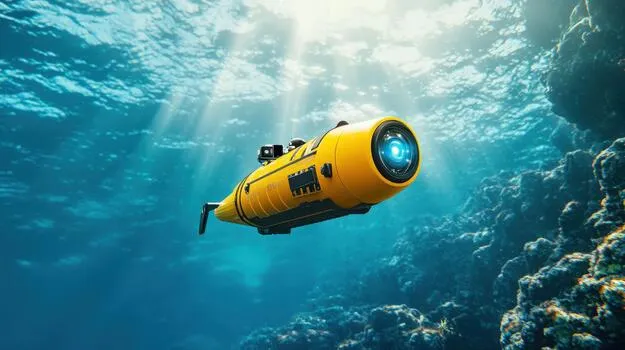
At the core of this contract is the delivery of a comprehensive range of autonomous ocean observing platforms designed to operate in some of the world’s most challenging maritime environments. Teledyne will supply Sentinel and Slocum gliders, APEX floats, and a range of associated support services, all of which are engineered to provide long-endurance, high-resolution data collection capabilities.
These systems will play a central role in expanding the Royal Navy’s existing fleet of unmanned technologies. Their deployment will enable continuous monitoring of ocean conditions, including temperature, salinity, currents, and other environmental factors that directly influence naval operations. Such data is critical for mission planning, submarine detection, navigation safety, and broader defense activities.
Importantly, the contract aligns closely with the Royal Navy’s Atlantic Bastion initiative, which focuses on maintaining strategic advantage and operational readiness in the North Atlantic region. By integrating Teledyne’s autonomous systems into this framework, the Royal Navy will be better equipped to monitor and respond to dynamic environmental and operational challenges in this increasingly contested maritime space.
Persistent Data Collection in Complex Environments
One of the defining features of Teledyne’s technology offering is its ability to deliver persistent, long-duration data collection in remote and often hostile ocean environments. Unlike traditional crewed survey missions, which are limited by time, cost, and operational risk, autonomous systems such as gliders and floats can operate continuously for extended periods, often spanning weeks or even months.
Under the FMDG program, these capabilities will provide the Royal Navy with a steady stream of actionable environmental intelligence. This includes real-time and near-real-time data that can be used to inform tactical decisions, enhance situational awareness, and support the effective deployment of naval assets.
The ability to gather reliable data from hard-to-reach areas is particularly valuable in the context of modern naval warfare, where understanding the underwater battlespace can provide a decisive operational advantage. From tracking changes in ocean acoustics that affect sonar performance to identifying environmental conditions that influence vessel maneuverability, the insights generated by these systems will play a crucial role in enabling informed decision-making at all levels of command.
Building on a Decade-Long Partnership
The newly awarded contract builds upon a longstanding relationship between Teledyne and the Royal Navy, which dates back to 2015. Over the past decade, Teledyne has supported the Royal Navy’s oceanographic and environmental monitoring requirements through the deployment of Slocum gliders, APEX floats, and Gavia autonomous underwater vehicles (AUVs).
This established track record has been a key factor in the MOD’s decision to award the contract directly to Teledyne. According to the Royal Navy’s justification for the direct award, Teledyne is currently the only supplier capable of ensuring seamless interoperability with the existing Royal Navy glider fleet, while also meeting stringent security and mission readiness requirements.
This continuity is critical for maintaining operational efficiency and minimizing integration risks. By working with a trusted partner whose systems are already embedded within its operational framework, the Royal Navy can accelerate the deployment of new capabilities without the need for extensive retraining or system modifications.
Supporting the Hybrid Navy Vision
The contract also reflects the Royal Navy’s broader strategic vision of transitioning toward a “Hybrid Navy,” as outlined by the First Sea Lord. This concept emphasizes the integration of crewed and uncrewed systems to create a more flexible, resilient, and technologically advanced force.
Autonomous ocean sensing technologies are a cornerstone of this vision. By augmenting traditional platforms with unmanned systems, the Royal Navy can extend its operational reach, reduce risk to personnel, and enhance its ability to operate in contested environments.
Commander Butcher, the Royal Navy’s Capability Sponsor, highlighted the strategic importance of this investment, noting that it will directly support front-line Information Warfare Meteorological and Oceanographic (IW METOC) operators. These specialists are responsible for analyzing environmental data and translating it into actionable intelligence that can be used to support mission planning and execution.
The persistent data provided by Teledyne’s systems will significantly enhance the Royal Navy’s understanding of the underwater battlespace. This, in turn, will enable more effective Tactical Exploitation of the Environment (TEOE)—a critical capability that allows commanders to leverage environmental conditions to their advantage during operations.
Enabling Operational and Information Advantage
In modern naval operations, information superiority is often as महत्वपूर्ण as physical القوة. The ability to collect, process, and act on high-quality data can mean the difference between mission success and failure. Teledyne’s autonomous systems are designed to deliver precisely this kind of advantage.
By providing continuous, high-fidelity environmental data, these systems enable the Royal Navy to build a more comprehensive and accurate picture of the maritime domain. This enhanced situational awareness supports a wide range of operational activities, from anti-submarine warfare and mine countermeasures to search and rescue missions and humanitarian assistance.
Furthermore, the integration of these systems into the Royal Navy’s existing information architecture ensures that data can be rapidly disseminated to decision-makers at all levels. This real-time flow of information is essential for maintaining operational tempo and responding effectively to emerging threats.
Proven Performance and Global Adoption
Teledyne Marine’s reputation as a leading provider of unmanned underwater vehicles and ocean observing systems is well established. The company has delivered more than 12,000 APEX floats and over 1,290 Slocum gliders worldwide, with more than 600 of these systems currently in service with NATO naval users.
In addition, Teledyne’s Gavia AUV systems have been adopted by 18 navies globally, further demonstrating the widespread اعتماد in the company’s technology. These systems are used by a diverse range of organizations, including military, commercial, and scientific entities, for applications ranging from oceanographic research to offshore energy exploration.
The broad adoption of Teledyne’s platforms across NATO and AUKUS partner nations highlights their interoperability and reliability—key considerations for multinational operations and coalition missions. By standardizing on proven technologies, allied forces can enhance coordination and data sharing, ultimately strengthening collective maritime security.
Strengthening the UK Defense Industrial Base
Beyond its technological contributions, Teledyne also plays a significant role in supporting the UK’s defense industrial base. The company employs approximately 2,700 people across 18 major sites throughout the United Kingdom, reflecting a strong commitment to local expertise and long-term partnership.
This domestic presence enables Teledyne to provide responsive support and maintenance services, ensuring that systems remain operationally ready at all times. It also contributes to the development of highly skilled jobs and the growth of the UK’s advanced manufacturing and technology sectors.
By investing in proven technologies and established partnerships, the MOD is not only enhancing the Royal Navy’s capabilities but also reinforcing the resilience and competitiveness of the UK’s الدفاع ecosystem.
As the maritime domain continues to evolve, the importance of persistent, high-quality environmental data will only increase. From climate-driven changes in ocean conditions to the growing complexity of naval operations, the need for accurate and timely information is more critical than ever.
The Royal Navy’s investment in Teledyne’s autonomous ocean observing systems represents a forward-looking approach to these challenges. By embracing cutting-edge technologies and integrating them into its operational framework, the Navy is ensuring that it remains at the forefront of maritime innovation.
Source link: https://www.businesswire.com/