


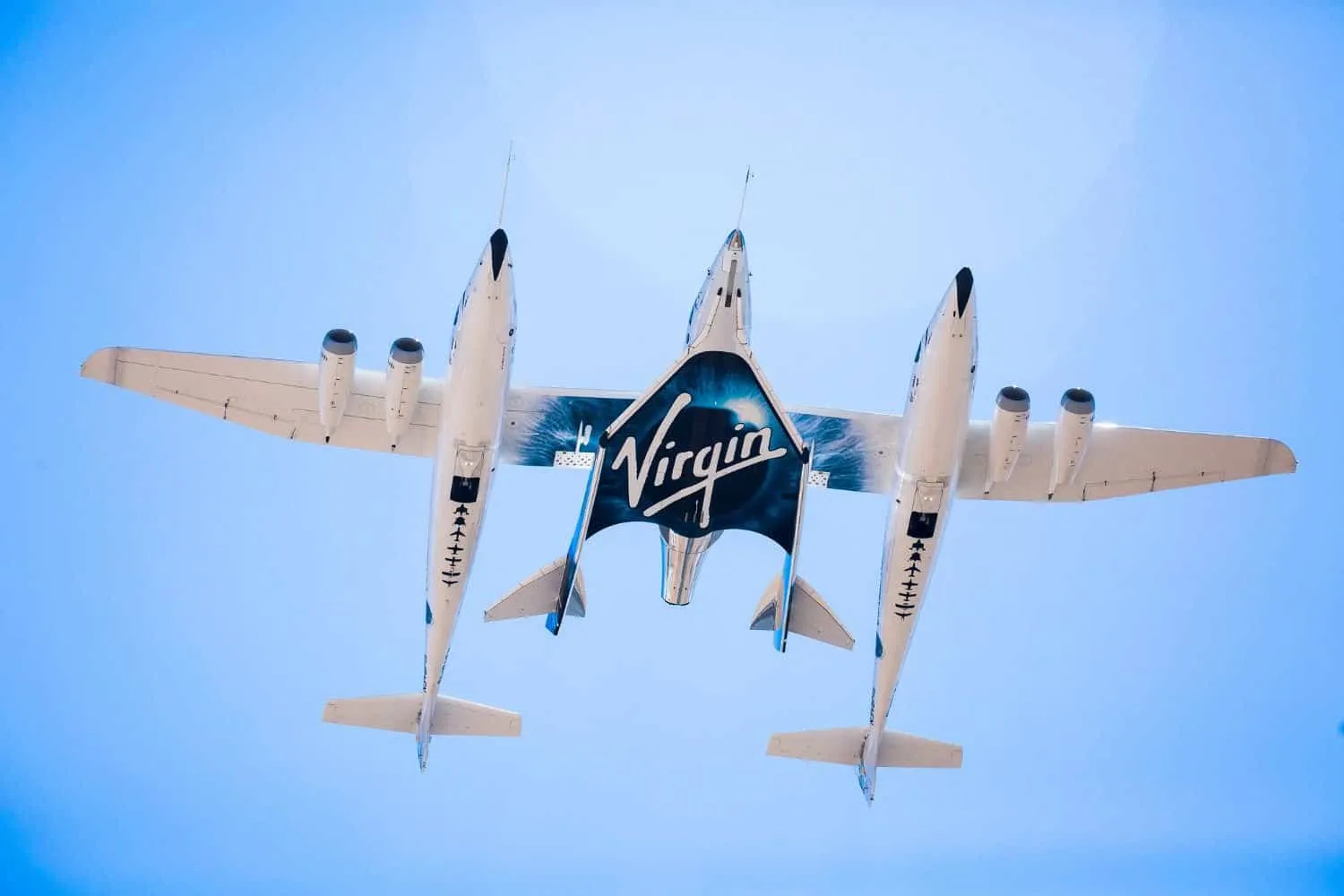
Virgin Galactic has announced a significant step forward in its development roadmap with the return of VSS Unity to flight operations above Spaceport America in New Mexico. The reusable spaceflight vehicle has resumed glide testing activities as part of a structured preparation program for the company’s next-generation SpaceShip, which is scheduled to begin flight testing in the near future.
The latest series of flights marks the first of several anticipated glide missions using VSS Unity, the company’s prototype SpaceShip. These flights are not aimed at pushing new performance boundaries for Unity itself, but rather at strengthening operational readiness, pilot proficiency, and ground coordination ahead of the introduction of Virgin Galactic’s upgraded fleet of vehicles.
According to the company, the initiative represents a deliberate transition phase in which proven flight assets are being used as real-world training platforms to support the next stage of commercial spaceflight development. By leveraging Unity’s established flight characteristics, Virgin Galactic aims to reduce uncertainty and enhance procedural familiarity for both flight crews and ground teams.
The renewed glide flights are taking place in advance of the first flight test of Virgin Galactic’s next-generation SpaceShip, which is expected to significantly expand the company’s operational capacity and flight cadence.
VSS Unity, which has already completed multiple spaceflights and suborbital missions in its operational history, now serves an additional role as a training and validation platform. The aircraft is being used to simulate the flight dynamics and operational environment that pilots and mission teams will encounter when transitioning to the new SpaceShip design.
Mike Moses, Spaceline President at Virgin Galactic, emphasized the importance of using a real flight vehicle to bridge the gap between simulation-based training and live operational experience.
“Unity’s glide characteristics and energy-management profile provide an outstanding real-world proxy for our new Spaceship,” Moses said. “Using a proven vehicle in this way prepares our pilots and operations teams to move through flight testing for our new Spaceship more efficiently and with greater confidence than simulator training alone could provide.”
This approach highlights a key principle in aerospace development: while simulation technology continues to advance, actual flight conditions remain the most reliable method for preparing crews for the complexities of real-world operations.
A central element of Virgin Galactic’s strategy is the similarity between VSS Unity’s glide behavior and that of its next-generation SpaceShip. During unpowered descent, Unity behaves in a way that closely mirrors the aerodynamic profile, landing approach, and cockpit visibility expected from the new vehicle design.
These similarities allow pilots to rehearse critical phases of flight under authentic conditions. The glide phase, in particular, is essential because it involves precise energy management, trajectory control, and landing execution after release from the carrier aircraft at high altitude.
For pilots transitioning to the new system, this provides a rare opportunity to experience near-identical flight conditions before the next-generation vehicle even enters powered testing.
The cockpit perspective is also a key factor. Visual cues during descent, approach angles to the runway, and timing of control inputs are all being replicated through Unity’s flight profile. These elements are difficult to fully simulate in ground-based systems, making live glide flights an important supplement to traditional training methods.
While pilot training is a major focus of the glide campaign, Virgin Galactic has emphasized that the program extends far beyond cockpit preparation. The return to flight also activates a full-scale operational rehearsal for ground-based teams, including maintenance crews, mission controllers, and flight operations personnel.
Each glide flight functions as a coordinated exercise involving multiple departments working in real time. From pre-flight checks and launch coordination to landing recovery and post-flight inspections, every stage is designed to replicate the operational tempo expected during routine spaceflight missions.
This integrated approach is intended to build what the company describes as “rhythm and muscle memory” across its entire operational ecosystem. As Virgin Galactic prepares for a higher cadence of future missions, the ability of teams to operate seamlessly together is considered just as important as vehicle performance.
Mission Control teams, in particular, are using the flights to refine communication protocols, timing sequences, and decision-making processes. Maintenance crews are simultaneously gaining hands-on experience with turnaround procedures, ensuring that post-flight servicing can be completed efficiently and consistently.
By conducting these rehearsals in a live flight environment, the company aims to reduce friction points that could emerge once the next-generation SpaceShip begins regular testing and eventual commercial operations.
Virgin Galactic has outlined a clear timeline for the introduction of its next-generation SpaceShip program. The company expects glide testing of the new vehicle to begin in the third quarter of 2026, followed by rocket-powered test flights to space in the fourth quarter of 2026.
These milestones represent a major step forward in the evolution of the company’s commercial spaceflight ambitions. The next-generation SpaceShips are designed to significantly improve operational efficiency, flight frequency, and vehicle longevity compared to earlier models.
According to Virgin Galactic, the new vehicles are engineered with the goal of supporting twice-weekly flight operations once fully operational. This represents a substantial increase in cadence compared to earlier spacecraft iterations and is central to the company’s long-term business model.
In addition to higher flight frequency, the new SpaceShips are expected to have an operational lifetime exceeding 500 missions per vehicle. This durability is a critical factor in the company’s strategy to build a scalable and economically sustainable spaceline.
The next-generation SpaceShip program is not only about advancing aerospace engineering capabilities but also about enabling a more commercially viable model for space tourism and research flights.
By increasing flight cadence and extending vehicle lifespan, Virgin Galactic is targeting a cost structure that supports more frequent operations while maintaining reliability and safety standards. The ability to fly twice per week per vehicle is intended to dramatically increase access to suborbital spaceflight experiences and research opportunities.
This shift reflects a broader evolution in the commercial space sector, where companies are increasingly focused on repeatability, operational efficiency, and fleet-based architectures rather than single-mission prototypes.
The expected service life of more than 500 missions per vehicle also signals a move toward long-term asset utilization, where each SpaceShip becomes a durable operational platform rather than a limited-use experimental craft.
The decision to return VSS Unity to glide flight operations underscores Virgin Galactic’s emphasis on risk reduction and operational preparedness ahead of its next major testing phase.
By using an already proven spacecraft as a training and simulation proxy, the company is aiming to ensure that both human and operational systems are fully aligned before introducing new hardware into flight conditions.
This incremental approach is particularly important in aerospace programs where complexity increases significantly with each new generation of vehicle. Even small improvements in procedural readiness can have a meaningful impact on safety margins, efficiency, and mission success rates.
As Virgin Galactic moves closer to the introduction of its next-generation SpaceShip, the current glide campaign represents a foundational step in bridging past experience with future capability.
The return of VSS Unity to the skies above Spaceport America marks more than just a resumption of flight activity. It represents a strategic preparation phase designed to align pilots, engineers, and mission control teams with the demands of Virgin Galactic’s next-generation SpaceShip program.
By leveraging Unity’s proven flight characteristics, the company is building operational confidence and reinforcing cross-team coordination ahead of a new era of commercial spaceflight.
With glide testing of the new SpaceShip expected in 2026, followed by rocket-powered spaceflight trials later that year, Virgin Galactic is entering a pivotal phase in its development timeline—one focused on scaling operations, increasing flight frequency, and advancing toward a more commercially sustainable spaceline model built for long-term growth.
Source link: https://www.businesswire.com/