


Werner Enterprises, Inc., one of North America’s leading transportation and logistics providers, has announced a significant expansion of its intermodal operations in Mexico, reinforcing its long-term commitment to the region and offering customers more dependable shipping solutions for domestic and cross-border freight movements.
The move comes as supply chains across North America continue to evolve, with businesses increasingly seeking resilient, cost-effective, and technology-enabled transportation options. By increasing its asset-based presence in Mexico, Werner aims to support shippers that require reliable service between Mexico, the United States, and Canada while simplifying the complexities often associated with cross-border logistics.
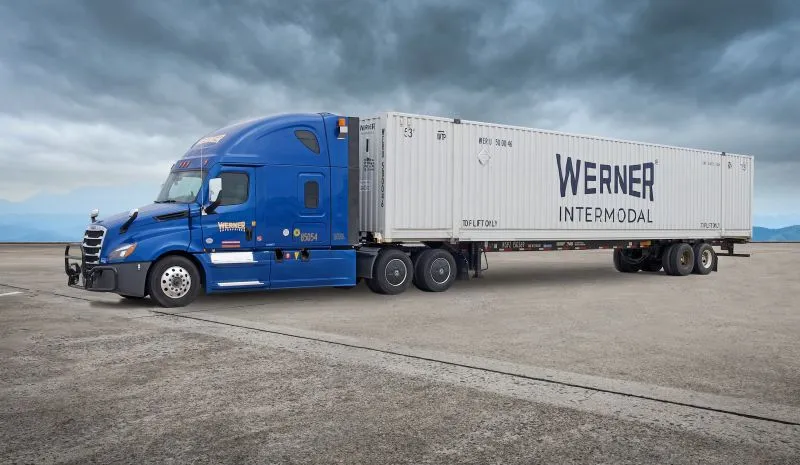
As part of the expansion, Werner is introducing its fleet of 53-foot containers into the Mexican market. The company currently has 400 containers already in operation, with plans to add another 400 units throughout 2026. This investment reflects growing demand for intermodal transportation and underscores Werner’s confidence in Mexico’s strategic role within regional manufacturing and trade networks.
Werner has maintained a presence in Mexico since 1999, building a reputation for dependable logistics services and strong relationships across the transportation ecosystem. The latest expansion is another milestone in the company’s regional strategy, designed to offer customers local support combined with the resources of a major North American transportation provider.
Mexico has become increasingly important in recent years as manufacturers diversify supply chains, move production closer to end markets, and benefit from the trade advantages of the United States-Mexico-Canada Agreement (USMCA). This has led to rising freight flows between industrial centers in Mexico and consumer markets across North America.
Werner’s expanded intermodal footprint positions the company to better serve customers operating in sectors such as automotive, industrial manufacturing, consumer goods, food and beverage, and retail distribution.
Bernardo Alexander, Werner’s Commercial Vice President of Mexico, emphasized the company’s commitment to the local market and its ability to remove friction from cross-border transportation.
“We want Mexican businesses to know there is a local, asset-based solution ready for them,” said Alexander. “With our long, trusted history in Mexico since 1999, we have the expertise to simplify cross-border shipping. By combining our advanced tracking technology with 24/7 bilingual support, we are removing the friction from cross-border trade and making the process more efficient than ever.”
Werner’s intermodal asset expansion will begin in Monterrey and Silao, two of Mexico’s most important industrial and logistics hubs.
Monterrey, located in the state of Nuevo León, is one of Mexico’s largest manufacturing centers and a critical gateway for trade with the United States. The city has strong industrial output in steel, automotive, appliances, and consumer products, making it a natural starting point for intermodal growth.
Silao, situated in Guanajuato, is another strategic location, particularly for the automotive sector. The Bajío region has emerged as one of Mexico’s fastest-growing industrial corridors, attracting major investments from global manufacturers and suppliers.
Werner also plans to expand into the Mexico City market during the second half of 2026. Mexico City remains one of the largest consumption centers in Latin America and a major distribution hub, making it an important addition to the company’s service network.
Together, these markets provide Werner with access to key production, consumption, and export regions, helping customers move freight more efficiently across Mexico and into the broader North American market.
Werner noted that intermodal demand has remained steady over the past 12 months, creating a favorable environment for additional investment.
Intermodal transportation combines rail and truck services, allowing freight to move long distances by rail while using trucks for first-mile and last-mile delivery. This model has gained popularity because it offers several advantages over traditional truckload-only transportation.
For shippers, intermodal can provide more stable pricing, increased capacity, reduced highway congestion exposure, and environmental benefits. In times of truckload market volatility, many companies turn to intermodal solutions to help balance costs and maintain service continuity.
Werner’s decision to expand its owned container fleet in Mexico reflects confidence that customers will continue to prioritize these benefits.
Cross-border shipping often presents unique challenges, particularly around cargo security, shipment tracking, and customs coordination. Werner says its Mexico intermodal offering has been designed with these concerns in mind.
Every Werner container is equipped with GPS technology and cargo cameras, giving customers enhanced shipment visibility throughout transit. Real-time tracking can help shippers monitor progress, improve planning, and respond quickly to disruptions.
Security remains a top priority for many businesses moving freight across borders, and Werner says it uses only C-TPAT certified carriers for all cross-border shipments. The Customs Trade Partnership Against Terrorism (C-TPAT) program is designed to improve supply chain security and streamline customs processes.
By integrating secure equipment, trusted carriers, and digital visibility tools, Werner aims to reduce risk while increasing customer confidence.
Another key part of Werner’s Mexico strategy is its investment in local operations teams. The company has personnel located near Monterrey, Silao, and Pantaco, enabling closer coordination with customers, rail partners, and customs stakeholders.
Pantaco, one of the most important rail terminals in the Mexico City metropolitan area, plays a central role in freight distribution and rail connectivity. Werner’s presence there is expected to support future growth in the Mexico City market.
The company also offers 24/7 bilingual customer support, an important feature for businesses operating across borders where communication delays can disrupt time-sensitive shipments.
In addition, Werner says it has developed strong relationships with customs brokers at major Mexican rail ramps. Efficient customs handling can be a critical factor in reducing border delays and ensuring predictable transit times.
One of the strongest advantages of intermodal transportation is its ability to provide more predictable costs over time.
Truckload markets can be highly cyclical, with rates fluctuating based on driver availability, fuel prices, seasonal demand, and economic conditions. During tight capacity periods, transportation costs can rise sharply.
Intermodal offers an alternative that can help smooth these fluctuations. Because rail networks move large freight volumes efficiently, they can often provide more stable pricing and consistent capacity access.
Werner says this can help shippers manage transportation budgets while maintaining dependable service levels in a changing freight market.
For companies with regular freight lanes between Mexico and the United States, or between manufacturing plants and domestic distribution centers, intermodal can become a long-term strategic solution rather than simply a backup option.
Sustainability is becoming an increasingly important factor in transportation planning, particularly for multinational companies with carbon reduction commitments.
Moving freight by rail generally produces lower carbon emissions than long-haul trucking, especially over extended distances. By integrating rail into supply chains, companies can reduce their environmental footprint while still maintaining network efficiency.
Werner highlighted sustainability as one of the core benefits of its expanded Mexico intermodal offering. Customers seeking to align logistics operations with ESG or corporate sustainability targets may find intermodal an attractive solution.
As more companies measure Scope 3 emissions from outsourced transportation providers, lower-emission freight options are likely to become even more valuable.
Werner says it can support a wide range of shipping needs through a single point of contact, helping customers navigate the complexity of cross-border freight management.
Its Mexico offerings include:
Managing these services through one provider can simplify operations, reduce administrative burdens, and improve accountability.
Werner’s expansion into Mexico’s intermodal market reflects broader trends shaping North American logistics. Nearshoring, regionalized supply chains, e-commerce growth, and sustainability priorities are all increasing demand for flexible transportation networks.
By investing in containers, local teams, digital visibility, and strategic market coverage, Werner is positioning itself to capture more of that demand while helping customers improve supply chain performance.
As the company adds another 400 containers throughout 2026 and enters new markets such as Mexico City, Werner’s role in Mexico’s freight landscape is expected to grow further.
For shippers navigating an increasingly complex trade environment, Werner’s message is clear: there is now a stronger local, asset-based intermodal solution available in Mexico, backed by decades of experience and North American scale.
Source link: https://www.businesswire.com/