

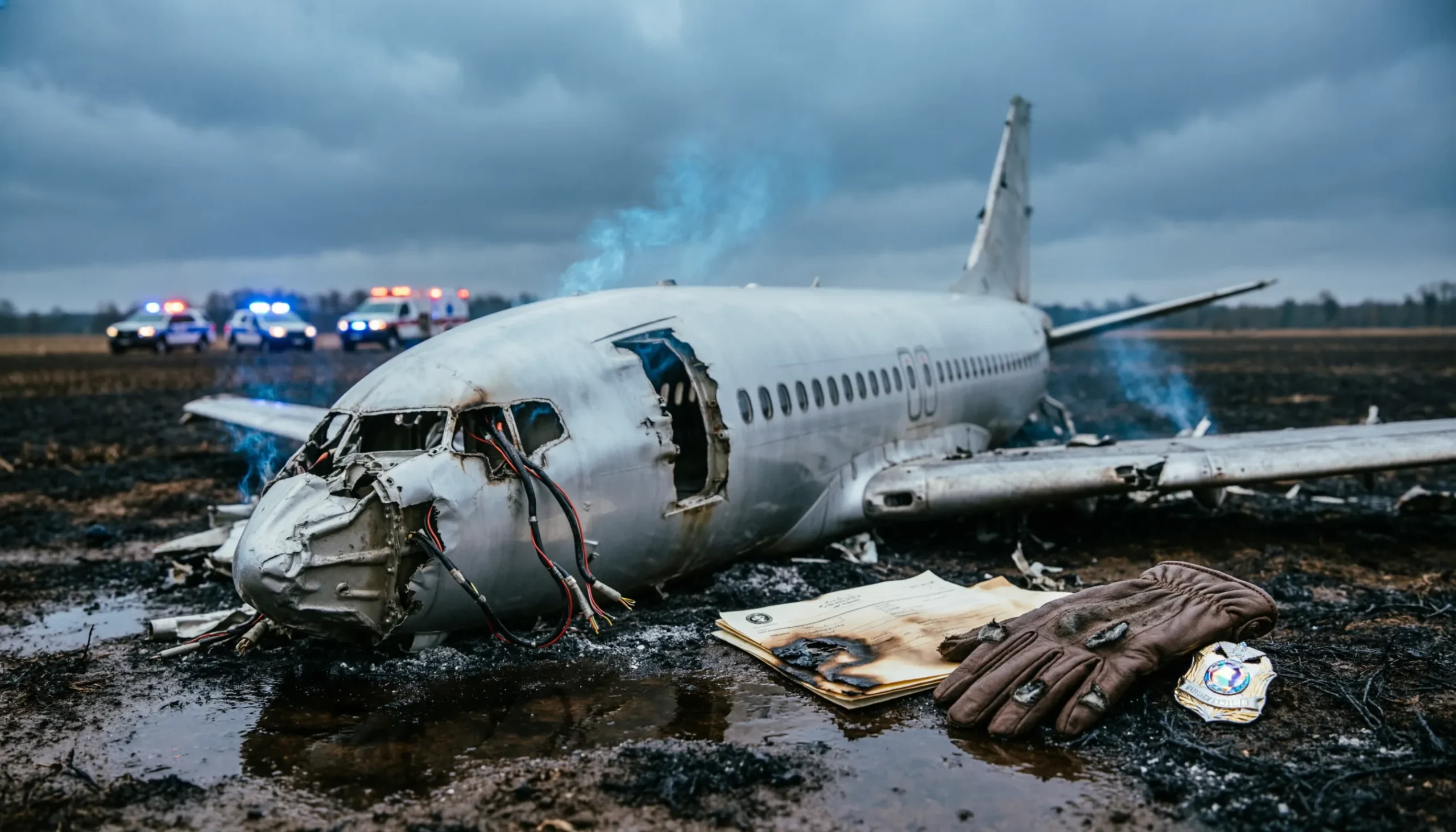
Lawsuit Filed Following Fatal Crash of UPS Flight 2976 Near Muhammad Ali International Airport
The widow of one of the pilots killed in last November’s crash of UPS Flight 2976 near Louisville’s Muhammad Ali International Airport has initiated legal action against major aerospace and maintenance companies, alleging catastrophic mechanical and corporate failures that led to the deadly accident. The complaint, filed on February 25, centers on the death of Dana Justin Diamond, a resident of Caldwell, Texas, who was serving as an international relief officer at the time of the incident. Diamond was assigned piloting responsibilities aboard the Boeing MD-11F cargo aircraft operating a long-haul flight bound for Honolulu when tragedy struck shortly after departure. The lawsuit represents a significant development in the aftermath of the crash, seeking accountability from aircraft manufacturer Boeing, engine manufacturer General Electric, and maintenance provider VT San Antonio Aerospace.
Allegations of Catastrophic Mechanical Failure
According to the complaint submitted by attorneys from The Lanier Law Firm, the aircraft experienced a catastrophic mechanical event moments after takeoff. The filing alleges that the left engine and its pylon assembly separated from the wing structure within seconds of departure. This structural failure reportedly triggered an onboard fire that quickly escalated, leaving the flight crew with insufficient altitude or time to recover the aircraft. Within 37 seconds of becoming airborne, the MD-11F failed to climb above 100 feet before descending into an industrial zone located south of the airport perimeter. The impact destroyed warehouses and adjacent buildings, resulting in the deaths of all three crew members onboard, including Diamond, as well as 12 individuals on the ground. The complaint frames the engine separation not as an unforeseeable accident but as the outcome of systemic negligence tied to design, manufacturing, and maintenance shortcomings.
Legal Claims Targeting Major Aerospace Companies
The lawsuit names Boeing, General Electric, and VT San Antonio Aerospace as defendants. Boeing is cited in its capacity as manufacturer of the MD-11 aircraft platform, while General Electric is identified as the designer and producer of the CF6 turbofan engines installed on the aircraft. The CF6 engine family has been widely used across commercial and cargo fleets for decades, making the allegations particularly consequential for the aviation industry. VT San Antonio Aerospace, a maintenance, repair, and overhaul provider, is included in the suit due to maintenance work performed on the aircraft in the weeks leading up to the crash. The legal filing contends that failures across these organizations collectively contributed to the engine separation event.
The plaintiffs assert claims including wrongful death, negligence, and loss of consortium, seeking compensatory damages for the profound personal and economic losses suffered by Diamond’s family. Additionally, the complaint requests punitive damages, arguing that the alleged conduct of the defendants warrants financial penalties beyond compensatory relief. The lawsuit demands a trial by jury to determine liability and assess damages.
Profile of Captain Dana Justin Diamond
Dana Justin Diamond’s career with UPS spanned more than 37 years, during which he rose to the highest levels of seniority within the airline’s pilot ranks. At the time of his death, he held the No. 1 seniority position among MD-11 pilots and ranked fifth overall among all company pilots. His professional achievements reflected decades of operational experience and leadership within the cargo aviation sector. Beyond his flying duties, Diamond played a prominent role in union advocacy and aviation safety initiatives. He served as vice chairman of the Independent Pilot Association’s Aircraft Rescue and Firefighting Committee from 2012 through 2017. In that capacity, he contributed to training and educational programs designed to strengthen emergency response capabilities at airports nationwide. According to the complaint, Diamond helped educate more than a thousand airport emergency personnel in aircraft rescue and firefighting protocols, underscoring his long-standing commitment to operational safety and risk mitigation.
Attorneys representing the family emphasized that Diamond’s dedication to safety stands in stark contrast to the circumstances of the crash. Legal counsel described the incident as a profound betrayal of the values he upheld throughout his career, asserting that the litigation aims not only to secure justice for his family but also to uncover systemic deficiencies that may prevent similar tragedies in the future.
Technical Details of the Crash Sequence
Preliminary flight data cited in the lawsuit provides a brief yet devastating timeline of events. The MD-11F departed from Muhammad Ali International Airport and remained airborne for approximately 37 seconds. During that brief interval, the aircraft reportedly did not exceed an altitude of 100 feet. The separation of the left engine and pylon assembly allegedly compromised aerodynamic stability and structural integrity, triggering a fire that further impaired aircraft control. The aircraft subsequently descended into an industrial district bordering the airport’s southern boundary. The impact site included warehouses and commercial buildings, amplifying the human toll of the accident.
Engine separation events are exceedingly rare in modern commercial aviation, particularly during the critical takeoff phase when structural loads are highest and redundancy systems are most vital. The complaint contends that such a failure indicates deeper issues in design integrity, component inspection protocols, or maintenance execution. By asserting that the engine and pylon assembly detached from the wing structure, the plaintiffs are effectively challenging the adequacy of certification, inspection, and ongoing airworthiness oversight associated with the aircraft and its propulsion system.
Broader Implications for the Cargo Aviation Sector
The crash of UPS Flight 2976 has reverberated across the air cargo and transportation industries, raising renewed scrutiny over aging widebody freighter fleets and maintenance practices. The MD-11 platform, originally developed decades ago and subsequently adapted for cargo operations, remains in service with several freight operators worldwide. The lawsuit’s allegations regarding engine pylon separation and maintenance oversight could carry implications not only for the named defendants but also for industry-wide safety reviews.
UPS had operated the aircraft since 2006 following its conversion for cargo service. The filing notes that recent maintenance work had been conducted prior to the crash, a detail likely to draw investigative attention to inspection records, component lifecycles, and compliance documentation. In complex aviation litigation, determining causation often requires exhaustive technical analysis, including metallurgical examination of fractured components, maintenance log reviews, and flight data recorder interpretation. The forthcoming legal proceedings may therefore intersect with ongoing regulatory and safety investigations.
Claims for Accountability and Preventive Action
Central to the lawsuit is the assertion that the tragedy was preventable. Legal representatives argue that when an engine separates from a wing seconds after takeoff, the event reflects systemic failure rather than random misfortune. The plaintiffs maintain that corporate responsibility extends across the aircraft’s design, manufacturing processes, and maintenance oversight. The filing’s request for punitive damages signals an intent to scrutinize not only technical defects but also corporate decision-making practices, safety culture, and quality assurance systems.
By pursuing claims for wrongful death and negligence, the family seeks financial redress for the loss of income, companionship, and emotional support resulting from Diamond’s death. The inclusion of loss of consortium claims further underscores the personal dimension of the tragedy, emphasizing the impact on family relationships and long-term wellbeing. A jury trial would enable public examination of evidence and testimony, potentially shaping broader industry conversations around accountability and safety reform.
Continuing Investigation and Legal Process
While the lawsuit marks a pivotal legal step, investigations into the crash’s precise cause remain ongoing. Aviation accidents of this magnitude typically involve extensive technical analysis by federal authorities, safety boards, and independent experts. Findings from such inquiries often inform civil litigation, although legal proceedings operate under distinct evidentiary standards. The plaintiffs’ attorneys have indicated that the litigation process will serve as an avenue to uncover additional facts regarding the engine separation and subsequent fire.
The crash of UPS Flight 2976 represents one of the most severe cargo aviation disasters in recent years, combining in-flight structural failure with significant ground casualties. As the legal case advances, it is expected to draw close attention from aviation professionals, regulatory authorities, and the broader transportation sector. For the family of Dana Justin Diamond, the lawsuit seeks not only accountability but also systemic change aimed at preventing future tragedies of similar magnitude.
Source LInk:https://www.businesswire.com/