

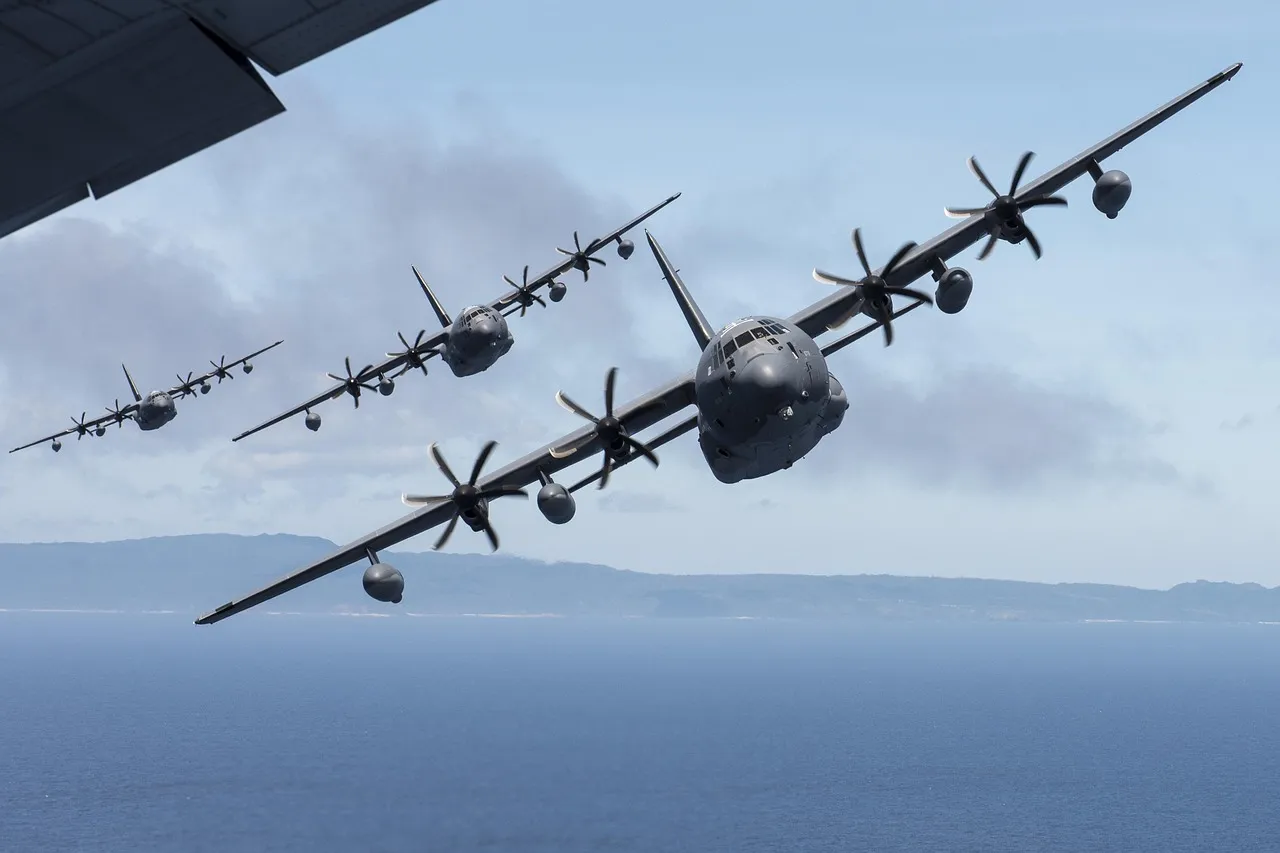
Accelerating Certification-Grade Autonomous Capabilities for Special Operations C-130J Aircraft
Merlin Labs, an aerospace and defense technology company focused on building the operating system of record for autonomous flight, has achieved a major program milestone with the successful completion of the Preliminary Design Review (PDR) for its C-130J autonomy initiative in collaboration with U.S. Special Operations Command (USSOCOM). The milestone marks a significant step forward in delivering certification-grade autonomous capabilities tailored for Special Operations Forces (SOF) aircraft and underscores the rapid technical maturation of Merlin’s AI-powered autonomy platform.
Below is a detailed overview of the program, its significance, and the next steps — presented with structured side headings for clarity.
Preliminary Design Review Successfully Completed
The completion of the Preliminary Design Review represents a critical checkpoint in the lifecycle of any advanced aerospace program. In the case of Merlin’s C-130J autonomy program, the PDR confirms that the system’s preliminary architecture, engineering approach, integration strategy, and safety methodology have been thoroughly evaluated and approved.
The review validates that the system design meets defined operational and technical requirements and is mature enough to proceed into the Critical Design phase. Achieving PDR approval means that both Merlin and USSOCOM agree the program is on a technically sound trajectory, with manageable risk and a clear path toward implementation.
For complex military aircraft modifications, particularly those involving autonomy and artificial intelligence, this level of validation is essential. It ensures that the autonomy system will integrate safely and effectively with the C-130J’s existing avionics and flight control infrastructure.
Advancing Autonomy for the C-130J Super Hercules
The C-130J Super Hercules is one of the most versatile and widely used tactical airlift aircraft platforms in the world. Within Special Operations Forces, the aircraft performs demanding missions that include low-level flight, austere runway operations, personnel and cargo insertion, and sensitive logistics operations in contested environments.
Merlin’s autonomy program is designed to enhance these missions by introducing a highly assured AI-powered autonomy stack that can perform or assist with core piloting tasks. The objective is not to eliminate human oversight, but rather to reduce crew workload, increase operational flexibility, and improve safety margins.
By integrating autonomy into the C-130J platform, the program aims to deliver a reduced aircrew capability for SOF missions. This means certain flight functions may be automated or augmented, allowing the aircraft to operate with greater efficiency while maintaining strict human command authority and oversight.
Backed by a $105 Million IDIQ Contract
The program operates under a $105 million Indefinite Delivery, Indefinite Quantity (IDIQ) contract awarded by USSOCOM. The IDIQ framework provides flexibility, enabling incremental development, phased testing, and scalable capability deployment as milestones are achieved.
This contract structure supports rapid iteration and adaptation, allowing the program to evolve in response to operational feedback and emerging mission requirements. It also reflects strong institutional confidence in Merlin’s technical roadmap and its ability to deliver a production-ready system rather than a limited prototype.
Beyond the C-130J, Merlin has internally scoped potential pathways for extending its autonomy stack across the broader SOF fixed-wing fleet, positioning the company to scale its technology across multiple platforms in the future.
Approval of Integration Design and Airworthiness Approach
One of the most significant outcomes of the PDR was the approval of Merlin’s preliminary integration design and airworthiness approach for demonstration flights. This milestone confirms that the autonomy system can be integrated into the C-130J in a manner consistent with aviation safety and certification standards.
Integration design involves defining how the autonomy stack interfaces with existing avionics, sensors, flight controls, communications systems, and onboard computing infrastructure. Given the complexity of military aircraft systems, seamless integration is essential to prevent performance degradation or unintended system interactions.
The airworthiness approval for demonstration establishes a clear and compliant pathway toward flight testing. This ensures that the autonomy system will be evaluated according to rigorous military and aviation safety standards, reinforcing Merlin’s commitment to delivering certification-grade autonomy rather than experimental automation.
Transition to Critical Design Review
With the Preliminary Design Review complete, the program now advances to the Critical Design stage. The Critical Design Review (CDR) represents a deeper level of technical validation, where the final system configuration is examined in detail.
During this phase, software architectures are refined, hardware components are finalized, interface control documents are locked in, and safety analyses are completed. The goal of CDR is to ensure the system design is complete, build-ready, and capable of meeting performance objectives under real-world operating conditions.
Successful completion of CDR will pave the way for full-scale integration, hardware installation, and validation testing.
System Integration and Ground Testing
Following Critical Design Review, the program will enter system integration and ground testing phases. Integration involves physically incorporating the autonomy stack into the aircraft or representative test platforms.
Ground testing will include hardware-in-the-loop simulations, system-level validation exercises, redundancy testing, and fault scenario evaluations. These tests are designed to ensure that the autonomy platform performs reliably across a wide spectrum of operating conditions, including degraded environments and emergency scenarios.
Testing at this stage is crucial to building confidence in system robustness before progressing to flight demonstrations.
Takeoff-to-Touchdown Flight Demonstrations
After successful ground validation, Merlin and USSOCOM will conduct a series of takeoff-to-touchdown flight demonstrations. These demonstrations will showcase the autonomy system’s capability across all major phases of flight, including taxi, takeoff, climb, cruise, approach, and landing.
Flight testing provides real-world performance data and allows engineers to validate AI decision-making, system redundancy, and human-machine interface effectiveness. For Special Operations Forces, these demonstrations will illustrate how autonomy can enhance mission readiness, safety, and operational flexibility.
Such flight events are essential not only for technical validation but also for operational evaluation and stakeholder confidence.
Delivering Highly Assured, Certification-Grade Autonomy
Merlin’s long-term vision is to create the operating system of record for autonomous flight. Unlike many autonomy initiatives that focus solely on experimental capability, Merlin’s approach centers on achieving highly assured autonomy that meets stringent safety and certification standards.
Military aviation demands reliability, cybersecurity resilience, redundancy, and transparency in automated decision-making. By embedding certification and airworthiness considerations into every development phase, Merlin is positioning its autonomy platform for operational deployment rather than limited experimentation.
CEO and founder Matt George described the PDR milestone as pivotal in bringing the program closer to delivering autonomy that enhances mission performance, improves safety, and expands operational flexibility for Special Operations Forces. The program’s structured progression — from design validation to integration, testing, and flight demonstration — reflects a disciplined engineering approach aligned with military operational needs.
Strategic Impact for Special Operations Forces
For Special Operations Forces, autonomy represents a force multiplier. Reduced crew workload can improve focus during high-stress missions. Advanced AI assistance can enhance situational awareness and support complex decision-making. In certain scenarios, reduced aircrew configurations may enable new operational concepts or extended mission endurance.
By advancing autonomy on the C-130J, Merlin and USSOCOM are taking a meaningful step toward modernizing special operations aviation. The successful completion of the Preliminary Design Review signals that the program is technically sound, strategically aligned, and progressing toward real-world deployment.
As the program moves into Critical Design, integration, and flight testing, Merlin’s achievement marks a defining moment in the evolution of autonomous military aviation — bringing highly assured AI-powered capability closer to operational reality.
Source link: https://www.businesswire.com/