

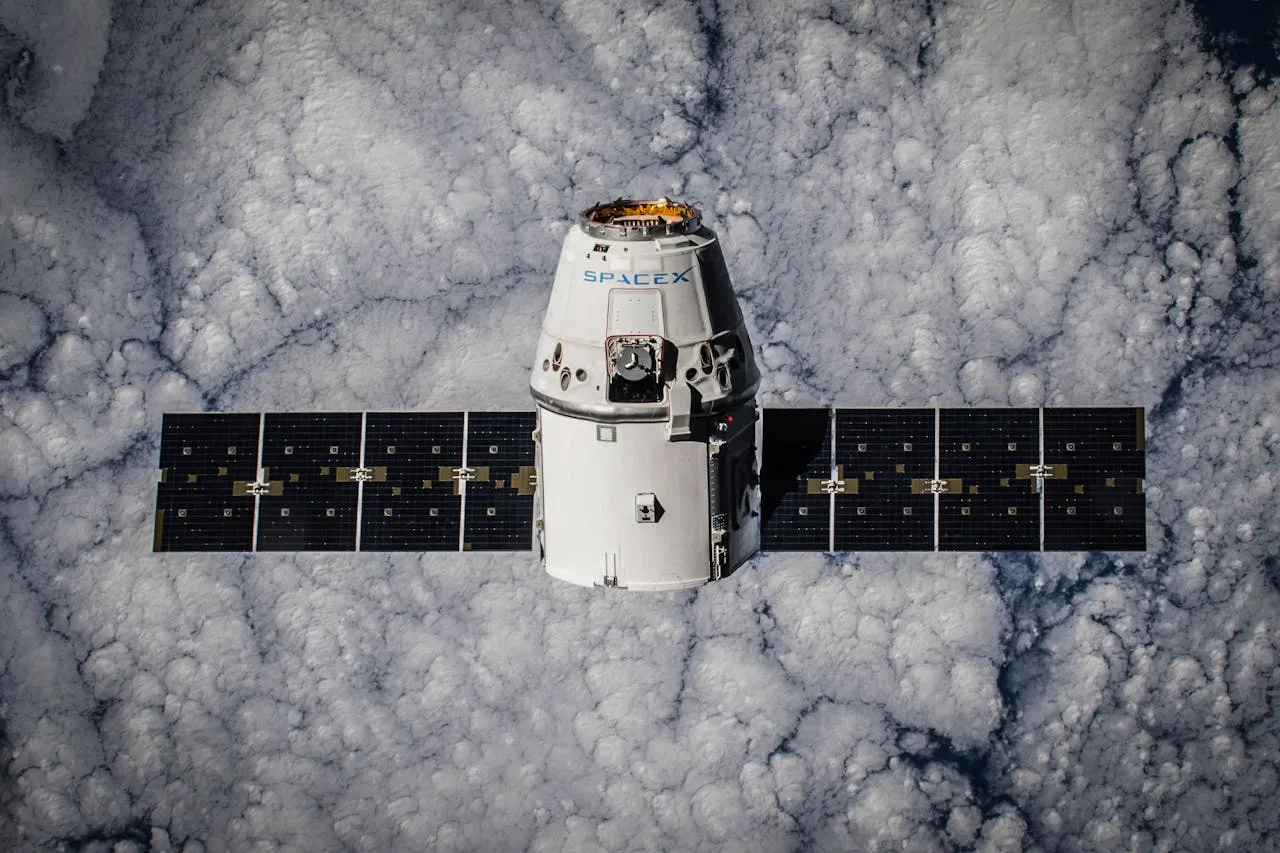
Symphony Space, a newly launched U.S.-based aerospace company, has formally emerged from stealth mode with the unveiling of its flagship innovation: the Adagio Platform. Positioned as the world’s first modular, multi-mission orbital infrastructure, Adagio represents a bold step forward in reshaping how payloads are hosted, operated, and maintained in space. The company’s debut comes at a pivotal moment for the global space industry, which has witnessed dramatic reductions in launch costs over the past decade but continues to grapple with high operational expenses once assets reach orbit.
While the cost of launching payloads into space has dropped by more than 90% due to advancements in reusable rocket technology and increased competition among launch providers, a significant bottleneck remains. Operating in space still requires highly specialized, single-purpose satellites that often take three to five years to design, build, and deploy, with budgets that can easily climb into the tens of millions of dollars. Symphony Space aims to disrupt this outdated model by introducing a shared, reusable, and significantly more cost-effective alternative.
At the heart of this transformation is the Adagio Platform, which promises to deliver on-demand payload hosting in orbit. By decoupling payload development from spacecraft infrastructure, Symphony Space is enabling customers to bypass the complexities of building entire satellites. Instead, organizations can focus exclusively on their mission-specific hardware while relying on Adagio to provide the foundational systems necessary for successful operations in space.
Merry Walker, CEO and Co-founder of Symphony Space, emphasized the significance of this shift in a statement accompanying the announcement. According to Walker, the primary challenge in today’s space economy is no longer access to orbit, but rather the speed and efficiency of operations once there. She highlighted that Adagio is designed not just as a single platform, but as the beginning of a broader network of persistent, modular orbital systems that can support a wide range of missions across industries.
This vision aligns with the growing concept of “Space-as-a-Service,” an emerging business model that mirrors the evolution of cloud computing on Earth. Just as companies no longer need to build and maintain their own data centers, Symphony Space envisions a future where organizations can access orbital infrastructure on demand, scaling their space operations as needed without incurring prohibitive upfront costs.
One of the most compelling aspects of the Adagio Platform is its ability to handle the so-called “heavy lifting” of space operations. This includes critical functions such as power generation and distribution, communications, thermal management, precision pointing, and robotic manipulation. These systems are typically among the most complex and resource-intensive components of any satellite mission. By integrating them into a shared platform, Adagio significantly reduces the technical and financial barriers to entry for space-based activities.
The platform’s modular architecture is another key differentiator. Designed with flexibility in mind, Adagio allows payloads to be installed, removed, or upgraded across multiple mission cycles. This is made possible through the use of advanced robotics, which can perform precise operations in the harsh environment of space. As a result, customers can extend the lifespan of their payloads, adapt to changing mission requirements, and maximize their return on investment.
This reconfigurability also opens the door to entirely new use cases. For example, research institutions and commercial entities can conduct experiments in microgravity without committing to long-term satellite deployments. The Adagio Platform includes capabilities for what Symphony Space describes as “Lab-as-a-Service,” enabling users to customize environmental conditions for scientific research. This is particularly relevant for industries such as pharmaceuticals and biotechnology, where microgravity can yield unique insights into molecular behavior, drug development, and advanced materials.
In addition to commercial and scientific applications, Adagio is designed with dual-use capabilities that make it suitable for defense and intelligence missions. The platform supports advanced ISR (Intelligence, Surveillance, and Reconnaissance) operations and incorporates secure communication systems leveraging distributed ledger technology (DLT). This approach enhances data integrity and security, addressing the growing need for resilient and tamper-proof communication channels in space-based operations.
Another notable feature of the Adagio Platform is its universal compatibility with major global launch vehicles. This ensures that customers are not locked into a single launch provider and can take advantage of competitive pricing and scheduling flexibility across the industry. By abstracting away the complexities of launch integration, Symphony Space is further simplifying the process of getting payloads into orbit.
From an economic perspective, the company दावा claims that Adagio can reduce costs by up to four times compared to traditional single-use satellite solutions. This cost efficiency is achieved not only through shared infrastructure but also by eliminating the need for redundant systems across multiple missions. As more customers utilize the platform, economies of scale are expected to drive costs down even further, reinforcing the value proposition of the Space-as-a-Service model.
The introduction of Adagio also has broader implications for the space ecosystem. By lowering barriers to entry, Symphony Space is enabling a more diverse range of participants to engage in space activities. Startups, academic institutions, and emerging markets that previously lacked the resources to develop full-scale satellite missions can now access orbital capabilities in a more affordable and flexible manner. This democratization of space has the potential to accelerate innovation and expand the range of applications being explored.
Moreover, the concept of persistent, modular orbital infrastructure aligns with long-term trends toward sustainability in space. Traditional satellites often become space debris once their missions conclude, contributing to the growing challenge of orbital congestion. In contrast, reusable platforms like Adagio can be maintained, upgraded, and repurposed over time, reducing waste and promoting more responsible use of orbital resources.
Symphony Space’s debut also reflects a broader shift in how the industry approaches infrastructure. Rather than viewing satellites as isolated assets, there is a growing recognition of the need for interconnected systems that can support multiple missions simultaneously. This networked approach mirrors developments in terrestrial infrastructure, where shared platforms and services have become the norm.
As the space economy continues to expand, driven by advancements in technology and increasing demand for data and connectivity, solutions like the Adagio Platform are likely to play a critical role. By addressing the operational bottlenecks that have persisted despite reductions in launch costs, Symphony Space is positioning itself at the forefront of a new era in orbital infrastructure.
Looking ahead, the company plans to engage with a wide range of partners across industries, from technology firms and research organizations to government agencies and defense contractors. Walker’s invitation for collaboration underscores the company’s commitment to building an ecosystem around its platform, fostering innovation and enabling new use cases.
In conclusion, the launch of Symphony Space and its Adagio Platform marks a significant milestone in the evolution of the space industry. By introducing a modular, reusable, and cost-effective approach to payload hosting, the company is challenging traditional paradigms and paving the way for a more accessible and scalable space economy. As the concept of Space-as-a-Service gains traction, platforms like Adagio could become the foundation upon which the next generation of space-based innovation is built.
Source link: https://www.businesswire.com/