

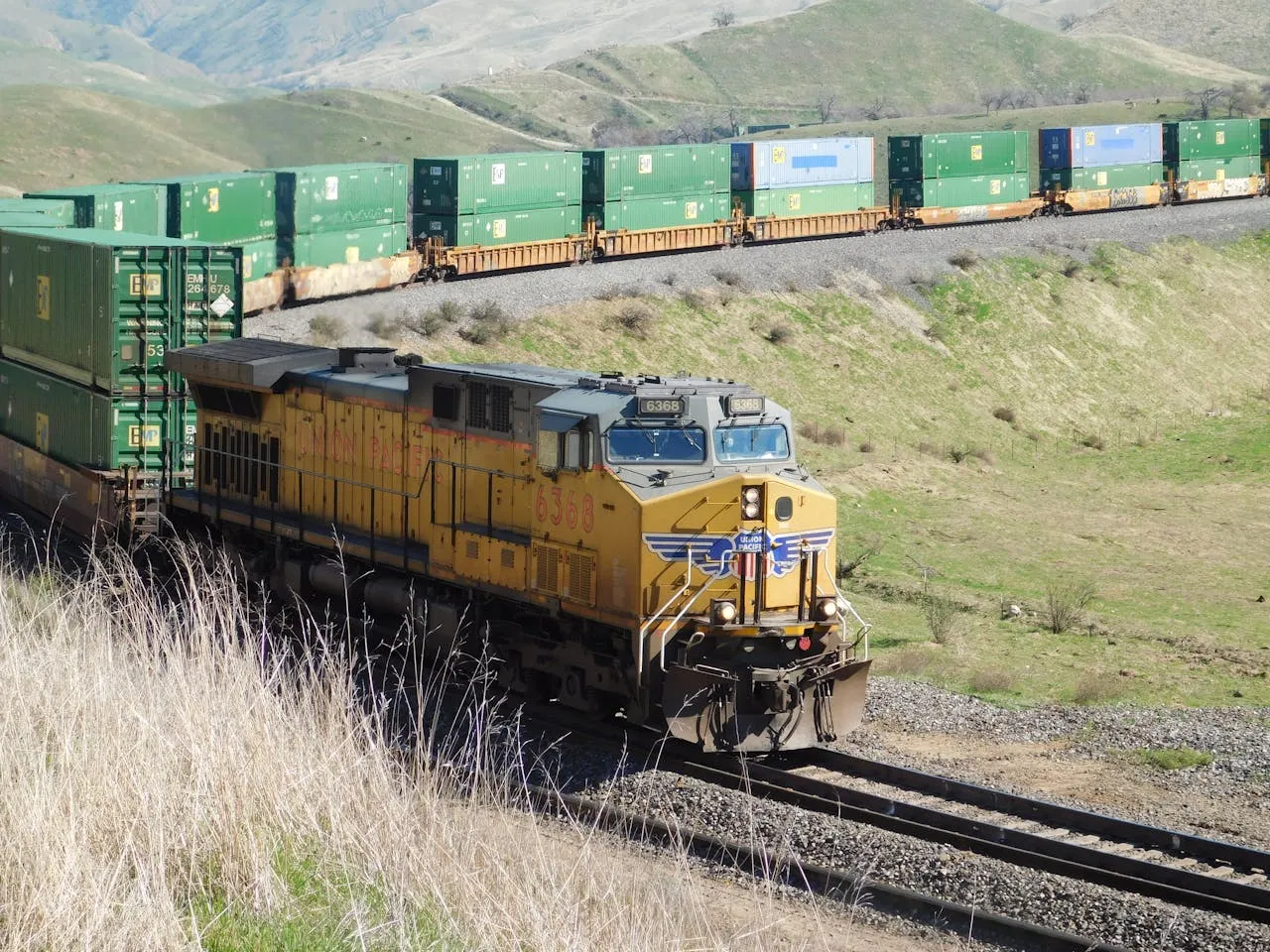
The American Train Dispatchers Association (ATDA) and Union Pacific Railroad have reached a landmark agreement that guarantees lifetime job protection for union employees as Union Pacific moves forward with its planned combination with Norfolk Southern. The merger, if completed, would create the United States’ first single-line, coast-to-coast railroad network, fundamentally reshaping freight rail operations across the country.
The agreement marks a significant milestone in ongoing labor negotiations tied to the proposed consolidation. Under the terms of the deal, ATDA members who are employed at the time the merger becomes effective will retain job security for life, provided they continue to meet standard employment requirements. The commitment is designed to ensure that dispatchers and other unionized rail employees are not displaced as a result of restructuring, integration, or operational changes that typically accompany large-scale corporate mergers.
For the ATDA, the agreement represents a key victory in safeguarding long-term employment stability for its members. Train dispatchers play a critical role in the safe and efficient movement of rail traffic, coordinating train movements, managing track usage, and ensuring operational safety across complex rail networks. With the proposed merger expected to significantly expand the scale and scope of Union Pacific’s operations, concerns about workforce restructuring and potential job displacement had been central to labor discussions.
ATDA President L. Ed Dowell emphasized that the union’s support for the merger was contingent on securing strong protections for its members. He noted that the agreement provides assurance that dispatchers will remain employed in their union roles for life under the new combined railroad structure, reinforcing both job security and the preservation of collective bargaining rights.
“With Union Pacific guaranteeing our members work as ATDA Train Dispatchers for life, committing to the preservation of their right to their union work, and collaborating with us to maintain their stability, I now support their effort to merge with Norfolk Southern,” Dowell said. His statement highlights the union’s position that labor protections were a prerequisite for endorsing the large-scale corporate integration.
The ATDA is the latest in a growing list of labor organizations to reach similar agreements with Union Pacific as part of the merger process. According to the company, this is the sixth national union to secure job protection commitments tied to the transaction. Other unions that have reached agreements include the International Association of Sheet Metal, Air, Rail and Transportation Workers–Transportation Division (SMART-TD), the National Conference of Firemen and Oilers (NCFO), the Brotherhood of Railway Carmen (BRC), the International Brotherhood of Boilermakers (IBB), and the United Supervisors Council of America (USCA).
Together, these agreements represent a broad labor framework aimed at minimizing disruption for existing employees while allowing the rail network expansion to proceed. Union Pacific has positioned these agreements as evidence of its commitment to workforce stability during what would be one of the largest rail consolidations in U.S. history.
Union Pacific Chief Executive Officer Jim Vena described the agreement with ATDA as part of a broader strategy to ensure that employees benefit from, rather than suffer because of, the proposed merger. He reiterated that the company’s goal is to create a seamless transcontinental rail system that improves efficiency, service reliability, and competitiveness in the freight transportation sector.
“We pledged from the first day we announced the merger that creating a seamless, transcontinental railroad will be good for our employees,” Vena said. “I want to thank ATDA; it was great working with them to move forward on a deal that supports our employees. This unprecedented jobs-for-life agreement underscores that commitment and confidence in the benefits of the merger for our nation, our workforce and our customers.”
The agreement is being viewed as part of a broader labor strategy designed to secure stakeholder alignment ahead of regulatory review and potential approval of the merger. Large-scale railroad consolidations in the United States are subject to extensive scrutiny from regulators, including the Surface Transportation Board (STB), which evaluates potential impacts on competition, service quality, safety, and employment.
By securing agreements with multiple unions, Union Pacific is signaling that workforce concerns are being addressed proactively. The “jobs-for-life” commitments are intended to reduce resistance from organized labor, which has historically played a significant role in shaping the outcome of major rail mergers.
The proposed Union Pacific–Norfolk Southern combination, if approved, would unite two of the country’s most significant freight rail networks. Union Pacific operates extensively across the western two-thirds of the United States, while Norfolk Southern has a strong presence in the eastern half. Together, the combined system would create uninterrupted rail connectivity from the Atlantic to the Pacific, potentially streamlining freight movement, reducing interchange delays, and improving logistics efficiency for shippers.
Supporters of the merger argue that a unified rail system could deliver significant economic benefits, including faster transit times, improved supply chain reliability, and enhanced global competitiveness for U.S. exports. They also point to potential environmental benefits, as more efficient rail transport could reduce reliance on trucking and lower overall emissions in freight logistics.
However, the merger is also expected to face scrutiny from regulators, competitors, and industry stakeholders who may raise concerns about market concentration, pricing power, and reduced competition in certain corridors. Labor agreements such as the one reached with ATDA are likely to play a role in shaping the broader narrative around the merger’s potential impact.
For union members, the agreement provides a rare level of long-term certainty in an industry that has historically experienced consolidation-driven workforce reductions. The assurance of lifetime employment for existing workers is particularly significant in the rail sector, where mergers often lead to operational integration and workforce realignment.
The ATDA deal also reflects a broader shift in how large infrastructure and transportation companies are managing labor relations during major corporate transitions. Rather than focusing solely on cost synergies, Union Pacific appears to be emphasizing workforce continuity and collaboration with unions as part of its integration strategy.
As the merger process moves forward, additional regulatory filings, stakeholder consultations, and union negotiations are expected. The outcome will likely shape the future structure of U.S. freight rail for decades to come, making the ATDA agreement a key milestone in one of the most consequential transportation industry developments in recent years.
Source link: https://www.businesswire.com/