

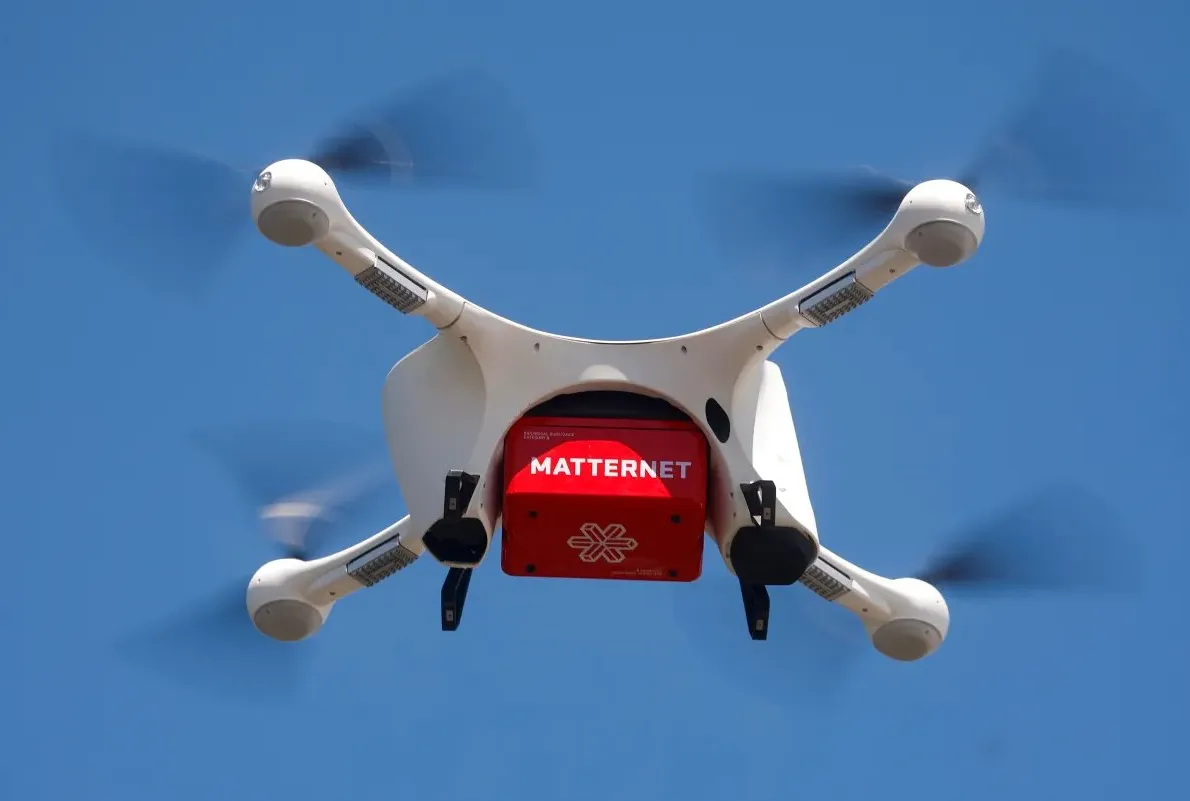
Matternet Expands into the UK with Launch of NHS Drone Delivery Operations in Central London
Matternet, widely recognized as a pioneer in urban drone logistics, has officially launched its first operations in the United Kingdom through a new partnership with the National Health Service (NHS). The company announced the start of drone delivery services in Central London, marking a major milestone not only for Matternet’s international expansion but also for the modernization of healthcare logistics in one of the busiest cities in the world.
The new service represents Matternet’s first commercial deployment in the UK and is expected to serve as the foundation for a broader city-wide medical drone network supporting NHS facilities across London in the years ahead. By using advanced unmanned aerial systems to transport critical healthcare supplies, the initiative aims to improve speed, efficiency, and reliability while reducing pressure on traditional road transport systems.
Connecting Hospitals Through Rapid Aerial Logistics
Matternet’s M2 drone platform is now operating in partnership with Apian, a UK-based healthcare logistics technology company focused on autonomous transport solutions. Through this collaboration, the drone system connects two of Central London’s busiest hospital campuses via dedicated bi-directional aerial routes.
These drone flights are specifically designed to move vital medical items between sites within minutes rather than relying on road-based courier services that often face delays caused by heavy traffic congestion. In a city like London, where travel times can vary significantly due to road conditions, the ability to bypass street traffic offers a major operational advantage.
The drone network will initially be used to transport diagnostic samples, laboratory specimens, pharmaceuticals, and other urgent medical payloads. These deliveries are essential to day-to-day hospital operations and can have a direct impact on patient care, treatment timelines, and workflow efficiency.
Healthcare systems often depend on the rapid transfer of blood samples, pathology materials, medicines, and urgent supplies between hospitals and laboratories. Any delay in transportation can slow diagnosis and treatment decisions. By shortening delivery times, drone technology can help hospitals respond more quickly and effectively.
Matternet Highlights Strategic Milestone
Commenting on the launch, Andreas Raptopoulos, Founder and Chief Executive Officer of Matternet, described the new UK deployment as a significant achievement for the company.
He said the start of operations in Central London for the NHS represents both a major company milestone and an important step toward creating a city-wide medical drone network for one of the world’s leading healthcare systems.
Raptopoulos also emphasized that ultra-fast logistics will increasingly become a core element of next-generation healthcare infrastructure. According to him, London is now demonstrating what the future of healthcare logistics can look like when advanced technology is integrated into public health systems.
The company has long promoted the concept of autonomous aerial logistics as a smarter and faster alternative for transporting lightweight, high-priority items across urban environments. With London now joining its operational footprint, Matternet is further strengthening its role in this emerging industry.
Strengthening Global Presence Across Multiple Continents
With the UK launch, Matternet now operates across three continents and four advanced regulatory jurisdictions. This expansion reinforces the company’s reputation as one of the most experienced and established operators in the drone delivery sector.
Matternet is particularly notable for being the only drone delivery company to achieve Federal Aviation Administration (FAA) Type Certification, one of the most significant regulatory milestones in the aviation industry. This certification demonstrates that its drone platform meets rigorous safety and airworthiness standards.
The company is also among a small number of drone operators globally conducting routine commercial flights in dense urban areas, where airspace management, safety compliance, and operational precision are especially critical.
Prior to entering the UK market, Matternet helped pioneer medical drone delivery networks in Switzerland and the United States. Those operations demonstrated the ability of drones to reliably move healthcare supplies between hospitals, laboratories, and distribution centers.
By bringing that operational expertise and regulatory experience to Britain, Matternet is positioning itself as a trusted partner for the NHS as it modernizes logistics systems.
UK Government Supports Innovation in Healthcare
The launch has also received support from UK officials, reflecting broader government interest in digital transformation and innovation within public services.
Dr. Zubir Ahmed, the UK’s Health Innovation and Safety Minister, welcomed the start of drone operations and said the country is becoming home to world-class medical drone services that can help transform NHS patient care.
He highlighted that connecting hospital campuses in minutes rather than hours can lead to faster test results, quicker access to urgent medical supplies, and improved treatment outcomes for patients.
According to Ahmed, the NHS deserves logistics systems that match the high standards of its healthcare workforce. He described the new drone service as an example of what becomes possible when government agencies, regulators, healthcare institutions, and private-sector innovators work together.
He also linked the initiative to the government’s broader healthcare modernization strategy, describing it as a shift from outdated analogue systems toward more efficient digital infrastructure under the UK’s long-term health planning agenda.
Apian’s Role in Building Autonomous NHS Logistics
Matternet’s deployment in London builds on the work of Apian, which has been focused on creating autonomous logistics infrastructure for the NHS.
Apian specializes in integrating drone delivery and automation into hospital supply chains. Its platform is designed to help healthcare providers move critical items faster, more reliably, and with lower environmental impact compared with conventional transport systems.
Urban hospitals often rely on vans, motorcycles, and couriers to transfer items between sites. However, these methods can be expensive, slow, and carbon-intensive. Drone logistics offer a more direct route while reducing dependency on congested city roads.
Alexander Trewby, Co-Founder and Chief Executive Officer of Apian, said Matternet brings proven world-class drone delivery capability to the company’s platform at an important time for the NHS.
He added that together the two companies are building a new infrastructure layer for healthcare in which autonomous systems move critical items seamlessly between hospital sites.
Trewby also noted that the partnership is laying the foundations for what he described as “physical AI” operating at scale in the real world, starting with healthcare applications in the NHS.
Benefits for Hospitals and Patients
The practical benefits of drone delivery in healthcare can be substantial. Faster transport of laboratory samples can accelerate diagnosis times. Rapid medicine transfers can help avoid shortages at specific sites. Emergency supplies can be dispatched more quickly. Staff can spend less time coordinating courier services and more time focused on patient care.
In complex hospital systems where multiple campuses operate together, efficient logistics are essential. Delays in moving supplies between facilities can create bottlenecks that affect operations throughout the network.
Drone systems can help solve these issues by offering predictable transport times and real-time tracking. They also provide redundancy during periods of road disruption, strikes, severe traffic, or emergency events.
For patients, this can translate into faster care decisions, reduced waiting times for results, and improved treatment pathways.
Regulatory Collaboration Supports Expansion
The launch follows close coordination with the UK Civil Aviation Authority (CAA), highlighting the importance of regulatory collaboration in bringing advanced drone services into urban environments.
Operating drones in a city such as London requires careful planning around airspace safety, route design, privacy considerations, and public confidence. Regulatory support is therefore essential to scaling services responsibly.
The successful launch signals growing institutional confidence in advanced drone logistics across the UK. It may also create momentum for similar deployments in other sectors such as emergency response, infrastructure inspection, and commercial delivery.
Future Growth Across London
As the network expands, Matternet and Apian expect to support additional hospital campuses, new payload categories, and broader healthcare use cases across the capital.
This could include more frequent transfers of pathology samples, blood products, specialist medicines, surgical materials, and urgent care supplies between NHS sites.
Over time, the companies aim to create an integrated healthcare drone network that becomes a routine part of urban medical logistics rather than a standalone pilot program.
A New Era for Healthcare Logistics
The launch of Matternet’s NHS drone delivery operations in Central London represents more than just a technology deployment. It signals a broader transformation in how healthcare systems may move critical supplies in the future.
As hospitals face growing demand, tighter budgets, and pressure to improve patient outcomes, efficient logistics will become increasingly important. Drone networks offer one possible solution by combining speed, automation, and sustainability.
With London now joining Matternet’s global network, the UK is taking a visible step toward a future where autonomous aerial transport becomes an everyday part of healthcare delivery.
Source link: https://www.businesswire.com/