

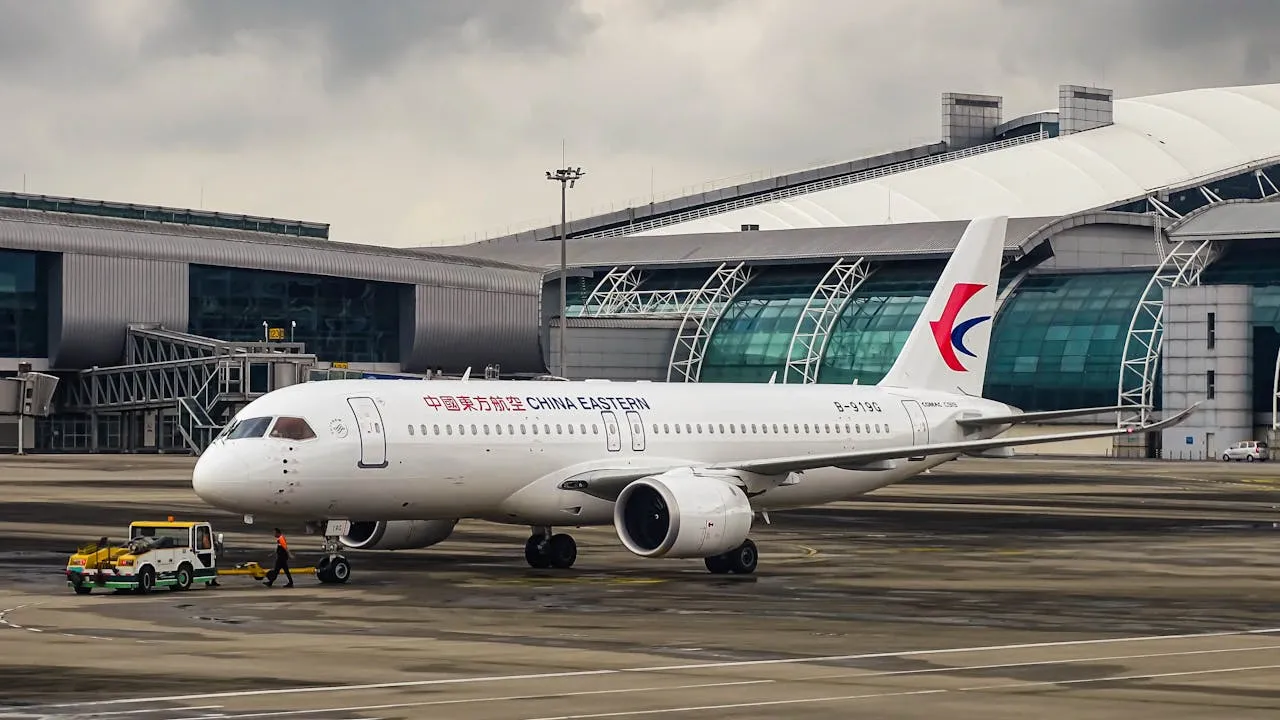
China Eastern Airlines Launches First Direct Vienna-Xi’an Route Linking Austria with Northwest China
China Eastern Airlines (CEAir) has officially launched a new nonstop service between Vienna, Austria, and Xi’an, the capital city of northwest China’s Shaanxi Province. The route marks a significant milestone in air connectivity, becoming the first direct flight link between Austria and northwest China. The new service is expected to boost tourism, business exchanges, and cultural cooperation between the two regions while strengthening China Eastern’s growing intercontinental network.
The inauguration of the Vienna-Xi’an route reflects increasing demand for direct long-haul travel options between Europe and China. By eliminating the need for connecting flights through other major hubs, the route offers passengers faster, more convenient access to one of China’s most historically important cities and one of Europe’s central economic gateways.
First-Ever Direct Air Link Between Austria and Northwest China
The new service is notable because it is the first nonstop route connecting Austria directly with northwest China. Until now, travelers heading between Vienna and Xi’an typically had to transit through major hubs such as Beijing, Shanghai, Doha, Frankfurt, or Istanbul. The new connection significantly reduces total travel time and creates a more seamless journey for both leisure and business passengers.
For Austria, the route strengthens its aviation links with China beyond the traditional gateways of Beijing and Shanghai. For Xi’an and Shaanxi Province, it opens a valuable direct connection to Central Europe, making it easier for international travelers to visit the region.
The service also highlights Vienna’s growing role as a strategic European gateway for airlines seeking to expand access to secondary Chinese cities with strong economic and tourism potential.
Flight Schedule and Operations
China Eastern Airlines is operating the Vienna-Xi’an route three times per week, providing regular and convenient options for travelers. Flights are scheduled on Mondays, Thursdays, and Saturdays.
The outbound flight, MU5064, departs Vienna at 13:30 local time and lands at Xi’an Xianyang International Airport at 05:50 the following day.
The return service, MU5063, departs Xi’an at 01:30 local time and arrives in Vienna at 06:10 local time.
This timetable is designed to maximize connectivity at both ends of the route. Passengers arriving in Xi’an can connect onward to domestic destinations across China and other Asian cities served by China Eastern. Meanwhile, passengers landing in Vienna gain access to Austria’s transport network and European connections.
Airbus A330 Widebody Aircraft Deployed
China Eastern Airlines is operating the route using the Airbus A330 wide-body aircraft, a popular long-haul jet known for passenger comfort and operational efficiency.
The aircraft used on the Vienna-Xi’an service features a two-class cabin layout with:
- 18 Business Class seats
- 245 Economy Class seats
The Business Class cabin offers premium seating for corporate travelers and long-haul passengers seeking extra comfort, while the spacious Economy cabin supports tourism and general travel demand.
The Airbus A330 remains a preferred aircraft for medium- to long-haul international routes because of its balance between range, capacity, and fuel efficiency. Its use on the route signals China Eastern’s confidence in demand while maintaining flexibility in capacity planning.
Xi’an Strengthens Role as Global Aviation Hub
The addition of Vienna further strengthens Xi’an’s position as a rising international aviation hub in western China. Historically famous as the starting point of the ancient Silk Road, Xi’an is increasingly becoming a modern transportation gateway connecting China with Europe, the Middle East, and Asia.
With the launch of the Vienna route, China Eastern now operates 16 international routes from Xi’an, linking the city with 14 destinations worldwide.
This network expansion supports China’s broader regional development goals by enhancing connectivity for inland provinces and reducing dependence on coastal gateway airports such as Beijing, Shanghai, and Guangzhou.
Xi’an’s strategic location makes it ideal for east-west air traffic flows, and the city’s growing airport infrastructure positions it for continued expansion in global aviation.
Benefits for Austrian Travelers
For travelers in Austria and neighboring European countries, the new route offers direct access to one of China’s most culturally rich and historically significant regions.
Xi’an is globally renowned as the home of the Terracotta Army, one of the most famous archaeological discoveries in the world. The city was once the capital of several Chinese dynasties and remains a major center for history, architecture, cuisine, and culture.
Visitors can explore attractions such as:
- The Terracotta Warriors and Horses Museum
- Xi’an Ancient City Wall
- Muslim Quarter food district
- Giant Wild Goose Pagoda
- Historical Silk Road heritage sites
The new nonstop flight makes these destinations more accessible than ever before for European tourists.
Stronger Access to China and Asia
Beyond Xi’an itself, the route provides Austrian passengers with convenient onward connections through China Eastern’s network. From Xi’an, travelers can continue to many cities across mainland China as well as destinations throughout Asia.
This creates new opportunities for:
- Tourism across China
- Academic exchanges
- Trade delegations
- Family visits
- Multi-city business travel
For European travelers seeking alternatives to traditional entry points such as Beijing or Shanghai, Xi’an offers a practical and culturally rewarding gateway into China.
Vienna Gains New Importance in China Eastern’s Europe Network
The addition of Vienna also enhances China Eastern Airlines’ footprint in Europe. The airline already serves several major European destinations, and Vienna now joins a growing list of strategic gateways that includes:
- London
- Paris
- Rome
- Amsterdam
- Frankfurt
Vienna is particularly attractive due to its central location, high quality airport infrastructure, and strong rail and road links to neighboring countries such as Hungary, Slovakia, Czech Republic, Germany, and Slovenia.
As a result, the route may attract not only Austrian travelers but also passengers from across Central and Eastern Europe who can easily access Vienna International Airport.
Tourism and Trade Opportunities
Direct air links often create wider economic benefits beyond passenger traffic. The Vienna-Xi’an route is expected to support stronger tourism flows in both directions while facilitating trade and investment.
For Austria, Chinese visitors represent an important long-haul tourism segment interested in luxury shopping, culture, alpine travel, and European city experiences. Vienna, with its imperial history, classical music heritage, and premium retail offerings, is well positioned to benefit.
For Shaanxi Province, the route can help attract more European tourists, investors, and academic institutions.
Business sectors likely to benefit include:
- Manufacturing
- Logistics
- Automotive supply chains
- Renewable energy
- Education partnerships
- Cultural industries
The route also supports cargo potential, allowing faster movement of high-value goods between the two markets.
Travel Rules and Visa Information
China Eastern Airlines has also highlighted simplified travel opportunities for Austrian citizens.
Austrian passport holders are eligible under China’s visa-free policy, allowing stays of up to 30 days for purposes such as tourism, business, family visits, or transit. The policy is currently valid until December 31, 2026.
This visa-free access is expected to stimulate stronger outbound travel demand from Austria and other nearby European countries.
Meanwhile, Chinese citizens traveling to Austria are required to obtain a Schengen visa prior to departure. Austria remains part of the Schengen Area, allowing approved visitors access to multiple European countries under one visa arrangement.
Growing Europe-China Aviation Recovery
The launch of the Vienna-Xi’an route also reflects the continued recovery and restructuring of Europe-China air travel. Airlines on both sides are restoring suspended services, opening new markets, and adjusting networks to changing passenger demand.
Instead of relying only on mega-cities, carriers are increasingly launching direct routes to culturally significant or economically growing secondary destinations. Xi’an fits this trend perfectly due to its tourism appeal, population size, and strategic inland location.
For China Eastern Airlines, the route demonstrates a broader strategy of building Xi’an into a powerful western China hub with strong global reach.
The Vienna-Xi’an service could become a model for future routes connecting European capitals with inland Chinese cities. If passenger demand remains strong, China Eastern may consider increasing frequencies or adding seasonal capacity.
The route also creates opportunities for tour operators, cargo forwarders, hospitality businesses, and travel agencies on both sides.
As aviation competition intensifies and passengers seek more convenient direct options, nonstop links such as Vienna-Xi’an are becoming increasingly valuable.
China Eastern Airlines’ launch of the first nonstop route between Vienna and Xi’an is a landmark development for aviation ties between Austria and northwest China. The new service improves travel convenience, boosts tourism opportunities, strengthens business connectivity, and enhances Xi’an’s role as an emerging international hub.
With three weekly Airbus A330 flights, visa-free access for Austrian travelers to China, and strong onward connections across Asia, the route is positioned to become an important bridge between Europe and western China. It also reinforces China Eastern Airlines’ growing presence in the European market while supporting long-term economic and cultural exchange between the two regions.
Source link: https://www.businesswire.com/