

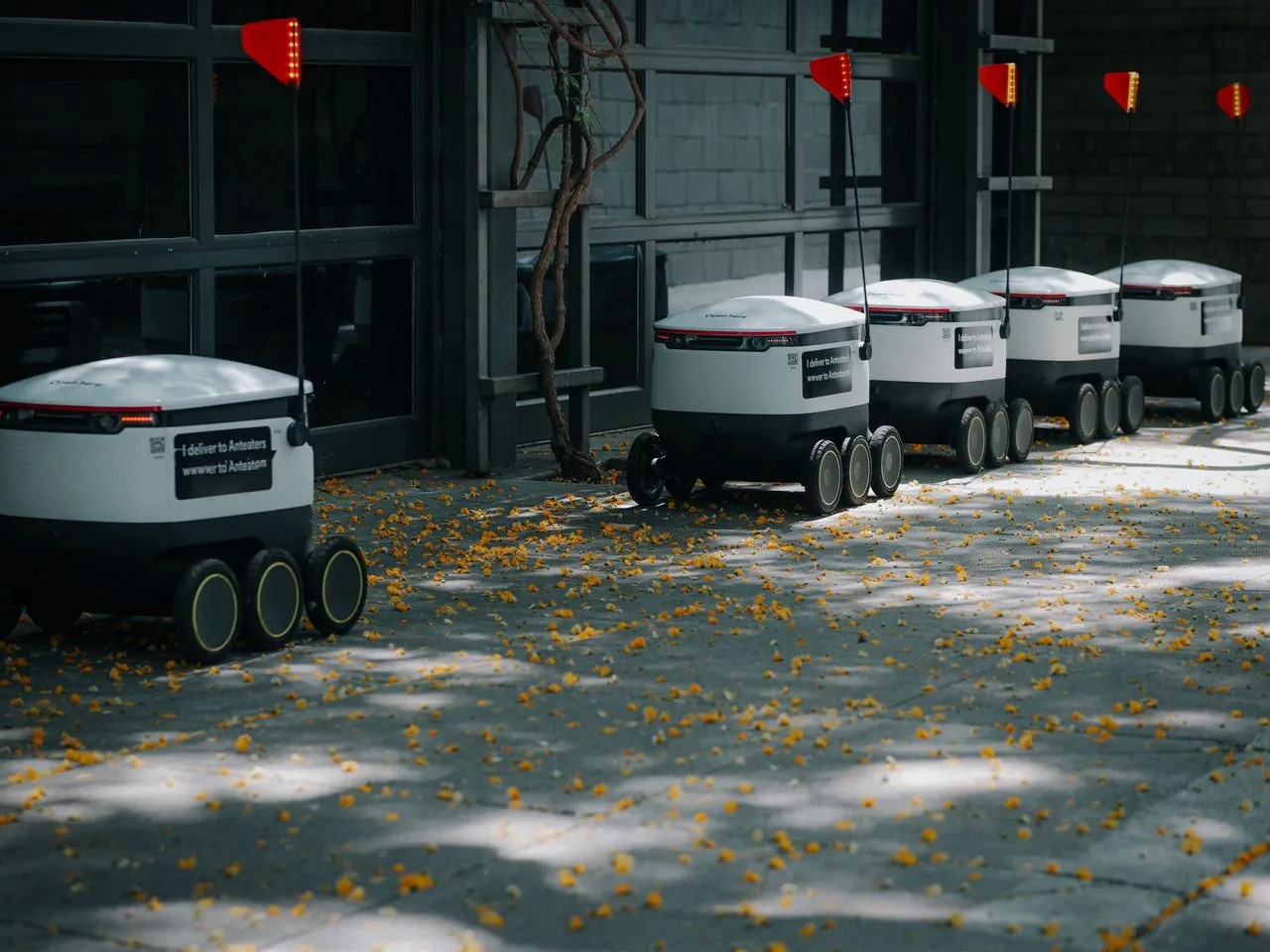
Starship Technologies Shifts Strategic Focus to Grocery Delivery Expansion Across Europe and the United States, Phases Out US Campus Operations
Starship Technologies, a leading player in sidewalk autonomous delivery robotics, has announced a significant strategic realignment as it doubles down on retail grocery chains and hot food delivery across major urban markets in Europe and the United States. As part of this transition, the company will gradually wind down its United States university campus delivery operations, marking a pivotal shift in its commercial focus from controlled environments to large-scale urban logistics.
The move reflects Starship’s growing conviction that grocery delivery represents the most scalable and economically impactful application of its autonomous delivery technology. The company emphasized that demand from major grocery retailers is accelerating rapidly, with adoption already demonstrating strong traction in multiple international markets. According to the company, its grocery delivery business is on a projected 10x growth trajectory over the next two years, driven by increasing retailer partnerships and rising consumer demand for faster, more cost-efficient last-mile delivery solutions.
Strong Momentum in Grocery Delivery Markets
Starship highlighted Finland as a standout example of its commercial success in grocery logistics. In the country, the company has already achieved approximately 20% market penetration in its operating areas, meaning that roughly one in five grocery deliveries is now completed by a Starship autonomous robot. This level of adoption, the company said, demonstrates both consumer acceptance and retailer confidence in robotic delivery at scale.
Building on this foundation, Starship aims to replicate similar outcomes in the United States and other European markets. The company is currently preparing to announce new partnerships with major grocery retailers in the coming months, signaling a broader rollout of its autonomous delivery network in densely populated urban environments.
To support this expansion, Starship confirmed that more than 1,200 robots currently deployed across its US university campus network will be redeployed to strengthen grocery delivery operations in both Europe and the United States. This redeployment is expected to significantly increase operational capacity in high-demand retail zones and accelerate deployment timelines for new grocery partners.
Strategic Shift Away from Campus Operations
For several years, Starship Technologies built and refined its autonomous delivery systems within university campuses in the United States, an environment that provided controlled conditions for testing, iteration, and operational learning. However, with the company now confident in the maturity and reliability of its technology, it is shifting its focus toward open urban environments where delivery complexity, scale, and commercial opportunity are significantly greater.
Ahti Heinla, CEO and co-founder of Starship Technologies, said the company’s evolution reflects both technological readiness and market opportunity.
“We’re seeing a lot of traction for delivery robots across numerous industries including industrial, universities, and corporate, but it’s time for us to focus on the vertical we feel will have the most value, both for our clients and for Starship,” Heinla said.
He added that the company’s early deployment in US campuses was critical to building operational depth and collecting real-world data that could not have been replicated in laboratory settings. These early environments allowed Starship to refine navigation systems, improve safety performance, and optimize delivery efficiency in real-world conditions.
Transition to Open Urban Deployment
According to Heinla, Starship’s technology has now reached a level of maturity that enables reliable large-scale operation in complex urban environments, which are essential for grocery delivery use cases. Unlike campus deployments, urban logistics require robots to navigate dense pedestrian traffic, unpredictable road conditions, and dynamic delivery routes.
“This is exactly what grocery delivery demands,” Heinla noted. “The unit economics are clear: our robots deliver groceries at a cost $3–4 lower per delivery than traditional courier fulfillment. That gap is the difference between last-mile delivery being a marginal problem and a competitive advantage.”
The company believes this cost advantage is a key driver of long-term adoption, particularly as grocery retailers face increasing pressure to improve margins while meeting consumer expectations for rapid delivery. By reducing per-delivery costs, Starship’s autonomous systems could enable retailers to scale delivery operations more profitably than traditional courier-based models.
Large-Scale Redeployment of Robotic Fleet
As part of its restructuring, Starship Technologies will redeploy a substantial portion of its US-based robotic fleet to support expanding grocery operations. More than 1,200 autonomous delivery robots currently operating on university campuses will be reassigned to commercial grocery delivery networks across Europe and the United States.
This redeployment represents one of the largest shifts in autonomous delivery infrastructure in the industry to date. It also underscores the company’s broader strategy of prioritizing high-density, high-volume delivery environments where its robotics platform can deliver maximum operational and economic value.
Starship emphasized that it has been working closely with university partners throughout the transition process to ensure uninterrupted service for campus communities. The company has implemented transition plans designed to minimize disruption, particularly during the critical back-to-school 2026–2027 academic period.
Ensuring Continuity for Campus Partners
While the US campus segment is being phased out, Starship has stressed that its existing university partners will continue to receive service support during the transition period. The company has coordinated with institutions to maintain delivery continuity and ensure that students and staff are not negatively impacted by the operational shift.
This phased approach reflects Starship’s effort to balance strategic restructuring with its commitment to existing partners. Campus deployments, while no longer the company’s primary focus, played a foundational role in its development and remain an important part of its operational history.
Expanding Global Food Delivery Market Opportunity
Starship’s strategic pivot comes amid rapid growth in the global food delivery market, which is currently valued at approximately $650 billion. The company argues that this expanding market requires more scalable, efficient, and sustainable logistics solutions, particularly as urban populations grow and demand for on-demand delivery services continues to rise.
Post-pandemic consumer behavior has further accelerated expectations for convenience, speed, and reliability in food delivery. Traditional courier systems, while widely used, often struggle with cost efficiency and scalability at high order volumes. Starship believes autonomous delivery robots are uniquely positioned to address these challenges by providing consistent, low-cost, and environmentally friendly delivery options.
The company also emphasized that its platform has already completed more than 10 million autonomous deliveries globally, demonstrating both operational scale and reliability. This track record, Starship said, positions it as a proven leader in sidewalk robotics and last-mile autonomous logistics.
Positioning for the Next Phase of Autonomous Delivery
With its renewed focus on grocery and hot food delivery, Starship Technologies is positioning itself at the center of what it describes as the most commercially viable segment of autonomous robotics. The company’s strategy reflects a broader industry trend toward applying robotics in high-frequency, high-density delivery environments where automation can deliver clear economic advantages.
By consolidating its resources around grocery retail partnerships and expanding its footprint in major urban markets, Starship aims to accelerate adoption of autonomous delivery at scale. The company’s leadership believes that the combination of proven technology, strong retailer demand, and favorable unit economics will drive the next phase of growth in the sector.
As Starship moves forward with its strategic transition, the company is signaling a clear departure from experimental deployment models toward fully commercialized, large-scale urban logistics operations.
Source link: https://www.businesswire.com/