


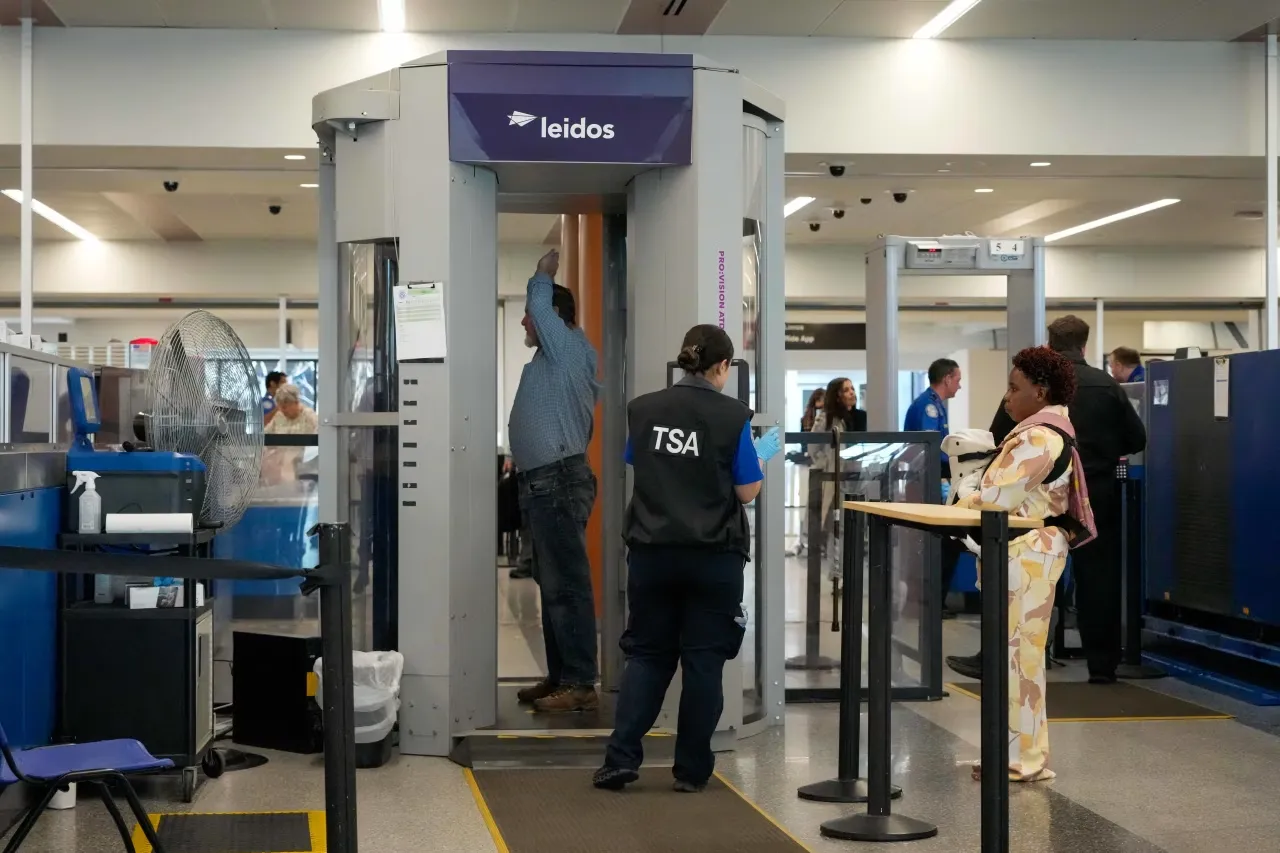
Agilent Technologies today announced that it has been awarded a contract by the U.S. Transportation Security Administration (TSA) to deploy its advanced Bulk Alarm Resolution Technology (BRT) at airport security checkpoints across FIFA World Cup U.S. host city airports. The deployment is intended to enhance aviation security screening capabilities ahead of one of the world’s largest international sporting events in 2026, which is expected to significantly increase global passenger traffic through U.S. airports.
The new system is designed to strengthen the screening of large volumes of commonly carried but security-sensitive materials, including liquids, powders, gels, creams, and solids. These items are frequently encountered during airport screening operations and often trigger alarms that require secondary inspection. Agilent’s BRT technology aims to streamline this process, improving both accuracy and speed while maintaining stringent security standards.
The FIFA World Cup 2026 is anticipated to drive a substantial surge in international travel, with millions of fans expected to arrive in the United States through designated host city airports. In preparation for this influx, U.S. aviation security agencies have been investing in advanced screening technologies that can handle higher passenger volumes without compromising safety or efficiency.
Agilent’s Bulk Alarm Resolution Technology will be deployed as part of this broader modernization effort led by the TSA. The system is specifically designed to address one of the key operational challenges in airport security: the rapid and reliable resolution of alarms triggered by carry-on items during screening.
By enabling security personnel to quickly identify whether a flagged item poses a threat or is benign, the technology reduces the need for manual inspections and minimizes delays at checkpoints. This capability is particularly important during peak travel periods, such as major international sporting events.
Commenting on the award, Geoff Winkett, vice president and general manager of the Spectroscopy and Vacuum Division at Agilent Technologies, emphasized the importance of the collaboration with the TSA in advancing airport security infrastructure.
“Agilent is thrilled to have been selected by TSA to modernize passenger security screening checkpoints at U.S. airports in advance of FIFA World Cup matches,” Winkett said. “TSA’s deployment of the BRT, our next-generation alarm resolution technology, is a significant milestone. We look forward to introducing the BRT into TSA’s screening operations to quickly and accurately screen and resolve alarms from powders, liquids, and other items.”
Winkett noted that the deployment marks a key step forward in integrating advanced analytical technologies into real-world security environments. The system is expected to support TSA officers in making faster, more reliable screening decisions while reducing operational bottlenecks.
Dr. Robert Stokes, director of detection and security at Agilent, also highlighted the operational benefits of the technology in improving passenger experience and checkpoint efficiency.
“Deployment of the BRT at FIFA host city airports will enable the fast and accurate screening of food, liquids, creams and other commonly surrendered items and provides us with the opportunity to enhance operational efficiencies and improve travelers’ experience,” Stokes said.
He added that improving the handling of frequently surrendered items—such as beverages, toiletries, and personal care products—can significantly reduce passenger frustration and streamline checkpoint throughput during peak travel times.
At the core of Agilent’s Bulk Alarm Resolution Technology is a sophisticated analytical platform that combines Surface Offset Raman Spectroscopy (SORS) with advanced computational algorithms. This integration enables precise chemical identification of substances without requiring direct contact or opening of containers in many cases.
Surface Offset Raman Spectroscopy is a non-destructive analytical technique that allows for the detection and identification of substances through opaque or layered materials. This is particularly valuable in airport security environments, where items are often sealed in bottles, bags, or other containers that cannot be easily opened during screening.
By applying SORS in combination with proprietary algorithms, the BRT system can analyze the molecular composition of liquids, gels, creams, powders, and solids. This enables security personnel to determine whether a substance matches known threat profiles or is safe for transport.
The system is engineered to handle a wide range of container types and materials, including plastics, glass, and multilayer packaging. This flexibility makes it well-suited for high-throughput airport environments, where a diverse array of passenger belongings must be screened quickly and efficiently.
One of the key advantages of Agilent’s BRT system is its ability to resolve security alarms more quickly than traditional secondary screening methods. In conventional checkpoint operations, items that trigger alarms often require manual inspection or additional testing, which can slow down passenger flow and increase congestion at security lanes.
The BRT system addresses this challenge by providing rapid confirmatory analysis of flagged items. This reduces the need for physical intervention while maintaining high levels of detection accuracy.
According to Agilent, the system is particularly effective in identifying substances that fall under liquids, aerosols, and gels (LAGs) regulations, which are a major focus of airport security screening worldwide. By improving the efficiency of LAGs screening, the technology helps airports manage large passenger volumes more effectively, especially during peak travel periods associated with major international events like the FIFA World Cup.
The Bulk Alarm Resolution Technology is the latest addition to Agilent’s portfolio of precision portable and desktop security screening solutions. It joins the company’s Insight Series Alarm Resolution systems, which are already deployed in various security environments globally.
Together, these systems form a comprehensive suite of tools designed to enhance threat detection capabilities at airport checkpoints while reducing operational inefficiencies. The Insight Series and BRT systems are built to meet global regulatory requirements for aviation security screening and are designed to support high-throughput environments where speed and accuracy are critical.
Agilent’s broader security technology portfolio reflects the company’s growing role in the intersection of analytical science and homeland security. By applying advanced spectroscopy and data analytics, Agilent is helping security agencies modernize their screening processes to keep pace with evolving travel demands and emerging threats.
In addition to improving operational efficiency, Agilent’s technologies are designed to align with international aviation security standards governing the screening of liquids, aerosols, and gels. These standards are implemented across airports worldwide to ensure consistent safety protocols for air travel.
The ability to accurately analyze substances through sealed or opaque containers is a key advancement in meeting these standards while minimizing disruptions to passenger flow. As airports continue to experience rising traffic volumes, especially during global events, technologies like BRT are expected to play a critical role in balancing security requirements with passenger convenience.
The deployment of Agilent’s Bulk Alarm Resolution Technology at U.S. airports ahead of the FIFA World Cup 2026 represents a significant step in the ongoing modernization of aviation security infrastructure. With increasing global mobility and heightened security expectations, airports are under pressure to adopt technologies that can deliver both speed and precision.
Agilent’s collaboration with the TSA reflects a broader trend toward integrating advanced scientific instrumentation into everyday security operations. By leveraging spectroscopy and machine learning-driven analytics, the company aims to redefine how security screening is conducted in high-traffic environments.
As implementation begins at FIFA host city airports, the technology is expected to serve as a model for future deployments across other major transportation hubs. The successful integration of BRT could pave the way for broader adoption of advanced alarm resolution systems in airports around the world.
Ultimately, Agilent’s latest innovation underscores the growing importance of science-driven solutions in ensuring safe, efficient, and passenger-friendly air travel in an increasingly connected global landscape.
Source link: https://www.businesswire.com/