


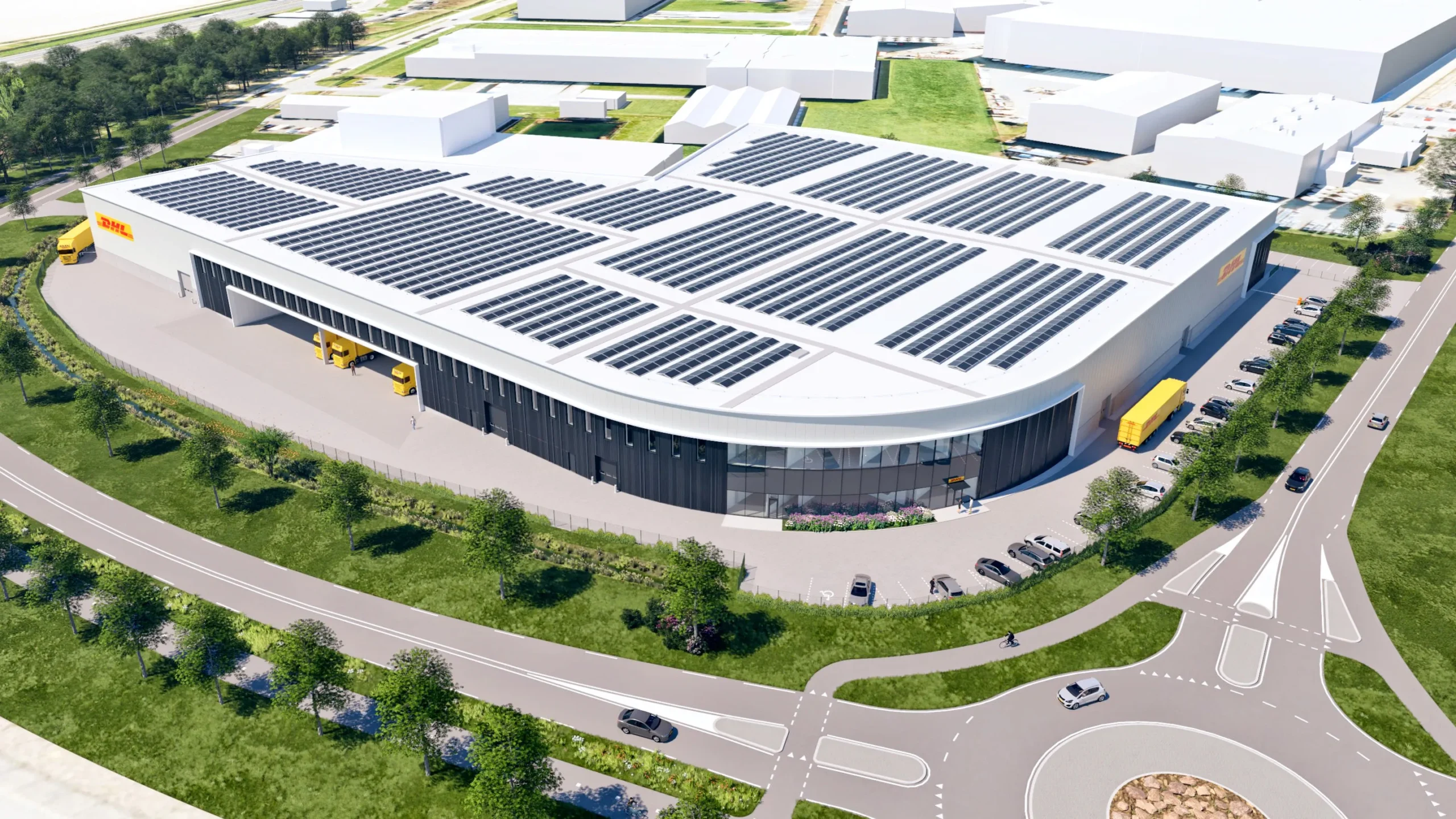
DHL Supply Chain, the contract logistics arm of DHL Group, has officially broken ground on a new European Battery Logistics Hub in Holtum, located in the Limburg region of the Netherlands. The development marks a significant expansion of the company’s specialized logistics infrastructure dedicated to the rapidly evolving electric mobility and energy storage sectors across Europe.
The new facility, which will span approximately 17,000 square meters of dedicated storage and service space, is purpose-built to handle high-voltage battery systems and related components. Once operational, it will significantly enhance DHL Supply Chain’s capacity to manage complex and highly regulated battery logistics flows. The site is scheduled to become fully operational in early 2027.
Strategically, the Holtum hub is positioned adjacent to DHL Supply Chain’s existing automotive logistics operation, effectively creating an integrated logistics campus. This co-location enables seamless coordination between traditional automotive supply chains and next-generation battery logistics services. Together, the two facilities will function as a unified center offering end-to-end solutions for electric vehicles (EVs), battery energy storage systems (BESS), and broader energy transition technologies.
The batteries handled at the new hub will support a wide range of applications, including electric passenger vehicles, commercial EV fleets, and stationary energy storage systems used in residential and industrial settings. As Europe continues its transition toward decarbonized transport and renewable energy integration, demand for advanced battery logistics solutions is accelerating at a rapid pace. DHL Supply Chain is positioning the Holtum site to address this demand by providing scalable, compliant, and highly specialized services tailored to the needs of automotive manufacturers, energy companies, and industrial clients.
According to DHL Supply Chain, the development reflects growing customer requirements for integrated logistics solutions that can safely manage battery lifecycles from production through to reuse and recycling. The increasing complexity of battery supply chains—driven by safety regulations, sustainability requirements, and technological advancements—has made specialized infrastructure a critical component of Europe’s energy transition ecosystem.
Rainer Haag, CEO of DHL Supply Chain Europe, emphasized the strategic importance of the investment in the context of broader industry transformation. “The transformation of mobility and energy systems is a key driver of change in global supply chains,” he said. “By expanding our battery logistics capabilities in Holtum and closely linking them with our existing automotive expertise on site, we are creating a scalable one-stop-shop solution for the EV sector. This investment directly supports DHL Group Strategy 2030, where New Energy is a decisive growth driver for our business across Europe.”
The Holtum battery logistics hub has been designed to support a wide range of value-added services beyond conventional warehousing. These services include compliant storage of high-voltage battery packs, diagnostic testing, controlled charging and conditioning, refurbishment, and reverse logistics operations. In addition, the facility will support end-of-life battery processing, including preparation for recycling and reintegration into circular supply chains.
By combining technical services with logistics operations under one roof, DHL Supply Chain aims to create a fully integrated ecosystem for battery lifecycle management. This approach is increasingly important as manufacturers and energy companies seek to improve sustainability performance while maintaining efficiency and cost control across their supply chains. The ability to manage batteries through multiple life stages—from production and deployment to second-life applications and recycling—represents a growing competitive advantage in the energy transition economy.
John Scherders, CEO of DHL Supply Chain Benelux, highlighted the regional importance of the investment and its impact on the Netherlands’ role within Europe’s logistics network. “For the Netherlands and the region around Holtum, this development reinforces the site’s strategic importance as a logistics and new energy hub,” he said. “By connecting the new battery operation with our existing automotive and spare parts site right next door, we are creating a center of excellence that allows us to offer seamless logistics and technical services for electric mobility and energy storage customers across Europe.”
The integration of automotive logistics and battery-specific capabilities at a single campus is expected to significantly improve operational efficiency and reduce handling complexity. It also enables faster response times for customers requiring just-in-time delivery of battery systems and related components, which is particularly important in the fast-moving EV manufacturing sector.
Geographically, the Holtum site benefits from a highly advantageous location within the European logistics network. Situated in the Limburg region, the facility has direct access to major motorway corridors connecting the Netherlands with Germany, Belgium, and broader Central European markets. This positioning allows DHL to serve key automotive and industrial hubs across multiple countries from a single centralized location.
In addition to its road connectivity, the site is also located near a container and barge terminal on the Juliana Canal. This multimodal access provides an important waterborne transport option, enhancing both capacity and sustainability. Inland waterway transport is increasingly being used in Europe as a lower-emission alternative to road freight, particularly for heavy or high-volume goods such as battery systems and industrial equipment. The combination of road and barge connectivity strengthens the resilience and flexibility of supply chains operating through the Holtum campus.
Sustainability is a central theme of the project, aligning with DHL Group’s broader strategic roadmap. The company’s Strategy 2030 places strong emphasis on “New Energy” as a core growth pillar, reflecting rising demand for logistics solutions supporting electrification, renewable energy infrastructure, and circular economy models. The Holtum battery hub is designed not only to support operational efficiency but also to enable more sustainable material flows across Europe’s energy and automotive sectors.
The increasing adoption of electric vehicles and renewable energy storage systems has created a parallel need for specialized logistics infrastructure capable of managing sensitive, high-energy components safely and efficiently. Batteries require strict handling protocols, temperature-controlled environments, and compliance with evolving safety regulations. DHL’s investment in dedicated infrastructure reflects its intention to remain a key enabler of the energy transition supply chain.
As Europe continues to scale up its EV manufacturing base and renewable energy capacity, logistics providers are expected to play an increasingly strategic role in ensuring supply chain reliability. Facilities like the Holtum hub are likely to become critical nodes in this ecosystem, connecting manufacturers, energy providers, and recycling operators through integrated logistics networks.
By 2027, when the Holtum facility becomes fully operational, DHL Supply Chain expects it to function as a central European gateway for battery logistics. Its combination of advanced technical capabilities, strategic location, and integration with existing automotive operations positions it as a key asset in supporting the continent’s transition toward electric mobility and sustainable energy systems.
Overall, the development underscores DHL Supply Chain’s commitment to expanding its footprint in high-growth, future-oriented sectors. Through investments in specialized infrastructure such as the Holtum battery logistics hub, the company is reinforcing its role as a critical logistics partner for Europe’s evolving energy and mobility landscape, while aligning closely with long-term sustainability and circular economy objectives.
Source link: https://group.dhl.com/