


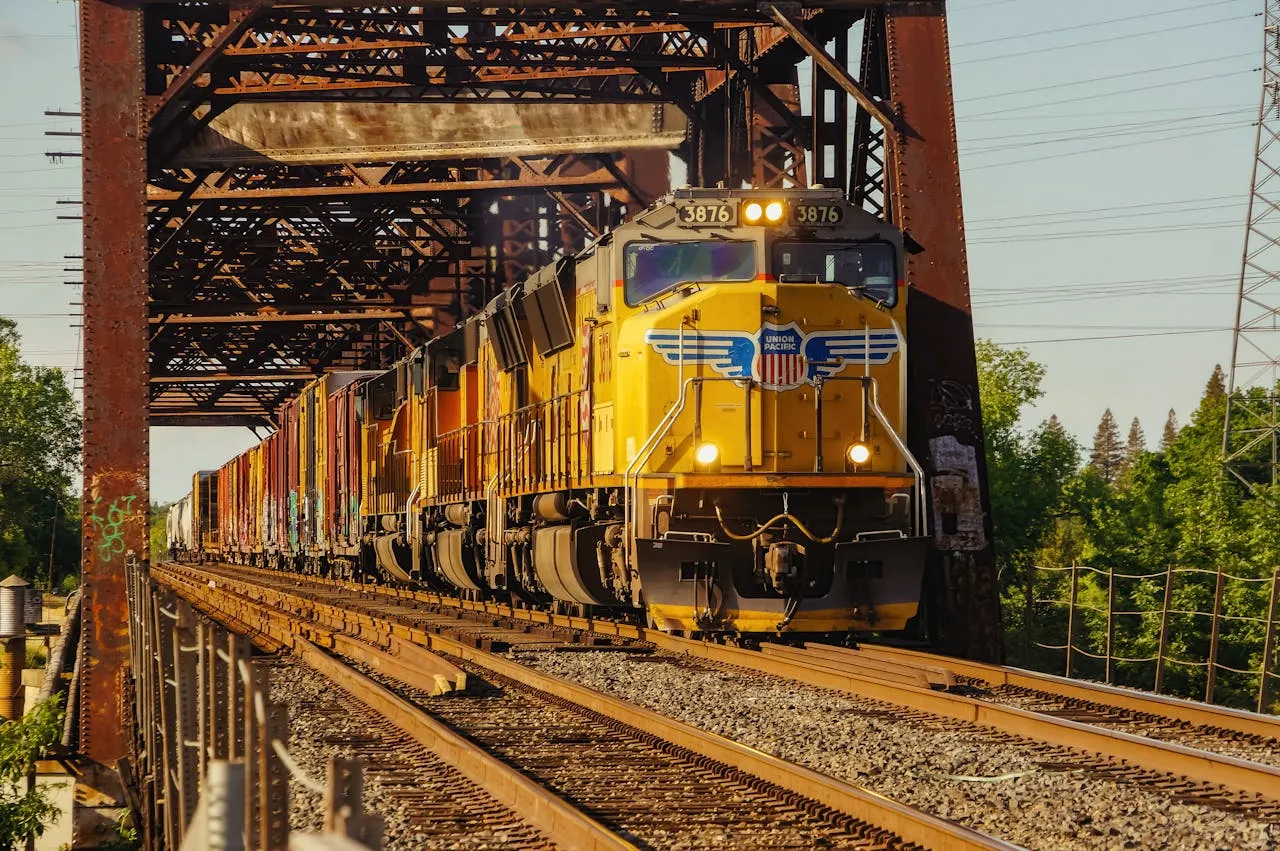
Union Pacific Corporation and Norfolk Southern Corporation have taken another major step toward reshaping the future of freight transportation in the United States. The two railroad operators announced that they have formally submitted an amended merger application to the Surface Transportation Board (STB), seeking regulatory approval for a transaction that would create what the companies describe as America’s first true transcontinental railroad network.
If approved, the combination would unite two of the country’s most influential freight rail systems—Union Pacific, with its extensive western rail network, and Norfolk Southern, a major operator across the eastern United States. Together, the companies say the merger would create a seamless coast-to-coast rail network designed to improve freight efficiency, reduce shipping costs, strengthen domestic supply chains, and increase rail’s ability to compete against long-haul trucking.
The revised filing includes expanded operational and economic analysis requested by the STB during the review process. According to both companies, the updated application not only addresses regulatory questions but also reinforces the original conclusion that the merger would deliver significant public benefits while preserving competition across the freight transportation sector.
In announcing the amended application, Union Pacific President and Chief Executive Officer Jim Vena said the additional research further confirms the strategic and economic advantages of combining the two railroads.
According to Vena, the revised filing demonstrates that the transaction would create meaningful benefits for customers, strengthen competition across the transportation market, and improve the resilience of the U.S. supply chain.
He emphasized that after completing the additional work requested by regulators, the evidence continues to support the merger’s long-term value. Vena noted that the latest analysis used a much broader and more complete data set than what has traditionally been available in rail merger evaluations.
Unlike prior merger reviews that often relied on sample traffic information, Union Pacific and Norfolk Southern say their new submission is based on complete systemwide traffic data supplied by all six North American Class I railroads. This represents the first time in railroad merger history that such comprehensive industry-wide operational data has been incorporated into an STB merger application.
Company officials believe this gives regulators, customers, and stakeholders a far clearer picture of how the combined railroad would perform and what market impacts could be expected.
By analyzing 100% of actual rail traffic movements across the Class I network, the companies say they were able to identify additional growth opportunities, operational efficiencies, and customer service improvements beyond what was previously outlined.
At the center of the proposed merger is the vision of building an end-to-end transcontinental rail system that connects freight origins and destinations across the United States without requiring cargo transfers between rail carriers.
Union Pacific’s rail network stretches across the western two-thirds of the country, serving ports, industrial centers, and agricultural regions throughout the West, Southwest, Midwest, and Gulf Coast.
Norfolk Southern, meanwhile, operates a vast eastern rail system covering major metropolitan markets, ports, manufacturing hubs, and distribution centers across the Midwest, Southeast, and East Coast.
Because the two networks have minimal route overlap, company executives argue that the transaction is complementary rather than consolidative. Instead of eliminating parallel routes, the merger would connect two separate systems into one integrated railroad.
Norfolk Southern President and Chief Executive Officer Mark George described the transaction as a growth-focused combination centered on customer demand.
George said shippers consistently show a preference for single-line rail service whenever it is available because it reduces delays, simplifies logistics management, and improves shipment reliability.
He added that the merged network would allow one Class I railroad to manage freight from origin to final destination across key U.S. markets, particularly throughout the Mississippi watershed and beyond.
By eliminating interchange handoffs between railroads, the companies believe they can remove a major source of inefficiency in freight transportation.
Currently, when shipments move across multiple railroads, freight often must be transferred between carriers at interchange points. These handoffs can add anywhere from 24 to 48 hours to delivery schedules while also increasing operational complexity and costs.
Under a unified Union Pacific–Norfolk Southern system, many of these delays could be eliminated through direct single-line service.
One of the most significant findings in the amended merger application involves projected cost savings for freight customers.
Based on the expanded analysis, the companies estimate that the combined railroad would generate approximately $3.5 billion in annual transportation savings for shippers.
These savings would primarily come from shifting freight away from long-haul trucking and onto rail.
Rail transportation has long been recognized as one of the most cost-efficient methods for moving bulk commodities, consumer goods, industrial materials, and intermodal containers over long distances.
By creating a direct coast-to-coast rail option, Union Pacific and Norfolk Southern say they can make rail a more attractive alternative for freight currently moving by truck.
As service reliability improves and transit times become more competitive, the companies expect a significant volume of truck traffic to migrate onto rail.
According to the amended filing, this modal shift could remove approximately 2.1 million trucks from U.S. highways each year.
This reduction in truck traffic could deliver multiple benefits beyond transportation savings.
Fewer trucks on highways could reduce roadway congestion, lower infrastructure wear and tear, improve traffic safety, and reduce greenhouse gas emissions associated with long-haul freight movement.
For customers, additional savings are expected through reduced inventory carrying costs, better asset utilization, and improved equipment cycle times made possible by faster and more reliable rail service.
Company executives believe these operational improvements could ultimately flow through the broader economy, helping lower transportation-related costs for manufacturers, retailers, and consumers.
The updated application also identifies new opportunities for premium intermodal growth.
Intermodal transportation, which combines rail movement with truck delivery, has become one of the fastest-growing segments in freight logistics.
Using the expanded industry traffic data, Union Pacific and Norfolk Southern identified stronger demand for premium intermodal lanes than initially projected.
As a result, the companies increased the number of proposed seven-day-a-week premium intermodal service lanes from six to seven.
One of the newly identified routes would connect Northern California with the Southeastern United States, linking major consumer and industrial markets through direct rail service.
This additional corridor is expected to support growth in retail imports, e-commerce fulfillment, manufacturing distribution, and agricultural shipments.
Executives say the expanded intermodal network would strengthen rail’s ability to compete directly with over-the-road trucking while giving customers more flexible transportation options.
The companies also confirmed in the revised filing that sufficient locomotive power, railcar capacity, terminal infrastructure, and track capacity exist to support the projected increase in freight volume.
This is a key issue for regulators, who often examine whether merged railroads can absorb new traffic without causing service disruptions.
According to the companies, their analysis shows the combined system would have the resources needed to accommodate growth while maintaining service quality.
One of the primary concerns in any major transportation merger is the potential impact on market competition.
Union Pacific and Norfolk Southern maintain that their merger would enhance—not reduce—competition within the freight transportation sector.
Because the merger is structured as an end-to-end combination rather than a consolidation of overlapping routes, the companies argue that customers would continue to have access to alternative rail carriers, trucking providers, and intermodal transportation services.
The amended application states that the transaction would have no meaningful negative impact on geographic competition or on the availability of independent routing options.
Instead, executives believe the merger would create a stronger competitor in the national freight market.
Vena pointed to operational projections showing that the combined railroad would move approximately the same volume of ton-miles as its largest western competitor currently handles.
He said this demonstrates how the merger would create a more balanced and competitive marketplace.
Greater competition, according to Union Pacific leadership, could drive innovation, improve service quality, and create pricing benefits for freight customers across multiple industries.
Beyond commercial benefits, both railroads are positioning the merger as a strategic investment in America’s supply chain resilience.
In recent years, global disruptions—from port congestion and labor shortages to geopolitical uncertainty and changing trade patterns—have exposed vulnerabilities in transportation networks.
Union Pacific and Norfolk Southern argue that a coast-to-coast single-line railroad could improve the flexibility and reliability of domestic freight movement during periods of disruption.
By connecting ports, manufacturing centers, agricultural regions, and consumer markets under one integrated operating system, the merged railroad could offer faster rerouting options and better network coordination during supply chain challenges.
Executives say the transaction aligns with national priorities around infrastructure modernization, economic competitiveness, and domestic manufacturing growth.
The Surface Transportation Board will now review the amended filing as part of its ongoing evaluation of the proposed merger.
The STB is expected to closely examine operational performance, competitive impacts, service reliability, labor considerations, infrastructure capacity, and public interest benefits before making a final determination.
Rail mergers historically face intense scrutiny due to their potential impact on commerce and national infrastructure.
However, Union Pacific and Norfolk Southern remain confident that their expanded data analysis and updated operating plans will support approval.
If the transaction receives regulatory clearance, it could represent one of the most transformative developments in North American freight transportation in decades.
By linking eastern and western rail networks into one seamless operation, the companies aim to redefine how goods move across the continent—creating a faster, more efficient, and more competitive transportation system for the future.
Source link: https://www.up.com/