


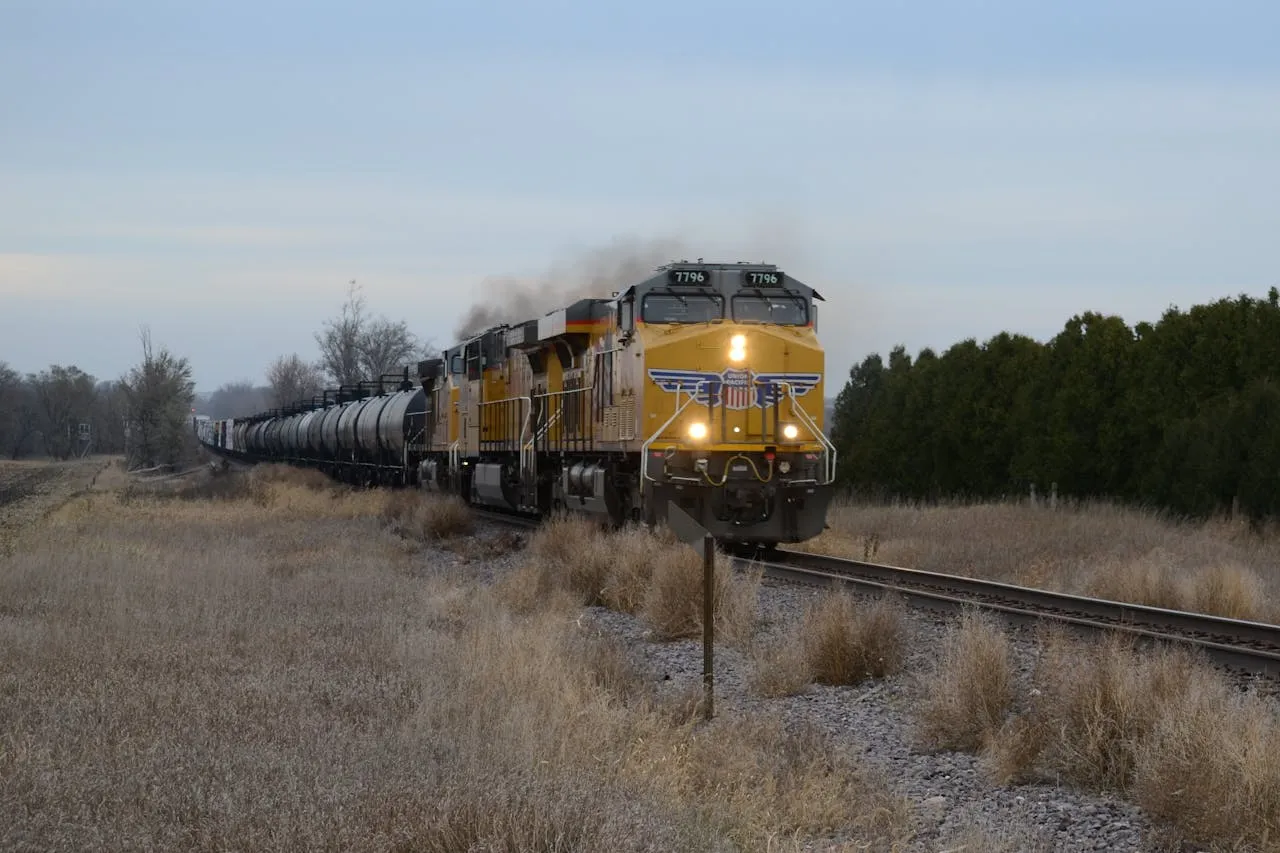
Union Pacific Corporation and Norfolk Southern Corporation have reached a significant milestone in their proposed merger after the U.S. Surface Transportation Board (STB) formally accepted their merger application for review. The decision marks the beginning of the next phase in what could become one of the most transformative developments in the history of the North American freight rail industry.
The two railroads welcomed the STB’s action, describing it as an important step toward establishing America’s first true transcontinental freight railroad. Company leaders emphasized that the merger has the potential to reshape the competitive landscape of the rail sector, improve supply chain efficiency, create jobs, and provide new transportation options for businesses and consumers across the United States.
Although the STB requested additional information regarding certain aspects of the amended merger application, both companies said they remain committed to working closely with regulators throughout the review process and are confident the transaction will ultimately demonstrate substantial public benefits.
Union Pacific Chief Executive Officer Jim Vena praised the STB’s decision and reaffirmed the railroad’s belief that the proposed combination would strengthen freight transportation throughout North America.
According to Vena, the merger proposal is supported by extensive operational planning and comprehensive analysis designed to ensure a smooth integration of the two networks. He noted that the application includes detailed data and evidence demonstrating how the combined railroad could improve service reliability while reducing transportation costs for customers.
Vena stated that the companies look forward to presenting their case during the formal review process and demonstrating how the transaction would benefit rail customers, employees, local communities, and the broader U.S. economy.
Norfolk Southern President and Chief Executive Officer Mark George echoed those sentiments, arguing that the rail industry is at a point where increased competition and network efficiency are needed to meet evolving supply chain demands.
George explained that the revised application contains expanded analysis and additional details that further strengthen the merger proposal. The additional information, he said, enhances both the operational planning and economic rationale behind the transaction. As a result, Norfolk Southern believes the proposal offers significant value for customers, workers, shareholders, and the overall freight transportation system.
If approved, the merger would combine Union Pacific’s extensive western rail network with Norfolk Southern’s eastern operations, creating a seamless coast-to-coast freight railroad connecting major ports, manufacturing centers, agricultural regions, and population hubs across the country.
Supporters argue that the combined company would eliminate many of the interchange challenges that currently exist when freight shipments must move between separate railroads. Instead of transferring cargo between carriers, customers would gain access to single-line service across a vast transcontinental network.
The proposal comes at a time when freight transportation providers are under increasing pressure to improve efficiency, reduce emissions, and address supply chain challenges that have emerged in recent years.
According to the companies, a unified network would provide shippers with faster transit times, more predictable service, and improved operational reliability while enhancing the competitiveness of rail transportation relative to trucking.
One of the most notable aspects of the merger application is the depth of analysis conducted by the companies.
Union Pacific and Norfolk Southern stated that their submission represents the most comprehensive merger assessment ever prepared in the history of the rail industry. The study utilized 100 percent actual traffic data provided by all six North American Class I railroads, allowing analysts to evaluate market impacts, network performance, operational efficiencies, and competitive effects with an unprecedented level of detail.
By using real-world freight traffic information across the entire Class I rail network, the companies believe they have created the most accurate picture yet of how a merger would affect customers, competitors, and transportation markets.
The analysis was designed not only to address regulatory concerns but also to demonstrate that the transaction would generate measurable public benefits while preserving competitive access for rail customers.
A central argument in support of the merger is its ability to attract freight away from long-haul trucking and onto rail.
The companies estimate that a transcontinental railroad could remove approximately 2.1 million truckloads from U.S. highways each year. By creating a more efficient rail option for long-distance shipments, the merged railroad would provide businesses with an alternative to trucking that could offer both economic and environmental advantages.
Reducing truck traffic on major highways could help ease congestion, lower roadway maintenance costs, and decrease transportation-related emissions. Rail transportation is generally considered more fuel-efficient than long-distance trucking, particularly for bulk commodities and large freight movements.
Company officials believe that providing shippers with a stronger rail alternative would encourage broader competition across freight transportation markets and place downward pressure on transportation costs.
The merger proposal also highlights substantial financial benefits for freight customers.
According to the companies’ analysis, businesses utilizing the combined railroad could experience lower inventory costs due to faster and more reliable service. Improved network coordination would enable freight to move more efficiently across long distances, reducing transit delays and allowing customers to manage inventory levels more effectively.
In addition, the combined railroad is expected to reduce equipment-related expenses by improving asset utilization and minimizing operational inefficiencies that can occur when shipments move between separate rail systems.
Perhaps most significantly, the companies project that shifting freight from higher-cost truck transportation to rail could generate approximately $3.5 billion in annual savings for shippers. These savings could extend throughout supply chains, helping manufacturers, retailers, agricultural producers, and other industries reduce logistics expenses.
Lower transportation costs could ultimately benefit consumers as businesses pass some of those savings through the economy.
While large railroad mergers often raise questions about competition, Union Pacific and Norfolk Southern argue that their proposal would increase competitive options rather than reduce them.
The companies contend that a coast-to-coast rail network would provide customers with a new single-line service option that currently does not exist. Instead of relying on multiple railroads to transport freight across the country, customers would have access to a unified network spanning both eastern and western regions.
For customers who may not directly benefit from a new single-line route, the companies have proposed a Committed Gateway Pricing program. This mechanism is intended to preserve access to interchange points and ensure that customers continue to receive competitive transportation options.
Executives argue that the merger would stimulate broader competition within the freight transportation sector by strengthening rail’s position relative to trucking and other transportation modes.
Employment has become another major focus of the merger proposal.
The companies project that growth generated by the combined network will create approximately 1,200 net new union jobs within three years following completion of the merger. These positions would be driven by increased freight volumes, network expansion, and new business opportunities resulting from the creation of a transcontinental railroad.
In addition to projected job growth, Union Pacific and Norfolk Southern have emphasized what they describe as an unprecedented employment protection commitment.
Under the proposed arrangement, every union employee working for either railroad at the time the merger is completed would receive a jobs-for-life guarantee. Company leaders say this commitment demonstrates their confidence that the merger will support long-term growth rather than workforce reductions.
Labor issues are expected to remain a key topic throughout the STB review process, and the companies have indicated that they will continue engaging with labor organizations as proceedings move forward.
With the application now accepted, the STB will proceed with a comprehensive merits-based review of the proposed transaction.
During this phase, regulators will examine the competitive, operational, economic, and public-interest implications of the merger. The agency may request additional information from the railroads and other stakeholders as part of its evaluation.
Union Pacific and Norfolk Southern noted that requests for supplemental information are common in major rail merger proceedings. They pointed to previous Class I railroad transactions in which the STB temporarily adjusted procedural schedules to gather additional information before ultimately reaching a decision.
The companies said they intend to continue cooperating fully with regulators and providing any information necessary to support a complete review.
Under federal law governing railroad mergers, the STB has 12 months from the publication of its acceptance decision to complete evidentiary proceedings. This timeline provides a structured framework for evaluating one of the most consequential transportation transactions proposed in decades.
Supporters of the merger have already begun making their voices heard during the regulatory process.
According to the companies, more than 2,000 stakeholders have submitted letters supporting the application. The supporters represent a broad cross-section of industries and organizations, including freight customers, labor groups, short line railroads, ports, business associations, and supply chain stakeholders.
Many supporters believe that a unified transcontinental railroad could strengthen national logistics networks, improve service reliability, and enhance the competitiveness of rail transportation within the United States.
Advocates also argue that stronger rail connectivity is essential for supporting economic growth, facilitating international trade, and ensuring the efficient movement of goods across increasingly complex supply chains.
As the STB begins its formal review, the proposed Union Pacific–Norfolk Southern merger remains one of the most closely watched developments in the transportation industry. If approved, the transaction would create the first coast-to-coast freight railroad in U.S. history, fundamentally altering the structure of the North American rail network.
The companies maintain that the merger will deliver substantial benefits through increased competition, lower transportation costs, enhanced supply chain efficiency, environmental improvements, and job creation. Regulators, customers, labor groups, competitors, and other stakeholders will now have the opportunity to scrutinize those claims during the months ahead.
With the review process officially underway, the future of America’s first transcontinental railroad will depend on whether the companies can convince regulators that the proposed combination serves the public interest and strengthens the nation’s freight transportation system for decades to come.
Source link: https://www.businesswire.com/