


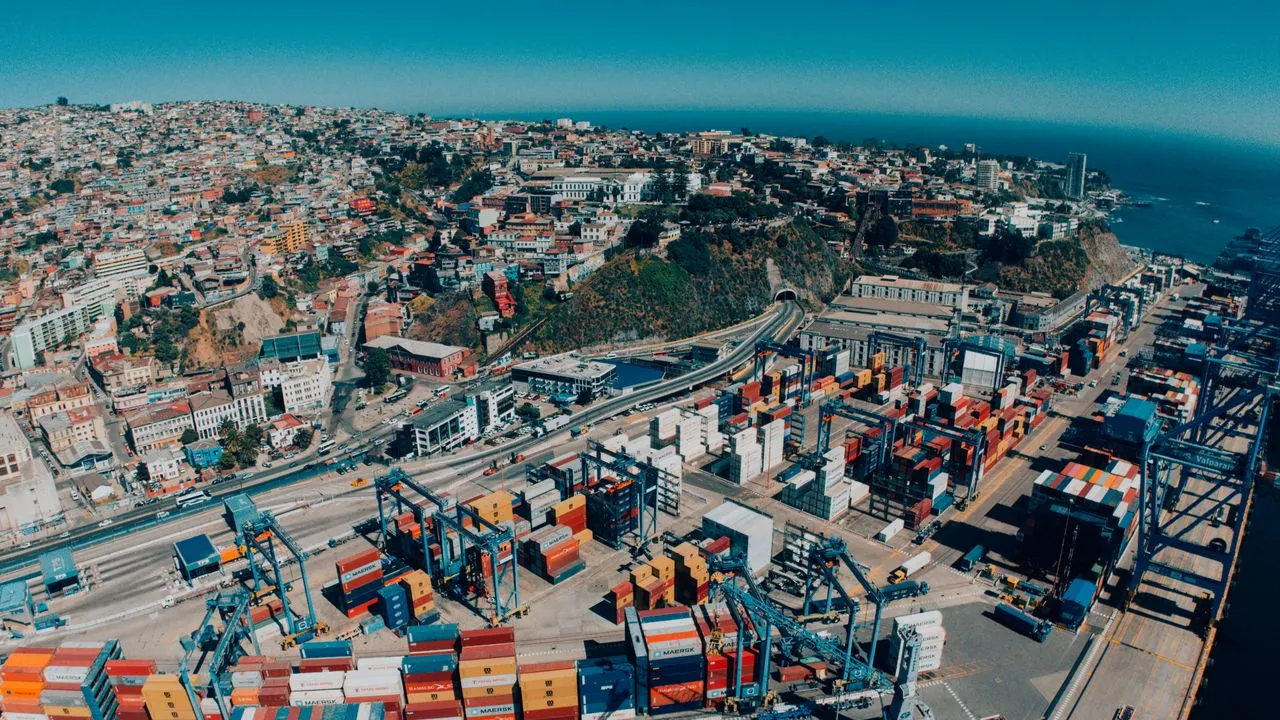
Venti Technologies, a pioneer in autonomous logistics solutions, has reached two significant milestones that underscore the growing impact of artificial intelligence in industrial transportation. The company announced that its autonomous vehicles (AVs) have collectively traveled more than 500,000 miles and successfully moved over 340,000 shipping containers across logistics hubs and industrial facilities. These achievements highlight the company’s ability to deploy autonomous technology at scale while delivering measurable operational improvements for customers operating in some of the world’s busiest supply chain environments.
The milestones represent more than just impressive numbers. They demonstrate the practical application of autonomous vehicle technology in real-world industrial settings where efficiency, safety, and productivity are critical. As global supply chains continue to face mounting challenges ranging from labor shortages and rising operational costs to increasing demand for faster cargo movement, Venti’s AI-powered platform is helping logistics operators address these issues through automation and intelligent vehicle management.
The logistics industry remains under significant pressure as companies seek ways to improve efficiency while controlling costs. Ports, container terminals, distribution centers, and industrial yards often struggle with congestion, bottlenecks, workforce shortages, and operational delays. These challenges can lead to substantial financial losses and reduced productivity throughout the supply chain.
According to Venti Founder and Chief Executive Officer Dr. Heidi Wyle, the company’s mission is focused on eliminating these inefficiencies through advanced AI-driven automation.
“Global logistics sites and supply chain nodes are burdened by many inefficiencies, including labor shortages, human error, and rising costs,” said Dr. Wyle. “Billions of dollars are wasted on congestion, bottlenecks, and delays. Venti uses AI to eliminate friction in the supply chain, thereby providing customers with transformational and sustained cost savings.”
The company’s technology is designed specifically for industrial logistics environments where large volumes of cargo must be moved efficiently and safely. By automating container transportation within terminals and logistics hubs, Venti enables operators to optimize asset utilization while reducing dependency on manual driving operations.
As supply chains become increasingly complex and demand for freight movement continues to grow, autonomous technologies are emerging as a key solution for enhancing operational resilience. Venti’s latest milestones provide evidence that autonomous logistics can deliver tangible business benefits while operating reliably in demanding industrial environments.
One of the most notable aspects of Venti’s achievement is its ability to deploy and operate driverless autonomous vehicles in active logistics facilities. While many autonomous vehicle developers continue to test their systems in pilot programs or controlled environments, Venti has successfully transitioned its technology into full-scale commercial operations.
The company reports that it is the only autonomous logistics provider that has operationalized driver-out autonomous vehicles in real-world logistics hubs and industrial yards. Its autonomous fleet has been running continuously in production environments for approximately two and a half years, operating around the clock without onboard drivers.
This achievement represents a major advancement in autonomous logistics. Driver-out operations require a high level of technological maturity because vehicles must navigate complex and dynamic environments independently while maintaining safety and productivity standards.
Unlike closed testing environments, industrial logistics sites involve constant movement of equipment, vehicles, cargo, and personnel. Autonomous systems operating in these locations must make real-time decisions while adapting to changing conditions.
Venti’s vehicles have demonstrated their ability to perform these tasks successfully while delivering productivity levels that exceed traditional human-operated processes. Continuous 24/7 operation allows customers to maximize throughput and maintain consistent performance regardless of labor availability or shift schedules.
The successful deployment of driverless operations at industrial scale marks an important milestone not only for Venti but also for the broader autonomous vehicle industry, illustrating how AI-powered transportation solutions can move beyond experimental phases and become integral components of commercial logistics operations.
A key differentiator of Venti’s technology is its ability to function effectively in mixed human-robot traffic environments without requiring dedicated infrastructure or isolated operating zones.
Many automation systems rely on separate lanes, fenced-off areas, or specially designed facilities to ensure safe operation. Venti’s autonomous trucks, however, operate alongside human-driven vehicles and personnel while carrying fully loaded shipping containers through active logistics hubs.
The vehicles use advanced onboard systems for localization, navigation, and decision-making. These capabilities allow them to accurately determine their position, plan routes, avoid obstacles, and execute precise movements within complex industrial settings.
One of the platform’s most impressive technical capabilities is its positioning accuracy. Venti reports that its autonomous vehicles can drive and park with an accuracy of approximately one inch, or two centimeters. Such precision is particularly valuable in container terminals and industrial yards where space is often limited and cargo placement must meet strict operational requirements.
This high level of accuracy contributes to safer operations while also helping logistics facilities improve workflow efficiency. Precise positioning reduces the risk of cargo handling errors and enables smoother coordination between autonomous vehicles and other equipment used throughout the facility.
By eliminating the need for expensive infrastructure modifications, Venti’s solution offers a more scalable and cost-effective pathway to automation for logistics operators seeking to modernize their operations.
The adoption of autonomous logistics technology is driven not only by technological innovation but also by the operational and financial benefits it can provide. Venti’s platform has been designed to generate measurable improvements across multiple performance areas.
One of the most significant advantages is increased throughput. Autonomous vehicles can operate continuously and maintain consistent performance levels, helping facilities move more containers within the same operational timeframe. This capability enables logistics hubs to handle growing cargo volumes without proportionally increasing labor costs.
Safety is another major area of improvement. By reducing the need for manual driving in potentially hazardous industrial environments, autonomous systems can help minimize accidents and improve workplace safety outcomes.
Additionally, Venti’s technology contributes to lower operating costs by improving resource utilization and reducing inefficiencies associated with delays, congestion, and human error. The ability to automate repetitive transportation tasks allows organizations to allocate personnel to higher-value activities while maintaining operational continuity.
Environmental benefits also play an increasingly important role. Improved traffic flow and optimized vehicle operations can help reduce fuel consumption and emissions, supporting sustainability initiatives across logistics and transportation networks.
These combined advantages create a compelling business case for autonomous logistics deployment, particularly as organizations seek innovative ways to improve competitiveness in a rapidly evolving global market.
At the core of Venti’s success is an artificial intelligence platform that continuously learns and improves through real-world operational experience.
The company reports that each autonomous vehicle generates approximately one million data points every second. This vast stream of information is used to refine and enhance the AI models that power vehicle navigation, decision-making, and operational performance.
Continuous learning enables the system to become more intelligent over time, improving its ability to handle diverse scenarios and adapt to changing operational conditions. Every movement, interaction, and environmental observation contributes to the ongoing development of the platform.
Over years of deployment, Venti has accumulated a proprietary dataset that reflects the complexity and diversity of real-world logistics operations. This extensive data foundation provides a significant competitive advantage, enabling the company to develop increasingly sophisticated AI models tailored specifically for industrial logistics applications.
The scale and quality of this dataset support the creation of what Venti describes as a foundation model for autonomous logistics. Such models have the potential to accelerate deployment across different types of logistics facilities while maintaining high levels of performance and reliability.
As more vehicles operate across more sites, the platform continues to gather valuable operational insights, creating a cycle of continuous improvement that strengthens the effectiveness of the entire system.
In addition to supporting autonomous operations, Venti’s platform also incorporates advanced monitoring capabilities that help maximize vehicle reliability and lifespan.
The system continuously tracks vehicle health and component performance, allowing operators to identify potential issues before they result in equipment failures. This predictive maintenance approach enables proactive servicing and repairs, reducing downtime and improving fleet availability.
Predictive maintenance has become an increasingly important capability within modern transportation and industrial operations. By leveraging AI and real-time data analysis, organizations can optimize maintenance schedules, extend asset life, and reduce unexpected disruptions.
For logistics operators managing high-volume cargo movement, minimizing downtime is critical to maintaining productivity and meeting customer expectations. Venti’s integrated approach to vehicle health monitoring provides an additional layer of operational value beyond autonomous driving capabilities.
Venti’s achievements have attracted significant recognition from industry organizations and business leaders. The company has received numerous awards and accolades that reflect its growing influence in autonomous logistics, artificial intelligence, and industrial automation.
In 2026, Venti was named among Forbes Asia’s Top 100 companies, recognizing its contributions to innovation and business growth. The company was also included among Fast Company’s Top 10 Most Innovative Companies in the Asia-Pacific region in both 2025 and 2026.
Beyond these honors, Venti has earned multiple Pinnacle Awards spanning categories such as artificial intelligence, Internet of Things technologies, robotics, and automation. These recognitions highlight the company’s broad impact across several emerging technology sectors.
The company and its founder, Dr. Heidi Wyle, also received international recognition through the FedEx Small Business Grant Contest, where they were selected as the Asia-Pacific winner from a field of approximately 4,000 competing businesses.
Further demonstrating her leadership within the industry, Dr. Wyle was appointed to Singapore’s National Committee on Integrating Autonomous Vehicles into Land Transport in 2025. The appointment reflects both her expertise in autonomous technologies and Venti’s role in shaping the future of transportation and logistics innovation.
The achievement of more than 500,000 autonomous miles and 340,000 container moves represents a significant milestone in the evolution of industrial transportation. It demonstrates that autonomous logistics systems are no longer limited to experimental projects but are capable of delivering measurable results in demanding commercial environments.
As global supply chains continue to seek greater efficiency, resilience, and sustainability, technologies such as Venti’s AI-powered autonomous vehicles are expected to play an increasingly important role. Through continuous innovation, real-world deployment, and data-driven improvement, Venti is positioning itself at the forefront of the autonomous logistics revolution.
With proven operational success, industry recognition, and a growing portfolio of real-world achievements, the company continues to demonstrate how artificial intelligence can transform logistics operations and create lasting value across global supply chains.
Source link: https://www.businesswire.com/